
8 Best Sake Brewery Tours in Japan with Tastings You Can Reach by Train
8 Best Sake Brewery Tours in Japan with Tastings You Can Reach by Train
Sake brewery tours combine the thrill of watching the brewing process up close, the charm of centuries-old buildings and tools, and tastings that tie everything together in a single visit. With over 1,000 breweries across Japan, though, only a fraction welcome visitors, and the booking process, tasting options, and overall experience vary wildly, making that first pick surprisingly tricky.
Sake brewery tours in Japan roll three experiences into one: a behind-the-scenes look at how sake is brewed, the atmosphere of historical buildings and traditional tools, and tastings that connect knowledge to flavor on the spot. That said, Japan has more than 1,000 sake breweries, yet only a fraction open their doors to visitors. Reservation systems, tasting depth, and tour content differ dramatically from one brewery to the next, so choosing your first visit can feel overwhelming.
This guide narrows the field to eight breweries that are easy to reach by public transportation. Each one is compared across booking convenience, tour content, tasting quality, station access, and how well it pairs with nearby sightseeing, giving you clear criteria before you dive into the details. The range spans from the casual, no-reservation-needed grounds of Ishikawa Brewery (Tokyo) to the intimate, premium-tier experiences at Kobe Shushinkan (Hyogo) and Daishichi Brewery (Fukushima).
You will also find practical tips on etiquette, typical costs, and what to look for regarding English-language support. By the end, you should be able to say "this is the one for me" and book a visit with confidence. Prices, hours, and holidays listed here reflect the most recent information available, though these details shift frequently, so always confirm on the official website before your trip.
Why Sake Brewery Tours with Tastings Have Become So Popular
The appeal of a sake brewery trip comes down to a single thread connecting "learn," "see," and "taste" at one destination. A typical visit starts with a guided walkthrough of the brewing process, moves into the building's history and traditional tools, and finishes with tastings or limited-edition pours, all while the impressions are still fresh. It is not quite a factory tour, and it is not a bar crawl. The magic sits in between: understanding the method deepens every sip, and that combination sticks in memory long after you leave.
Japan counts over 1,000 sake breweries, but the ones open to visitors represent only a slice of that number. Even among those, the experience varies widely. Ishikawa Brewery (Fussa, Tokyo) lets you wander the grounds freely without a reservation. Ozawa Brewery, the maker of Sawanoi (Ome, Tokyo), runs reservation-based guided tours that pair a walk through the brewery with sake tasting. Kobe Shushinkan (Hyogo) and Daishichi Brewery (Fukushima) take things further with small-group, premium-tier tours where tasting depth is part of the design. Same category, completely different density.
That variety is part of the fun. Fushimi in Kyoto, home to the Gekkeikan Okura Museum, makes it easy to fold a brewery visit into a broader Kyoto day. The Nada district in Kobe clusters multiple breweries along the Hanshin rail line, perfect for hopping between several in a single afternoon. In Niigata, Imayo Tsukasa Brewery sits roughly a 15- to 20-minute walk from JR Niigata Station, making it simple to slot into a half-day itinerary right after stepping off the Shinkansen. Each brewery works as a standalone destination, yet naturally connects to nearby dining, shopping, and sightseeing, and that flexibility is what makes sake touring such an approachable travel theme.
From a travel perspective, brewery visits balance learning and cultural immersion without forcing either. The architecture and tools reveal the local water, climate, trade routes, spiritual traditions, and food culture of the region. Add tastings on top, and the rice polishing ratios and aroma profiles you heard about during the tour shift from abstract facts to something you can actually sense. Winery and distillery tours share a similar draw, but sake breweries in Japan carry extra weight because so many sit in castle towns, port towns, and old post-station towns where the surrounding streetscape deepens the entire experience.
Popularity does introduce a challenge, though. Without a framework for choosing, it is easy to get stuck. Do you want a reservation-required guided tour or a walk-in free visit? A brief tasting sampler or a serious multi-label comparison? A quick drop-in on a sightseeing day or a deep dive that fills an entire afternoon? Framing it this way helps: casual drop-in types suit free-entry breweries, while dedicated single-brewery days pair best with guided or premium tours.
💡 Tip
When tastings are part of the plan, your choice of transportation shapes the entire experience. Trains and walking beat driving every time, both for the freedom to actually drink and for the street-level discoveries along the way.
With that in mind, this article focuses specifically on brewery tours built around tastings. Beyond flavor alone, it also evaluates walkability from the nearest station, ease of building a public-transit itinerary, and how smoothly a visit connects to meals and sightseeing nearby. The goal is to present sake brewery touring not as an isolated stop but as a travel theme you can design an entire day around.
How to Choose Without Regrets: Reservations, Pricing, and Tasting Differences
Reservation Basics and How to Avoid Sold-Out Slots
When comparing brewery tours, the first question is less about "which brewery looks interesting" and more about "how do I actually book a spot?" In recent years, online reservations through official websites have become the norm, replacing the old phone-call approach. More breweries now run appointment-only, time-slotted, small-group formats. The more popular the brewery, the more your trip needs to revolve around the event calendar rather than a spontaneous drop-in.
This trend becomes clear when you line up all eight breweries. Ozawa Brewery (Sawanoi) lists reservation-based tours on its official site. Imayo Tsukasa Brewery manages slots through a dedicated booking page. Kobe Shushinkan separates free self-guided options from small-group premium tours, each with its own path. Daishichi Brewery requires advance reservations for both its standard and premium tiers. Ishikawa Brewery bucks the trend with a no-reservation, walk-the-grounds-at-your-own-pace format, but that is closer to the exception. For most, "check the schedule and grab a slot" is the starting point.
The easiest way to avoid a sold-out disappointment is to avoid locking down the rest of your trip first. When building a day trip around a brewery, working backward from the tour start time and fitting meals and walks around it tends to produce more reliable plans than fixing a train first. Even station-adjacent breweries have tours running 30 to 60 minutes, and thorough courses can stretch to 80 or 100 minutes. If you plan to visit two breweries in one day, factor in reception, the gift shop, tastings, and the walk back to the station, not just the tour itself.
Before booking, focus less on price and more on operational details. The items where breweries diverge most are:
- Tour dates and available time slots
- Start time and estimated duration
- Price (tax-included) and payment methods (cashless acceptance varies by brewery and can change; confirm on the official page beforehand)
- Tasting availability and number of pours (specific labels and quantities shift often; defer to official guidance)
- Language support
- Photography rules (policies differ by area and brewery; restrictions tighten during the brewing season)
- Accessibility information
- Age requirements
- Cancellation policy
One detail that slips under the radar: whether non-drinking companions have an alternative. At Ozawa Brewery, visitors who skip the tasting can opt for yuzu cider instead. Breweries with this kind of consideration are far easier to work into trips with families or mixed groups, and they keep the satisfaction level steady for everyone.
Pricing and Tasting Cost Benchmarks
Getting a feel for the price range upfront makes comparing all eight much easier. Sake brewery tour costs span free to several thousand yen (~$7-20+ USD), with guided paid tours generally falling in the 1,000 to 3,000 yen (~$7-20 USD) range. Tastings are sometimes bundled into the admission fee and sometimes charged separately; standalone tastings commonly run a few hundred yen to around 1,000 yen (~$2-7 USD).
The gap between free and paid is not simply about cost; it reflects the density of the experience. Free tours typically center on exhibits, videos, reference materials, grounds strolling, and glass-partitioned views of the production area. Ishikawa Brewery's walk-around format is a prime example, valued for its low barrier to entry. The Gekkeikan Okura Museum also pairs exhibition viewing with tastings at an accessible 600 yen (~$4 USD) for visitors aged 20 and older, making it easy to fold into a Fushimi stroll.
Paid tours, on the other hand, add a guide walking you through the brewing steps, access to spaces normally off-limits, multi-label tastings, and small-group settings where you can actually ask questions. Kobe Shushinkan's official site lists a small-group premium tour at approximately 60 minutes for 3,300 yen (~$22 USD, tax included). Daishichi Brewery makes the tier structure especially transparent: standard tours run 60 minutes at 1,000 yen (~$7 USD) during the brewing season and premium tours run 80 minutes at 3,000 yen (~$20 USD), with the price gap directly mapping to experience depth.
Tastings follow the same logic. Free tastings tend to be a single pour or a small sampler, mainly serving as a closing note to the tour. Paid tastings offer multi-label comparisons, access to limited or premium bottles, and sometimes a commemorative cup, all structured so the drinker can focus on differences. Kamotsuru Brewery features a premium bar on its official page with paid tasting menus, including a three-variety comparison set of 30 ml each for 500 yen (~$3.50 USD). At Ozawa Brewery, tastings are woven into the end of the guided tour, so even within "tasting included," the format varies.
From a travel-planning perspective, free-entry breweries suit the "drop one brewery into a sightseeing day" approach, while paid guided tours work best when the brewery itself is the day's main event. If you want to keep things light and walk the town too, go with Ishikawa Brewery or the Gekkeikan Okura Museum. If you want to go deep at a single brewery, look at Kobe Shushinkan or Daishichi. That framing makes the choice straightforward.
English-Language Support and Practical Notes
If you are traveling with international companions or visiting as an English speaker yourself, a simple "English available" label does not tell you much. English-language support at sake breweries breaks down into breweries with a standing English tour, breweries where interpreter arrangements are possible, and breweries with English signage or subtitles only. The reality varies considerably.
The Gekkeikan Okura Museum features English subtitles in its exhibits and video content, pairing naturally with its self-guided format. On the guided-tour end, English support sometimes comes at an extra cost. Kamotsuru Brewery's experience tours note a separate interpreter guide fee when English is needed, and Daishichi Brewery lists an English interpreter guide at 7,700 yen (~$52 USD) per group. Rather than lumping everything under "English OK," checking what is covered by the base fee sharpens the comparison.
More important than English support, however, is understanding the hygiene rules that apply regardless of language. A sake brewery is a food production facility before it is a tourist attraction, and visitor etiquette runs stricter than at a typical museum. Strong perfumes and hair products are best avoided, and some breweries ask visitors to skip natto and certain fermented dairy products the day before or the day of a visit. Kamotsuru and Aiyu Brewery are among those that adjust tour routes during the brewing season, so thinking about "what areas are off-limits" as part of the experience helps set expectations.
Transportation planning ties directly into all of this. If tastings are on the agenda, driving is off the table. Many breweries turn out to be surprisingly walkable from the nearest station. Imayo Tsukasa Brewery is about 15 to 20 minutes on foot from JR Niigata Station. Ozawa Brewery is roughly 3 to 5 minutes from Sawai Station on the JR Ome Line. Kamotsuru Brewery is about 3 minutes from JR Saijo Station. Checking whether you can comfortably reach the brewery by public transit matters more for a tasting-focused trip than checking whether English tours exist.
ℹ️ Note
When comparing English support, distinguish between "English-speaking guide available," "English signage and materials only," and "interpreter available at extra cost." That distinction tells you far more about the actual experience.

蔵見学10か条 | 日本酒ツーリズム(全国蔵元・銘柄情報)~日本酒を蔵元を旅するポータルサイト
注意事項を守って、気持ちよく安全に蔵見学に参加しましょう! 蔵元さんを訪ねると、蔵見学ができることがあります。
nihonshu-tourism.comBrewing Season vs. Year-Round Visits
The same brewery can feel like a completely different place depending on when you go. The key distinction: winter through early spring (brewing season) delivers raw, in-the-moment atmosphere, while year-round tours offer more consistent and polished experiences.
During the brewing season, you sense the steaming rice, the aroma of fermentation, and the focused energy of a workspace where sake is actively being born. Aiyu Brewery (Itako, Ibaraki) runs its brewing season from around November through early April, with mid-January to late February highlighted as the peak period for daiginjo brewing. Daishichi Brewery also shifts its tour design for October through March, adjusting duration and pricing between the standard and premium tiers. For these breweries, the brewing season itself is the reason to visit.
That said, the brewing season does not automatically mean you see more. Stricter sanitation controls may actually narrow the areas open to visitors. In other words, the brewing season adds authenticity and sensory richness, but the walkable route may shrink rather than expand. Knowing this keeps expectations realistic and prevents the "I came in winter so I should see everything" mindset.
Year-round breweries and memorial halls offer stability through well-curated exhibits, video content, and structured guide routes. The Gekkeikan Okura Museum, an exhibition-focused venue, delivers a consistent experience regardless of the season, making it a solid first stop for anyone new to sake. Imayo Tsukasa Brewery, walkable from the station, fits neatly into a schedule even on arrival day. A visit of 30 to 40 minutes for the tour, plus time for tastings, shopping, and lunch, tends to wrap up comfortably in about 2.5 to 3 hours. Whether you prioritize seasonal atmosphere or schedule reliability determines which breweries naturally rise to the top of your list.
Mapped to trip planning, the brewing season suits "a day dedicated to one brewery," while year-round venues suit "a day combining multiple stops and a neighborhood walk." Are you chasing the energy of active fermentation, or building a broad picture of sake culture? Holding that question in mind makes the personalities of the eight breweries ahead much easier to read.
8 Recommended Sake Breweries for a Tasting-Focused Tour
Quick Comparison Table
For a bird's-eye view, here are all eight breweries lined up on the same axes. Selection criteria weigh tasting availability alongside public-transit access, booking ease, tour depth, and compatibility with nearby sightseeing.
| Brewery | Location | Access (Public Transit) | Tour Style | Tastings | Reservation | Estimated Duration | Price Range |
|---|---|---|---|---|---|---|---|
| Sawanoi / Ozawa Brewery | Ome, Tokyo | ~3-5 min walk from Sawai Stn (JR Ome Line) | Reservation-based guided tour with process explanation | Yes | Required | (Not officially published; author estimate available) | Free |
| Ishikawa Brewery | Fussa, Tokyo | Walking distance from nearest station (exact minutes unpublished) | No-reservation self-guided grounds tour | Yes | Not required | Open-ended | Free |
| Imayo Tsukasa Brewery | Chuo-ku, Niigata | ~15 min walk or ~10 min bus from JR Niigata Stn | Guided tour near the station | Yes | Required | ~30-40 min | Free (basic) |
| Gekkeikan Okura Museum | Fushimi-ku, Kyoto | Accessible by rail/bus to Fushimi area | Exhibition and video self-guided tour | Yes | Walk-in (self-guided) | Museum-style visit | 600 yen (~$4 USD) for age 20+ |
| Kobe Shushinkan | Kobe, Hyogo | Easy public-transit access in the Nada district | Dual-track: self-guided + small-group premium | Yes | Depends on course | ~30-60 min | Free course available / Premium 3,300 yen (~$22 USD, tax incl.) |
| Kamotsuru Brewery | Higashihiroshima, Hiroshima | ~3 min walk from JR Saijo Stn | Exhibition, premium bar, and experience tours | Yes | Confirm for tours | Varies by tour | Experience tour 2,000 yen (~$14 USD, tax incl.) |
| Aiyu Brewery | Itako, Ibaraki | Nearest station info not specified | Free tour focused on brewing-season atmosphere | Yes | Confirm (contact brewery) | ~30-40 min | Free |
| Daishichi Brewery | Nihonmatsu, Fukushima | ~5 min by car from JR Nihonmatsu Stn | Small-group paid tours, high premium feel | Yes | Required (advance) | ~60-100 min | 1,000-3,500 yen (~$7-24 USD) |
Reading the table for patterns: Imayo Tsukasa, Ozawa Brewery (Sawanoi), and Kamotsuru stand out for station proximity. Ishikawa Brewery and the Gekkeikan Okura Museum lead on flexibility. Kobe Shushinkan and Daishichi deliver the highest experience density. Aiyu Brewery shines for seasonal atmosphere.
Sawanoi / Ozawa Brewery
Ozawa Brewery sits in Ome, Tokyo, and works well for anyone who wants a proper brewery tour experience without leaving the greater Tokyo area. The brewery is located near Sawai along the JR Ome Line, about 3 to 5 minutes on foot from Sawai Station. Being able to walk from the platform to the brewery, with the Tama River valley setting the mood along the way, gives the visit a sense of destination even on a day trip from central Tokyo.
Tours are reservation-based and guide-led, with a walk through the brewery followed by sake tasting at the end. Weekday and weekend/holiday schedules differ in the number of available sessions, so checking the official site for dates before booking is the safest move. Factoring in the tour, tastings, the shop, and a stroll around the area, expect to spend roughly 2.5 to 3.5 hours on-site.
Ishikawa Brewery
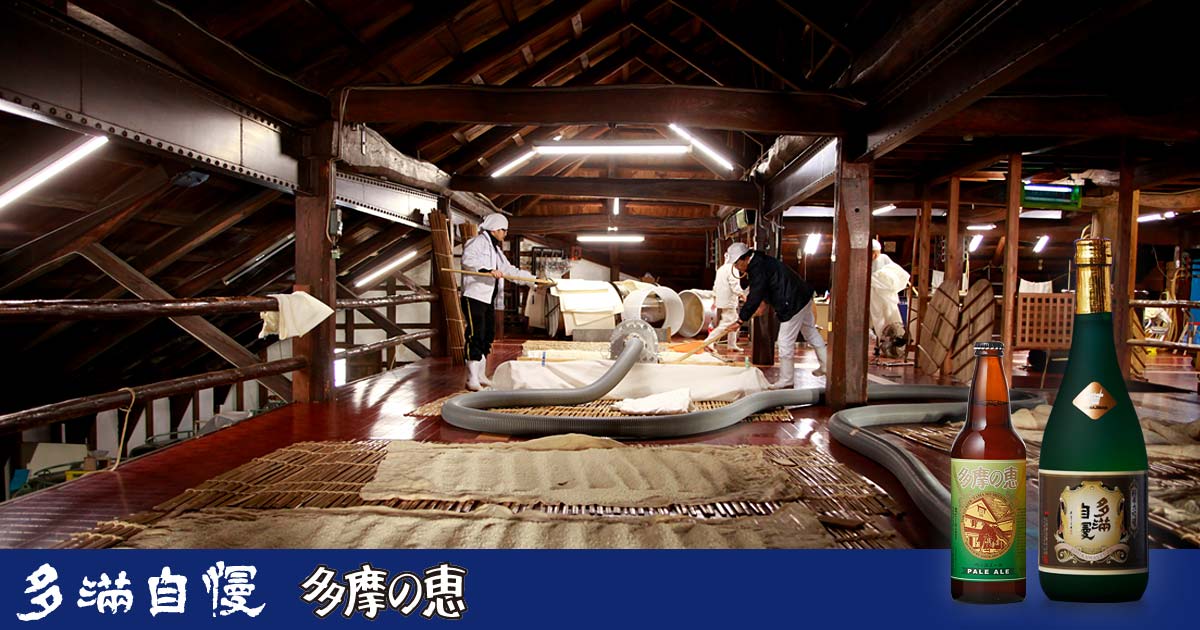
Ishikawa Brewery in Fussa, Tokyo, is the pick for anyone who prefers flexibility over structure. The brewery sits in the Kumagawa area of Fussa, roughly a 15- to 20-minute walk from Haijima Station on the JR Hachiko and Itsukaichi lines. The spacious grounds house brewing buildings, a direct-sales shop, and a restaurant, creating a setting you can stroll through at your own pace.
What defines this brewery is its no-reservation, self-guided format. You pick up a QR pamphlet at the shop and explore the grounds however you like. It suits trips where the schedule is loose: "we were nearby, so we stopped in" or "we have an hour before lunch" rather than a tightly timed itinerary. The experience leans less toward concentrated knowledge transfer and more toward soaking up the atmosphere, the buildings, the shop, and the on-site dining.
Tastings include small pours, with seasonal limited releases among roughly three options, plus non-alcoholic products for those who prefer them. The tour itself is free, and once you factor in the shop and time on the grounds, the whole setup is beginner-friendly. The flexibility makes it a natural fit for families or groups that mix drinkers and non-drinkers.
Operating hours and regular holidays were not confirmed in available sources. Explicit English-language support was also not documented. That said, Ishikawa Brewery's strength is that it does not depend on a structured tour to deliver value. The restaurant and the overall atmosphere of spending time in a brewery compound carry the experience. In terms of pairing with nearby travel, it works better as a layer that enriches a day in the Fussa area than as the sole headliner.
石川酒造
石川酒造公式HP
www.tamajiman.co.jpImayo Tsukasa Brewery
Imayo Tsukasa Brewery in Chuo-ku, Niigata City, is the model student of public-transit sake touring. JR Niigata Station is about 15 minutes away on foot, or roughly 10 minutes by bus, so you can head straight there after stepping off the Shinkansen. A brewery you can walk to from a major station is genuinely convenient. Even on a travel day loaded with luggage, slotting it in feels effortless.
Tours are guide-led and last about 30 to 40 minutes, hitting a sweet spot that is neither rushed nor drawn out. The flow from brewing explanations and brewery context into tastings feels natural, making it an easy win for a first-ever brewery visit. Groups of 15 or fewer visit for free; groups of 16 or more pay 400 yen (~$3 USD) per person, so for individuals and small parties, this is effectively a free experience.
Post-tour tastings follow a sampling format, and non-alcoholic options like amazake (sweet rice drink) are available too. This is where Imayo Tsukasa really shines: station proximity, a guided tour, and tastings all bundled together make it a natural opening move for a Niigata trip. From arrival to the tour, shopping, and lunch, the whole sequence fits comfortably inside about 2.5 to 3 hours, leaving your afternoon wide open.
The address is confirmed within Chuo-ku, Niigata City, with Kagamigaoka 1-1 referenced in separate sources. Hours are listed as 9:00 to 17:00, with closures around December 31 through January 3. A booking page is available on the official site. Standing English support was not confirmed. The brewery pairs well with the surrounding area; Niigata Station's dining and shopping options are right there. For anyone wanting a reliable first sake brewery experience in Niigata, this is the straightforward choice.
Gekkeikan Okura Museum
The Gekkeikan Okura Museum in Fushimi-ku, Kyoto, excels less as a traditional brewery tour and more as an exhibition-style venue where sake culture clicks into place. Fushimi itself is a historic brewing district, and getting around by rail and on foot is simple, making the museum easy to weave into a broader Kyoto day.
The format is self-guided, with exhibits and videos you move through at your own speed. Rather than an up-close production-floor experience, it organizes the tools, history, and brewing process into a clear narrative. As a first stop for someone new to sake, it reduces the chance of feeling lost. After the exhibits, a tasting awaits: choose 3 out of roughly 10 varieties, a format that turns the tasting into an active, preference-discovering exercise rather than a passive pour.
Pricing keeps the barrier low: 600 yen (~$4 USD) for visitors aged 20 and over, 100 yen (~$0.70 USD) for ages 13 to 19, and free for children 12 and under. With the exhibition and tasting bundled at this level, it slots easily into a Fushimi walk. Hours are 9:30 to 16:30, with closures during Obon and the New Year period. The address is confirmed within Fushimi-ku. Access is via rail or bus, though exact walking times from specific stations were not pinpointed in available sources.
On the English front, the exhibits and videos include English subtitle support, which is a practical strength. Because there is no guide to keep pace with, international visitors can move through comfortably alongside Japanese companions. The museum works well as a connective thread linking a Fushimi brewery-district walk, broader Kyoto sightseeing, and a sake-culture primer in a single visit.
Kobe Shushinkan
Kobe Shushinkan in Kobe, Hyogo, targets visitors who want something a notch above the standard brewery stop in the Nada district. Its location in an area well-served by public transit provides a solid baseline, and the connection between Kobe city sightseeing and Nada's sake heritage feels natural. Exact walking times from the nearest station were not confirmed in available sources, but within the context of Nada brewery hopping, it fits comfortably into an itinerary.
The tour comes in two layers: a roughly 30-minute self-guided option and a roughly 60-minute small-group premium tour. The premium tier accommodates 2 to 6 visitors at 3,300 yen (~$22 USD, tax included), positioning both the time investment and the price on the "commit to the experience" end. It is designed as a single arc that runs from the brewery through to premium sake tastings, and that intentional packaging is what sets this brewery apart.
A free tour option also exists, so you can calibrate to the mood of your trip. If you just want a quick sense of the atmosphere, the free route works fine. For an anniversary trip or a visit with fellow sake enthusiasts, the premium course is where the satisfaction lives. This brewery suits a day where you give it your time rather than a speed-run through multiple stops.
Hours vary by course: the self-guided option runs 11:00 to 15:30, while the premium tour has been offered at 16:30 to 17:30 as one example. Closure schedules differ by course type. Multilingual enhancements have been noted in official communications, giving Nada-district visitors a relatively accessible experience. For anyone building a day that connects Kobe sightseeing, Nada sake culture, and a good meal, this brewery is a strong anchor.
Kamotsuru Brewery
Kamotsuru Brewery in Higashihiroshima, Hiroshima, sits in the Saijo district, where the brewery and the townscape are practically the same thing. JR Saijo Station is about 3 minutes away on foot, and that proximity is a genuine asset when tastings are involved. Saijo clusters multiple breweries in a compact area, so beyond going deep at a single spot, you can walk the neighborhood and experience brewery culture as a streetscape.
The main visit centers on an exhibition room and direct-sales shop converted from the original No. 1 storehouse, with video screenings and, depending on timing, guided brewing-house tours and hands-on experience tours. Think of it less as a constant guided-tour operation and more as a facility blending exhibits, a shop, a premium bar, and event-style programming. It maintains the feel of a working brewery while staying easy to drop into.
Tastings here lean on the premium bar's paid menu, with the official page listing a three-variety comparison set (30 ml each) at 500 yen (~$3.50 USD). Experience tours run 2,000 yen (~$14 USD, tax included, cash only), and English support requires a separate interpreter guide arrangement. This is better understood as add-on English support rather than built-in bilingual service.
Hours for the No. 1 storehouse area are listed as 10:00 to 18:00, with last entry at 17:45. Closure schedules differ by facility, so check each one individually. The brewery pairs beautifully with its surroundings. Walking the Saijo sake brewery street, sampling small tastings along the way, is a trip format that Saijo does better than almost anywhere else. Rather than squeezing it into a Hiroshima city day, dedicating a half-day to a full day to Saijo on its own produces a richer experience. As a regional sake town reachable by Shinkansen, it punches above its weight.
日本酒・清酒「賀茂鶴」醸造元|賀茂鶴酒造株式会社 公式サイト
賀茂鶴は広島県の西条で150年続く、日本酒ブランドです。 広島杜氏が、軟水に近い柔らかな中硬水と地元の酒米にこだわり醸した酒は旨味に富み、幅広く食に寄り添います。
www.kamotsuru.jpAiyu Brewery
Aiyu Brewery in Itako, Ibaraki, is less a polished tourist venue and more a place where the weight of the brewing season hits you directly. The brewery is located in Otsuka, Itako, with JR Kashima Line's Itako Station as the nearest stop. Planning your route in advance makes the public-transit connection smoother.
Tours are free and generally require a reservation. The brewing season (roughly November through early April) is when the visit carries the most impact, with mid-January through late February, the daiginjo brewing period, highlighted as the prime window. Dates, times, and reservation requirements shift with the season, so contacting Aiyu Brewery before your visit is the recommended approach.
The surrounding Itako and Roko area pairs well with local sightseeing, and if you plan to taste, arriving by public transit and treating the brewery as a standalone destination makes the most sense. A visit timed to the brewing season is where this brewery delivers its strongest impression.
Daishichi Brewery
Daishichi Brewery in Nihonmatsu, Fukushima, offers the highest tour density among all eight breweries. The address is confirmed within Nihonmatsu City, and access is roughly 5 minutes by car from Nihonmatsu Station on the JR Tohoku Main Line. It is not within easy walking distance of the station, making it the least grab-and-go option in this lineup. But the experience justifies the extra step.
Tours are paid and reservation-only, split into standard and premium tiers. The content shifts between the brewing season and off-season: during the brewing season (October through March), standard tours run about 60 minutes at 1,000 yen (~$7 USD) and premium tours about 80 minutes at 3,000 yen (~$20 USD). Outside the brewing season (April through September), standard tours run about 70 minutes at 1,500 yen (~$10 USD) and premium tours about 100 minutes at 3,500 yen (~$24 USD). Few breweries make the tier distinction this transparent, and the price gap maps directly to experiential depth.
Premium-course tastings include a 7-item tasting flight, giving the comparison genuine substance. Standard tours include tastings too, but anyone who wants to explore flavor seriously will get more from the premium tier. The small-group format suits visitors who want to build understanding through conversation, sake enthusiasts marking a special occasion, and hosts welcoming international guests.
An English interpreter guide is available at 7,700 yen (~$52 USD) per group. Being able to arrange English support at a defined cost is a practical advantage for a serious regional brewery. The brewery is generally closed on Sundays and public holidays, with some Saturday exceptions. Tour reception runs from 10:00 to 16:00. Rather than treating this as a stop within broader Nihonmatsu sightseeing, planning a half-day to full day around a visit to Daishichi itself produces the most satisfying trip.
💡 Tip
Sorting the eight by travel style: for ease of entry, go with Ishikawa Brewery or the Gekkeikan Okura Museum. For station proximity, Imayo Tsukasa, Ozawa Brewery (Sawanoi), and Kamotsuru. For experience density, Kobe Shushinkan and Daishichi. For seasonal atmosphere, Aiyu Brewery.
Last confirmed: March 15, 2026
Area-Based Itinerary Ideas for Weaving Breweries into Your Trip
Breweries that look far apart on a map become much more manageable once you group them by area and build around a rail hub. Sake trips work better when you design a flow connecting the station, neighborhood walks, lunch, and nearby sightseeing rather than just targeting one brewery in isolation. Below are five areas where a half-day to full-day plan comes together naturally using public transit.
Kyoto: Fushimi
Fushimi turns a brewery visit into something more than an extension of Kyoto sightseeing. It becomes time spent savoring the town itself. A convenient starting point is the area around Fushimi-Momoyama Station or Chushojima Station, from which you head toward the Gekkeikan Okura Museum and walk the surrounding brewery streets. The museum's exhibition-and-tasting flow eases you in, and stepping outside afterward connects naturally to the canal-side paths and old townscape.
A half-day model might start with a morning arrival near Fushimi-Momoyama Station, a walk through the neighborhood toward the museum, lunch at a Fushimi restaurant after the visit, and an afternoon stroll along the canal where the jikkokubune boats drift or around the historic Teradaya inn area. Walking between stops feels like "strolling through the town while taking in the scenery" rather than point-to-point commuting, which keeps fatigue low. For souvenirs, the museum shop plus Fushimi's wagashi (traditional sweets) and Kyoto-style gifts round things out.
Stretching to a full day, a morning in Fushimi followed by an afternoon in central Kyoto is a natural split. Fushimi's real charm, in this writer's experience, lies in how the taste of sake rises after walking through a town defined by water. Easy connections back toward Kyoto Station mean even a tight schedule can accommodate the detour.
Hyogo: Nada
Nada rewards a hopping mindset more than a single-stop visit. The district is best approached from the Hanshin line, thinking in terms of brewery-to-brewery walks. Hanshin Mikage or Ishiyagawa stations make good starting points, with Kobe Shushinkan as the anchor and neighborhood walks before and after filling out a satisfying half-day. The density of breweries along the route means each short walk between stops invites another quick detour.
A half-day model starts in the Mikage area in the morning or early afternoon. Anchor the plan with a Kobe Shushinkan visit; if going deep, the roughly 60-minute premium tour works as the centerpiece, with shops and dining on either side for balance. For a lighter touch, use the self-guided option as the core and shift time toward neighborhood exploration, which feels more in keeping with Kobe's rhythm.
Side trips for food lean into Kobe's identity: Western-style restaurants, bakeries, and local specialties pair easily. Souvenirs extend beyond sake to Kobe's baked goods and fermented food products, giving the day a cohesive feel. For a full-day model, morning in Nada and afternoon in Kitano or the harbor area flows smoothly. This area is practical precisely because it anchors around sake culture while connecting seamlessly to urban sightseeing.
Hiroshima: Saijo
Saijo's defining feature is that the breweries are the streetscape. JR Saijo Station is the starting point, and Kamotsuru Brewery is about 3 minutes on foot. That immediacy makes itinerary building simple: step off the train and you are already in the brewery district. Even just walking from the station and taking in the white walls and chimneys conveys a strong sense of Saijo's character.
A half-day model has you heading from the station toward Kamotsuru's No. 1 storehouse area for exhibits, the shop, and the bar, then branching out to walk the brewery street. Distances between stops are short enough to cover without tiring, and lunch or a snack near the station or along the brewery street ties the experience together. Adding a classic Hiroshima treat rounds out the souvenir haul at the station.
For a full day, Saijo works better as a standalone deep dive than when crammed alongside Hiroshima city sightseeing. Spreading the morning through afternoon across breweries, streets, and dining in a relaxed rhythm produces a higher return than rushing between two very different destinations. The station-adjacent brewery zone holds up even when timing is uncertain, making Saijo an excellent regional sake town to slot into a Shinkansen-based itinerary.
Niigata Station Area
Niigata's strength is sheer clarity: walk from the station, reach a brewery. JR Niigata Station is the starting point, and Imayo Tsukasa Brewery is about 15 minutes on foot. You can head over the moment you arrive by Shinkansen, which means it works on arrival days and departure days alike. The tour lasts about 30 to 40 minutes, so it never monopolizes your schedule.
A half-day model flows most naturally from stepping off the train, walking to Imayo Tsukasa, completing the tour and tastings, browsing the shop, and returning to the station area for lunch. The entire sequence, from the walk to shopping to eating, fits inside roughly 2.5 to 3 hours, leaving your afternoon free. Niigata is a city with serious gravitational pull around food. Pairing the morning brewery visit with a rice-country lunch or fresh seafood makes the sake experience feel like part of a complete trip.
Souvenirs are easy to consolidate near the station: grab a bottle at the brewery, then add rice crackers and fermented specialties at the station shops. For a full-day version, morning at Imayo Tsukasa followed by an afternoon of Niigata city strolling and cafe time wraps up without any strain. The brewery works equally well as the main act or the opening number, and that versatility is the Niigata station area's real selling point.
Tokyo: Tama Area
For a sake brewery outing from Tokyo, the Tama area delivers a surprising shift out of the everyday despite being close to the city. Rather than one dense cluster, the approach here is to choose between "nature-forward Ome" and "leisurely-grounds Fussa" based on what you are after. If you want riverside scenery woven in, start from Sawai Station and visit Ozawa Brewery. If you want a laid-back, unstructured visit, head to Ishikawa Brewery in the Fussa area.
A half-day from Sawai Station comes together easily. The walk from the platform to Ozawa Brewery takes about 3 to 5 minutes. After the tour, add time at Sawanoi-en garden and a walk along the Tama River, and on-site time settles in around 2.5 to 3 hours. Touring the brewery, tasting sake, and unwinding by the river make for a well-rounded day trip from central Tokyo. Lunch fits naturally into the riverside setting, and the brewery shop covers souvenirs.
Ishikawa Brewery, on the other hand, runs a no-reservation, self-guided format, which means you do not have to nail down exact times. The walking distance from the station has not been confirmed, but as an area concept, the "spend time on the brewery grounds in Fussa" model works. Combining the on-site dining with an unhurried visit turns the experience into time spent in a brewery setting rather than a brewery tour per se. It suits families and groups where not everyone drinks.
Tama's appeal is that you cross into a different atmosphere without going far. A relaxed morning departure still produces a full half-day, and extending to a full day adds nature walks, cafes, and local food. The tempo here is distinct from urban sightseeing, making it a strong option for filling "one more day" during a Tokyo stay.
Brewery Tour Etiquette and What to Bring
A sake brewery tour is less a sightseeing attraction and more a visit to a working food production facility. Approaching it with that mindset instantly sharpens your behavior. Avoiding strong perfume or hair products matters not only because scents interfere with tasting but because the fermentation environment at some breweries is sensitive to outside odors and compounds. The occasional request to skip natto or certain fermented dairy the day before or day of your visit stems from the same concern: respect for fermentation and sanitation. Experienced sake drinkers might think "that seems excessive," but treating it as courtesy toward the production floor rather than a flavor rule puts it in the right frame.
Inside the brewery, sticking to the designated visitor route protects both safety and trust. Walk only where the tour takes you, follow staff instructions, and stay clear of machinery, tanks, and restricted areas. Some breweries operate out of centuries-old buildings; others have active equipment running at full speed. The footing and corridor width can be tighter than they appear. Even at a self-guided venue like Ishikawa Brewery, the line between open and off-limits areas exists. At guide-led breweries like Imayo Tsukasa or Kobe Shushinkan, not interrupting the flow of the guide's explanation is itself a form of etiquette.
If photography matters to you, confirm the policy upfront. Breweries are photogenic, but production areas often include non-public sections, and images of employees may be restricted. A common setup allows shooting in exhibition areas and photo spots but prohibits it in the brewing rooms. Flash restrictions apply in some spaces, and forcing a bright shot in a dim corridor invites trouble. Focusing on exteriors, exhibits, and shop areas keeps the experience smooth.
Footwear affects comfort more than you might expect. Sake brewery tours call for shoes that are easy to walk in and easy to slip on and off. Some routes require shoe removal or switching partway through, so lace-up shoes that need retying become a hassle. Heels and sandals are poor choices. Slippery floors, uneven steps, and transitions between indoors and outdoors make practical footwear more important than it sounds. On Tama-area trips where you walk along the river after the tour, the right shoes make a tangible difference in how tired you feel.
ℹ️ Note
When tastings are on the schedule, public transit is the natural match. Breweries within walking distance of a station, like Imayo Tsukasa near Niigata Station and Kamotsuru near Saijo Station, let you transition straight from tasting to town walking without rearranging the plan.
Keep your bag on the smaller side. A compact bag maneuvers better in narrow corridors, and it stays out of the way during tastings and shopping. Brewery interiors can feel noticeably cooler or warmer than outside, so one layer you can add or remove helps. In winter, even thin hand coverage prevents the numb-finger struggle when trying to take notes or operate your phone. Bring water regardless of whether you plan to taste, and a mask can provide peace of mind during peak visitor times.
Tastings are absolutely part of the enjoyment, but one point is non-negotiable: if you are tasting, do not drive. Sake brewery trips are inherently better on foot, by train, or by bus. Side trips come more naturally, and travel times stay predictable. Because the whole point is savoring, arranging comfortable transportation to and from the brewery lets the satisfaction carry all the way through.
Who Should Go: Solo Travelers, Couples, and International Visitors
Picking a Brewery for a Solo Trip
When building a solo sake brewery visit, prioritize breweries that are easy to reach from the station and have a clear booking process. Even a strong interest in sake can be undermined by complicated transfers that throw off a half-day plan. A solo traveler might start the shortlist with Imayo Tsukasa Brewery, the Gekkeikan Okura Museum, and Kobe Shushinkan. Imayo Tsukasa is about 15 minutes on foot from JR Niigata Station, with a 30- to 40-minute tour. Stopping by after arrival, then heading to lunch, creates a flow that never drags even when you are on your own.
The Gekkeikan Okura Museum, with its self-guided exhibition format, pairs perfectly with solo travel because there is no group to keep pace with. After the museum, you walk straight into Fushimi's streets, so the visit never ends with "saw the brewery, now what?" Kobe Shushinkan offers both the 30-minute self-guided option and the 60-minute small-group premium tour, letting you match the depth to your schedule. The premium tour in particular holds its density at about 60 minutes even for a solo participant.
For solo trips, not lingering too long at one brewery also preserves schedule flexibility. Keeping the total on-site time, including the tour, tasting, and shop, to about 60 to 90 minutes leaves room for lunch and a walk before or after. Too short feels thin; too long makes the next leg heavy. That window works best. Anchoring around a station-adjacent, easy-to-book brewery lets you fit a sake experience into the day without sacrificing freedom.
Planning a Couples' Trip
For couples, overall satisfaction rises when you choose an area where walking and dining pair naturally with the brewery rather than optimizing for the brewery alone. Fushimi, Nada, and Saijo stand out. All three resist the "tour ends, now what?" feeling because neighborhood strolls and meals fit seamlessly on either side, keeping conversation flowing.
Fushimi puts the Gekkeikan Okura Museum at the center of a walkable brewery townscape. Moving from exhibits to the canal and surrounding streets feels seamless, and the visit folds into a broader Kyoto day without friction. Nada anchors around Kobe Shushinkan in a sake-district atmosphere that extends naturally to dining afterward. Choosing the premium tour adds a touch of occasion, matching anniversary or weekend-getaway energy. Saijo places Kamotsuru Brewery steps from the station, keeping travel stress low while the brewery ambiance and walkable streets deliver in tandem.
For couples, scheduling the brewery visit in the afternoon and following it with a walk through shopping streets or along the waterfront builds a smooth rhythm. A light morning of neighborhood browsing, a brewery tour and tasting as the day's anchor, then dinner: the impressions from the guide's explanations fuel conversation straight through to the meal. Picking based on "is there a good walking area?" and "is there a natural transition to dinner?" serves two-person trips better than picking based on tour quality alone.
Evaluating Options for International Visitors
When traveling with guests from overseas, the quality of the on-the-ground experience depends less on a brewery's name recognition and more on whether the language support structure is visible in advance. Strong candidates include Daishichi Brewery, Kamotsuru Brewery, and Ishikawa Brewery. Daishichi offers an English interpreter guide at 7,700 yen (~$52 USD) per group, suited to visits where comprehension matters. Kamotsuru also provides interpreter guide arrangements as a separate add-on, pairing well with its experience-tour format. Ishikawa Brewery works differently: the self-guided format does not rely on detailed spoken explanations, so the grounds-based experience holds up without language support.
For international visitors, looking at how much you can arrange in advance is more practical than checking a binary "English: yes/no." Confirming the preferred language, accepted payment methods, and age requirements for tastings covers the three areas most likely to cause day-of confusion. Kamotsuru, for example, notes that some experience fees and tasting menus accept cash only, which is useful to communicate ahead of time to cashless-oriented travelers. The Gekkeikan Okura Museum's English-subtitled exhibits maintain experience quality even without a guide, making it accessible in a self-guided setting.
When the group includes non-drinkers, designated drivers, or children, breweries with non-alcoholic alternatives simplify itinerary building considerably. Ozawa Brewery offers yuzu cider for visitors who skip the tasting, and Ishikawa Brewery carries non-alcoholic products. These breweries keep the day from becoming exclusively about sake, holding group-wide satisfaction steady. Evaluating international readiness means looking beyond language to who is drinking and who is not, then choosing accordingly.
Wrapping Up: Start by Booking One Brewery You Can Reach by Train
For your first sake brewery visit, choosing a place that is easy to reach by train, simple to book, and offers a guided tour produces the most reliable experience. Once you have a candidate in mind, pick one area you can comfortably reach by public transit, then check the official page for tour dates, tasting details, and reservation requirements to lock in the plan. Build the day around not driving if tastings are part of it, and bundle lunch, accommodation, or a neighborhood walk alongside the visit so the brewery functions as the core of a complete trip.
The practical details in this article are organized around a last-confirmed date of March 2026, but reception procedures and offerings shift, so always finalize with each brewery's official information before booking. If you are thinking about how to build a full trip around brewery visits, pairing this with a public-transit-focused itinerary guide or a one-night/two-day model course can help the planning come together faster.
Related Articles
7 Best Weekend Solo Trip Destinations in Japan for Your 30s | By Travel Time & Budget
For busy professionals in their 30s, a weekend solo trip is less about going far and more about whether a short getaway actually resets your mind. These seven destinations in Japan offer the right mix of recovery, flavor, and calm for a weekend escape.
15 Best Regional Food Destinations in Japan: Local Specialties by Prefecture
When researching what to eat on a trip to Japan, terms like gotouchi gourmet, kyodo ryori, and meibutsu ryori can blur together, making it hard to pick a destination. This guide sorts out those distinctions using official sources such as the Ministry of Agriculture's regional cuisine database, Japan Tourism Agency statistics, and B-1 Grand Prix data, then narrows the field to 15 prefectures for easy trip planning.
10 Hidden Natural Gems in Shikoku, Japan — Chosen for Scenery and Serenity
Planning a quiet nature-focused trip through Shikoku? Rather than defaulting to the usual tourist spots, seek out places where you can actually slow down and take in the landscape. Coverage note: the author visited and verified these spots between February and March 2026 (checking official sources for the latest info is always recommended).
10 Best Solo Onsen Trips in Japan: Quiet Inns Where You Can Truly Unwind
A satisfying solo onsen trip in Japan comes down to choosing an inn that matches how you want to spend your time, rather than chasing famous hot spring resort names. Narrow your search by room count, dining style, private baths or in-room open-air baths, solo-traveler friendliness, access, and budget, and strong candidates become remarkably clear.