
10 Hidden Natural Gems in Shikoku, Japan — Chosen for Scenery and Serenity
10 Hidden Natural Gems in Shikoku, Japan — Chosen for Scenery and Serenity
Planning a quiet nature-focused trip through Shikoku? Rather than defaulting to the usual tourist spots, seek out places where you can actually slow down and take in the landscape. Coverage note: the author visited and verified these spots between February and March 2026 (checking official sources for the latest info is always recommended).
If you are planning a nature-driven trip through Shikoku — the smallest of Japan's four main islands — skipping the crowded standards and targeting places where the scenery genuinely holds your attention is the fastest route to satisfaction. Coverage note: the author visited and verified key spots between February and March 2026 (always cross-check official sources for the most current details). This guide narrows down 10 hidden natural spots across Shikoku's four prefectures — Tokushima, Kagawa, Ehime, and Kochi — selected strictly for landscape and natural beauty.
To make comparisons practical, each spot includes best season and time of day, ease of access by car or public transit, estimated visit duration, and things to watch out for. Shikoku covers more ground than most visitors expect, and a two-night, three-day itinerary that tries to hit everything turns into a trip dominated by driving. The smarter approach is choosing an area that fits what you want to see, rather than checking off all four prefectures.
Whether you want to sit by the ocean, walk alongside clear streams, or stand on a mountaintop with an unbroken view — this guide is structured so you can build a route around your priorities without overcommitting.
What Makes a "Hidden Gem" in Shikoku? How These Differ from the Usual Spots
The term hidden gem here does not simply mean "unknown." In this article, it refers to nature and scenery spots across Shikoku's four prefectures (Tokushima, Kagawa, Ehime, and Kochi) where you can enjoy the view at a calmer pace compared to the popular destinations. Even spots that have gained attention on social media or in travel publications qualify — as long as they lack the concentrated foot traffic of hot spring towns or major shrine approaches, and the experience centers on watching, walking, or photographing.
The difference from mainstream attractions is not about quality. It is about density of experience. Dogo Onsen (Ehime) and Kotohira-gu Shrine (Kagawa) are hard to skip on a Shikoku trip, and rightly so. But on days when you want to dodge the crowds or reset after a morning of shrine-hopping and town-walking, a seaside station, a gorge, or a hilltop park — places that let you focus quietly on the view — fit perfectly. Hidden gems are not replacements for the classics. They are the counterweight that sets the tempo for your trip.
Shikoku is the smallest of Japan's four main islands, yet travel distances add up faster than expected. The Shikoku Tourism official guide on route planning puts a full loop at roughly 1,000 km. That is exactly why, even when picking hidden spots, it is more practical to ask "can I pair this with another place in the same or neighboring prefecture?" rather than "how many more spots can I fit in?" The 10 entries in this article are distributed across all four prefectures, balanced across sea, mountain, and gorge.
What to Look for When Comparing Against the Classics
Hidden spots are hard to evaluate by name alone. So this article aligns every entry along the same axes: best season and time of day, visit duration, whether car or public transit works better, what to look for when shooting photos, and what to watch out for on the ground. A seaside spot shines in the late afternoon; a gorge is best from fresh green season through autumn color; a mountaintop rewards morning visits when visibility peaks. These differences feed directly into itinerary planning.
With these comparison points, the word "scenic" gets specific. If you want to enjoy the journey itself, including a short ferry ride, an island landscape like Megi Island — about 20 minutes by boat from Takamatsu Port — becomes a candidate. If you would rather walk through nature over an extended stretch, Nametoko Gorge with its roughly 12 km of continuous valley, or the hike to Yukiwa Falls (about 40 minutes one way), gives you something measurable. And if sheer mountain scale is what you are after, Mt. Ishizuchi at 1,982 m speaks for itself.
The Scope of "Hidden" in This Article
This selection excludes hot spring towns, temples, and shopping streets. The focus is strictly on places where nature and scenery take center stage — specifically, three types: gorges and waterfalls, mountains and highlands, and ocean and islands. Gorges and waterfalls draw you in with water clarity and cool shade. Mountains and highlands deliver views created by elevation. Ocean and island spots offer sunset panoramas and open space. The question that matters for your trip is not "which is famous?" but "what kind of time do I want to spend?"
💡 Tip
If walking along water appeals to you, go with gorges and waterfalls. For sweeping views, mountains and highlands. For a relaxed photography day, sea and island spots. Shikoku is large enough that deciding on landscape type before picking destinations makes your trip far easier to organize.
Quantitative details in this article are limited to numbers that actually help you plan. Mt. Ishizuchi at 1,982 m, Oboke-Koboke stretching roughly 8 km, Nametoko Gorge running about 12 km, the ferry to Megi Island taking about 20 minutes, and the Unpenji Ropeway round trip at 2,200 yen (~$15 USD) for adults — these are figures that connect directly to what you will feel on the ground or how you will structure your day. Hidden-gem guides that rely on impressions alone tend to be difficult to use in practice, so this article builds comparisons on measurable data.
The 10 spots ahead are not simply a list of quiet places. They are locations that slot easily before or after a major destination, where the payoff in scenery is predictable relative to travel effort, and where the purpose — photography, hiking, contemplation — is clear. What makes Shikoku's hidden gems interesting is that they rarely stay in a supporting role. They tend to become the highlight that defines your day.
10 Hidden Natural Spots in Shikoku
Nametoko Gorge (Ehime) — A 12 km Valley Walk and Yukiwa Falls, Where the Sound of the Stream Is Yours Alone
Official name: Nametoko Gorge / Prefecture: Ehime / Appeal: roughly 12 km of granite gorge with crystal-clear water, plus accessible Yukiwa Falls / Why it qualifies as hidden: visitors spread across the full length of the valley, keeping it quiet throughout / How it differs from the classics: this is not a "arrive and done" hot spring town or observation deck — the scenery deepens the farther you walk.
Nametoko Gorge stands out among Ehime's natural sites for its ability to reset your headspace through walking. Water glides across flat rock surfaces, and a cool stillness fills the entire valley. Yukiwa Falls anchors the experience, but the point is not to rush toward the waterfall basin. The sounds of the stream and the textures of the rock along the way deserve as much attention. The one-way walk to Yukiwa Falls takes about 40 minutes, making it easy to fit into a trip as a light hike.
Best season runs from fresh green through autumn foliage. Mornings work well for walking — the light is softer, and the water surface shows more detail. Time estimate: a quick look near the entrance is brief, but including the Yukiwa Falls round trip pushes it toward half a day. In my experience, the number of places along the stream where you want to stop means you move slower than the clock suggests.
Access is realistic by car, with a rental from the Uwajima or Matsuyama direction as the standard approach. By air, Matsuyama Airport is a natural starting point for heading south into the prefecture; the airport's official site has details. Public transit involves limited frequency and connection constraints, so expect to piece together trains and buses to reach the area.
Watch out for footing around the rocks and water. Wet rock is more slippery than it looks, and water levels can rise after rain. Sturdy walking shoes are a prerequisite — sandals will not work here.
Essential Info
| Item | Details |
|---|---|
| Location | Nametoko Gorge area, Uwajima City / Matsuno Town, Kitauwa District, Ehime |
| Hours | Natural area — daytime visits recommended |
| Closed | — |
| Admission | Free to explore |
| Parking | Available |
| Official info | Check local tourism offices for Uwajima City and Matsuno Town |
松山空港
www.matsuyama-airport.co.jpTonaru Zone (Ehime) — Industrial Ruins on a Mountain Slope, Called "the Machu Picchu of the East." Stone Walls Veiled in Mist
Official name: Tonaru Zone / Prefecture: Ehime / Appeal: Besshi Copper Mine heritage with imposing stone masonry on a mountainside / Why it qualifies as hidden: even as awareness grows, the mountain location means casual drop-ins are rare / How it differs from the classics: less a history exhibit and more a landscape-driven site where ruins, mist, and light merge into a single scene.
What makes the Tonaru Zone compelling is that it works as landscape even though it is industrial heritage. Stone walls, mine shaft remnants, and structures hugging the mountainside come together as a unified scene within the mountain's silence. The "Machu Picchu of the East" label gets thrown around, but standing there in person, what registers is not spectacle — it is a sense of weight in the air. Foggy days are especially striking, and this is a place that tends to feel deeper on-site than in photographs.
Best season is spring through autumn. Clear days give reliable visibility, but if atmosphere is the priority, a misty morning is hard to beat. Time estimate is roughly half a day combining the overlook and walking tour. Reading the interpretation panels along the way adds more than a quick stop would.
Access is by car. The main route climbs up from the Niihama side, and the realistic air gateways are Matsuyama Airport or Takamatsu Airport with a rental car. Rather than trying to reach it by public transit alone, combining it with other Besshi Copper Mine sites in a driving loop is far more efficient.
Be aware of mountain road driving conditions and sudden weather shifts. Fog days offer great scenery but reduce visibility. Stay within marked areas around the ruins, and do not climb on the stone structures.
Essential Info
| Item | Details |
|---|---|
| Location | Tonaru area, Niihama City, Ehime |
| Hours | Outdoor viewing area — daytime visits recommended |
| Closed | — |
| Admission | Free to visit |
| Parking | Available |
| Official info | Check Niihama City and Besshi Copper Mine tourism guides |
Shimonada Station (Ehime) — A Seaside Station Where the Ocean Meets the Platform. Waiting for Blue to Turn Orange Is the Real Reward
Official name: Shimonada Station / Prefecture: Ehime / Appeal: a platform that opens directly onto the sea, with stunning sunset views / Why it qualifies as hidden: though well-known, the experience is about waiting, so the bustle of a typical tourist site does not last / How it differs from the classics: not a place for activities — this is a station where the time flowing between trains and ocean is the experience itself.
Shimonada Station is a place where the act of waiting for the view leaves a stronger impression than the view alone. The sea stretches out at nearly the same eye level as the platform, and as the light softens, the colors shift quietly from blue into amber. I find that the most generous part of visiting a place like this is the half hour before you even start taking pictures. Timing your visit around a train arrival has its appeal, but the gaps between trains are when you feel the station's breathing room most.
The prime window is late afternoon through sunset. A stay of one to two hours allows a comfortable pace. Rushing through reduces it to a photo spot and nothing more — you miss the atmosphere that makes the station distinctive.
For public transit, the JR Yosan Line is the standard access; train schedules are available through JR Shikoku's Yosan Line timetable. Driving works too, though parking during sunset hours requires some awareness. The station pairs well with a day trip from central Matsuyama or Dogo Onsen (hot spring bath area), and also fits as a stop on the way toward western Ehime.
Remember that this is an active rail line. Avoid risky photography at the platform edge or leaning toward the tracks. Consideration for nearby residences and local roads is part of respecting this station's character.
Essential Info
| Item | Details |
|---|---|
| Location | Okubomachi, Futami, Iyo City, Ehime |
| Hours | Per station operating hours |
| Closed | None |
| Admission | Free access |
| Parking | Limited nearby options |
| Official URL | JR Shikoku timetable: https://timetable.jr-odekake.net/line-timetable/2469 |
| Crowding | Medium to high (especially around sunset when visitors concentrate) |
区間時刻表 | JRおでかけネット
timetable.jr-odekake.netUnpenji Mountaintop Park (Kagawa) — A Sky-High Park Reached by Ropeway. Sea of Clouds, Swings, and the Quiet of a Pilgrimage Temple
Official name: Unpenji Mountaintop Park / Prefecture: Kagawa / Appeal: mountaintop panoramas via ropeway, potential sea-of-clouds views, and the calm atmosphere of a Shikoku pilgrimage temple nearby / Why it qualifies as hidden: less concentrated foot traffic than Konpira-san, with visitors spreading out across the summit / How it differs from the classics: instead of the sense of accomplishment from a shrine approach climb, this is about the wide-open views that altitude creates.
Unpenji Mountaintop Park is the kind of spot that changes your trip's rhythm the moment you step off the ropeway. The rapid elevation gain means the view suddenly opens up. The swing is what you see on social media, but that is only part of it — the proximity of a Shikoku Pilgrimage temple means play and devotion coexist in the same space. Clear days bring long-distance views, and with the right conditions, a sea of clouds.
Best season is spring through autumn, with mornings offering the clearest air. Time estimate is roughly half a day covering the ropeway round trip and a walk around the summit. This is not a place for packing in activities, so a relaxed pace split between the overlook and walking around fits best.
Car access is most convenient, and the park fits naturally into a drive through western Kagawa or western Tokushima. By public transit, plan for connections beyond the nearest station. The ropeway runs from 7:20 a.m. with the last descent at 5:20 p.m. (seasonal variation applies), and a round trip costs 2,200 yen (~$15 USD) for adults, 1,650 yen (~$11 USD) for middle and high school students, and 1,100 yen (~$7.50 USD) for elementary students. Working backward from the last descent to set your summit time makes planning easier.
Note that temperatures feel lower and wind stronger at the top. On days when you are prioritizing the view, wind protection pays off. Around the swing, patience with queuing and photography etiquette keeps the experience pleasant for everyone.
Essential Info
| Item | Details |
|---|---|
| Location | Unpenji summit area, on the border of Kan'onji City (Kagawa) and Miyoshi City (Tokushima) |
| Hours | Ropeway: 7:20 a.m. – last descent 5:20 p.m. (seasonal variation) |
| Closed | — |
| Admission | Ropeway round trip: 2,200 yen (~$15 USD) adults, 1,650 yen (~$11 USD) middle/high school, 1,100 yen (~$7.50 USD) elementary |
| Parking | Available |
| Official info | Check Unpenji Ropeway official site |
Megi Island (Kagawa) — A 20-Minute Ferry from Takamatsu Port. Gentle Seto Inland Sea Scenery and Island Time
Official name: Megi Island / Prefecture: Kagawa / Appeal: a quiet island reachable in about 20 minutes from Takamatsu Port, with seaside village atmosphere / Why it qualifies as hidden: draws less concentrated tourist traffic than Naoshima or Shodoshima / How it differs from the classics: not a large-scale island tour — this is about minimizing travel distance and making "time spent on the island" the main event.
Megi Island hits the right distance for anyone who wants an island trip through the Seto Inland Sea without a heavy commitment. The roughly 20-minute crossing from Takamatsu Port is short enough for a half day, yet the feeling of having actually arrived on an island comes through clearly. Walking along the shore, gazing at the village, listening to the wind — these understated activities are what suit this island. The less you try to fill your schedule, the more satisfying it becomes.
Best season is spring, autumn, or a clear day in early summer. Midsummer offers beautiful ocean color, but stretches without shade call for some planning. Time estimate is half a day to a full day. The ferry crossing itself carries a sense of travel, so even a limited itinerary on the island does not feel thin.
Public transit starts with a boat from Takamatsu Port. The port is about a 5-minute walk from JR Takamatsu Station; check individual ferry operator sites for schedules and routes. If driving, park near the port and cross on foot — on the island, walking and cycling are the natural fit. By air, fly into Takamatsu Airport and connect to the city center, then to the port.
Keep in mind that ferry schedules shape your day. Once you cross, "waiting for the next boat" becomes part of island time. In the village, you are entering a living community — be mindful about photography near private homes.
Essential Info
| Item | Details |
|---|---|
| Location | Megimachi, Takamatsu City, Kagawa |
| Hours | Island is freely accessible; ferry runs on operator schedules |
| Closed | Per ferry operator schedule |
| Admission | Ferry fares per operator |
| Parking | Use parking near Takamatsu Port |
| Official URL | Ferry operators from Takamatsu Port (e.g., https://www.shikokukisen.com/stand/) |
四国汽船株式会社
四国汽船株式会社の公式ホームページです。フェリー、高速旅客船、旅客船の乗り場や、ダイヤ情報、運賃の情報をご確認いただけます。
www.shikokukisen.comOboke and Koboke Gorges (Tokushima) — An 8 km V-Shaped Canyon with Emerald Water and Dramatic Rock Formations. River Cruises Available
Official name: Oboke and Koboke / Prefecture: Tokushima / Appeal: roughly 8 km of V-shaped canyon along the Yoshino River, with deep water color and striking rock walls / Why it qualifies as hidden: less name-driven tourism than the Iya Valley, and often treated as a pass-through, which preserves on-site quiet / How it differs from the classics: the gorge's raw geology, not the surrounding village experience, is the main attraction.
Oboke and Koboke carry impact even viewed from a car window or a bridge, but the impression truly depends on how you read the water's color. Some days it leans emerald; other days it sinks into a deep green. The V-shaped canyon stretching roughly 8 km delivers a concentrated sense of Shikoku's mountain depth in a compact visit.
Best season is the fresh-green and autumn-foliage periods. Angled light from mid-morning through early afternoon brings out the best visibility. Time estimate: viewpoints alone can be brief, but adding a river cruise pushes it toward half a day. Driving along the gorge is satisfying on its own, making this an effective midpoint on a day traveling between western Tokushima and Kochi.
Public transit works through JR Dosan Line's Oboke Station. The Dosan Line makes this one of the more accessible mountain gorge destinations for train travelers. By car, the gorge is reachable from both Tokushima City and Kochi City as a scenic mountain drive — useful for days when you want to increase the landscape density on a Shikoku loop.
Watch your footing around viewpoints, and stay aware of your surroundings along the riverbank. Gorge photography tends to draw your focus forward, so checking behind you matters. If taking a river cruise, be prepared to adapt to operating conditions on the day.
Essential Info
| Item | Details |
|---|---|
| Location | Yamashiro-cho area, Miyoshi City, Tokushima |
| Hours | Outdoor scenery — daytime visits; river cruise per operator schedule |
| Closed | Varies by facility |
| Admission | Gorge viewing is free; river cruise per operator |
| Parking | Nearby lots available |
| Official info | Check Miyoshi City / Oboke Gorge tourism guides |
Nikobuchi (Kochi) — A Pool That Shifts from Blue to Green with the Light. A Tiny Jewel Box of Niyodo Blue
Official name: Nikobuchi / Prefecture: Kochi / Appeal: water that transitions from blue to green depending on the angle of light, concentrated in a compact pool / Why it qualifies as hidden: well-known within the Niyodo River basin but not a large tourist area, limiting visitor numbers at any given time / How it differs from the classics: not a wide canyon panorama — this is a "single-point" scenic wonder where all attention focuses on one pool.
Nikobuchi is not a vast panorama. Instead, the color shifts of the water are packed tightly into a small space. It is often cited as the iconic example of Niyodo Blue, but the reality is less monochrome than the name implies — the color sways between blue and green as the hour and light change. When you peer into the water, the scene completes itself, and your voice drops to a whisper almost involuntarily.
The best window is midday through early afternoon on a sunny day. That is when light enters the pool and the blue becomes vivid. Time estimate: a short visit is enough for the pool itself, but factoring in the drive and walk from parking, building half a day into your itinerary keeps things comfortable.
Access is by car. Driving from Kochi City toward the Niyodo River basin and including Nikobuchi as part of the route is the natural approach. Reaching it by public transit alone is a difficult proposition. The drive from Kochi Ryoma Airport westward also connects well.
Be careful on the stairs, slopes, and waterside. Popularity has brought more visitors, but it remains a natural pool. This is not a spot for jumping in or swimming — it is meant for quiet observation.
Essential Info
| Item | Details |
|---|---|
| Location | Shimizu-Kamibun area, Ino Town, Agawa District, Kochi |
| Hours | Daytime visits recommended |
| Closed | None |
| Admission | Free to visit |
| Parking | Limited nearby |
| Crowding | Medium (increases on weekends and sunny days) |
| Official info | Check Ino Town / Niyodo River basin tourism guides |
Akano Rest Area (Kochi) — Pacific Horizon and the Curves of Route 55. A Sunset Drive Photo Stop
Official name: Akano Rest Area / Prefecture: Kochi / Appeal: Pacific Ocean views combined with the photogenic curves of National Route 55 / Why it qualifies as hidden: not a tourist facility — it tends to be driven past as "scenery along the road" / How it differs from the classics: you are not entering a destination — the road you have been driving becomes part of the view.
Akano Rest Area is where a coastal drive along Kochi's shoreline crystallizes into a single frame. Horizon views are available at any seaside point, but here National Route 55 curves into the composition, making both the ocean and the road co-stars. In the late afternoon, angled light separates the road lines from the ocean color cleanly. Even a short stop delivers satisfaction, yet the impression stays with you.
The prime window is late afternoon through sunset. Time estimate is 15 to 30 minutes as a quick break. If you are shooting, though, waiting a bit for the right cloud movement or a car passing through the curve can elevate the composition.
Access is by car, fitting naturally into a day driving eastern Kochi. The strength is that it slots into the flow toward Aki or Muroto without a detour. Building this spot into a public transit itinerary is less straightforward. It also works early in a coastal drive east from Kochi Ryoma Airport.
Remember that this is a roadside rest area. Enjoy the view while staying aware of where you park and where you stand — stepping into the roadway for a photo is something to avoid.
Essential Info
| Item | Details |
|---|---|
| Location | Akano-Ko area, Aki City, Kochi |
| Hours | Outdoor spot — daytime to evening |
| Closed | None |
| Admission | Free |
| Parking | Available |
| Official info | Check eastern Kochi tourism guides |
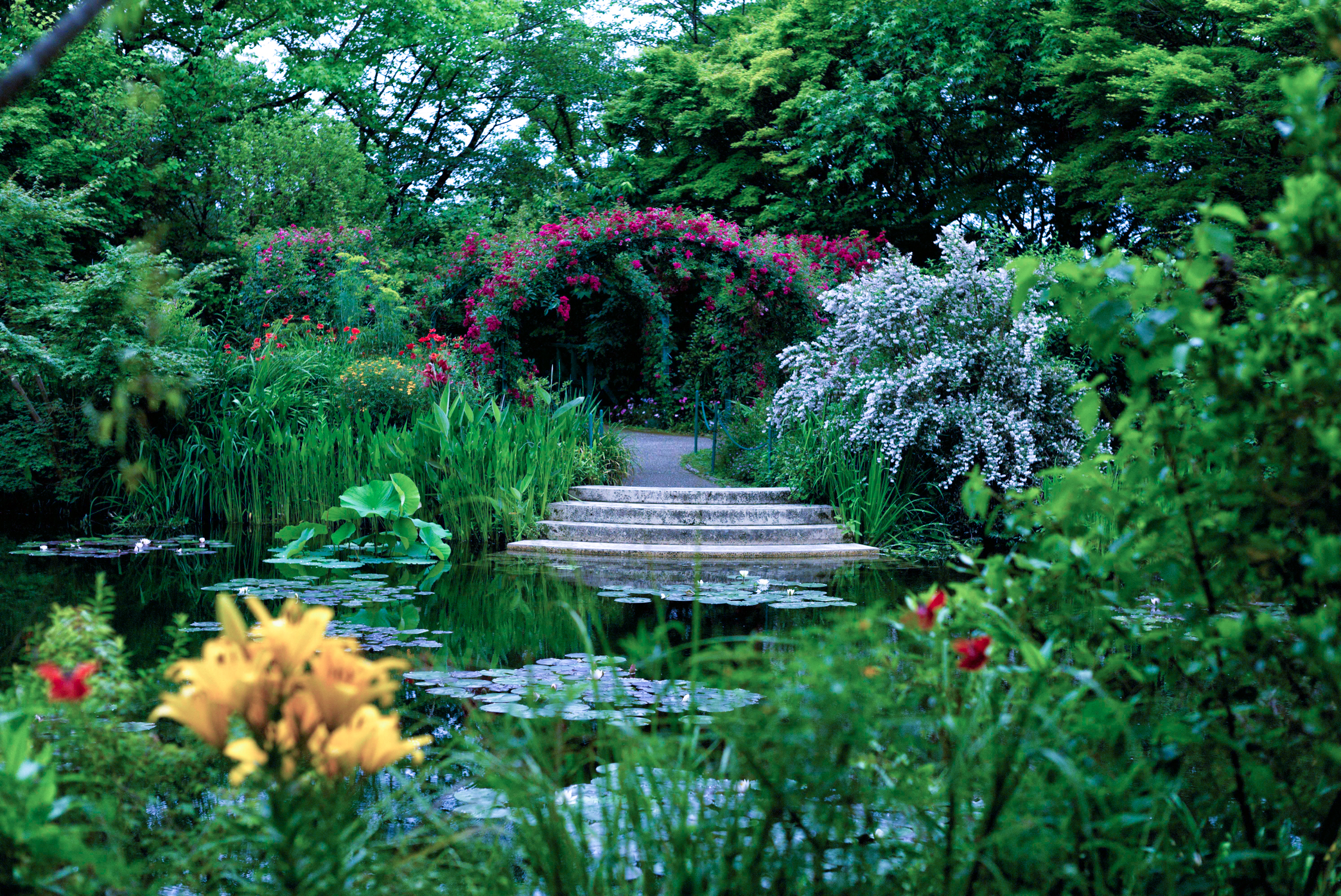
Monet's Garden Marmottan, Kitagawa Village (Kochi) — A Garden of Light and Water. Rich Subjects Even in the Rain
Official name: Monet's Garden Marmottan, Kitagawa Village / Prefecture: Kochi / Appeal: the Water Garden and Flower Garden create layered color and water-surface compositions ideal for photography / Why it qualifies as hidden: overshadowed by Kochi's dramatic ocean and river scenery, so visitor density stays manageable / How it differs from the classics: not a grand natural vista — this is a "garden photography trip" where every few steps reveal a new composition.
Monet's Garden Marmottan in Kitagawa Village delivers satisfaction in a completely different register from raw natural scenery. Water surfaces, bridges, layered flowers, raindrops lingering on leaves — all of it becomes subject matter. Sunny days are beautiful, of course, but what sets this garden apart is that overcast skies and light rain barely diminish its expressiveness. On travel days when the weather does not cooperate, a place like this reveals its true worth.
Best season is spring through autumn when flowers are abundant, with the blue water lilies typically visible from late June through early November. Time estimate is 60 to 120 minutes. Rushing through the highlights misses the point — a full loop of the garden paths with frequent stops captures the character best. Once you start photographing, an hour disappears quickly.
Access is convenient by car and fits into a day exploring eastern Kochi. By public transit, there are village bus connections from the Nahari Station side. Pairing this with coastal scenery adds depth to an eastern Kochi itinerary.
Note that the garden is maintained as a viewing space. Staying out of restricted areas is expected. Stone paths and garden walkways get slippery in rain, and it is easy to lose track of your footing when focused on framing a shot.
Essential Info
| Item | Details |
|---|---|
| Location | 1100 Notomo-Ko, Kitagawa Village, Aki District, Kochi 781-6441 |
| Hours | 9:00 a.m. – 5:00 p.m. |
| Closed | First Wednesday of the month (June–October); winter maintenance closure |
| Admission | 1,000 yen (~$7 USD) adults, 500 yen (~$3.50 USD) elementary/middle school |
| Parking | Approximately 100 spaces, free |
| Official URL | https://www.kjmonet.jp/ |
ℹ️ Note
Eastern Kochi is an area where coastal drama and garden beauty coexist. Visiting Monet's Garden after taking in the Pacific's expansiveness makes the water and light feel noticeably more delicate by contrast.
北川村「モネの庭」マルモッタン
高知県東部の北川村「モネの庭」マルモッタンの公式サイトです。
www.kjmonet.jpKamagatani Gorge (Tokushima) — Crystal-Clear Pools and Smooth Rock. A Half-Day Immersion in a Quiet Canyon
Official name: Kamagatani Gorge / Prefecture: Tokushima (Naka Town, Kisawa district area) / Appeal: highly transparent water, large boulders, and waterfalls that create a wild and natural atmosphere / Why it qualifies as hidden: harder to turn into a "destination" compared to famous-name gorges, attracting mainly nature-focused visitors / How it differs from the classics: no viewing facilities or tourist infrastructure — the quiet of the canyon itself is the experience.
Kamagatani Gorge is a place where the on-site silence hits harder than the name. Transparent water, rounded rock, and waterfalls appearing in succession create a feeling less like walking through a gorge and more like placing yourself inside it. For anyone seeking uncrowded natural terrain, this is a strong match. Autumn foliage in particular tightens the entire scene.
Best season is autumn for the color, though early summer's fresh greens also make the clear water stand out. Time estimate is roughly half a day. This suits a day spent giving your full attention to one mountain spot rather than hopping between attractions.
Access assumes a car. The gorge sits in the Kisawa district area of Naka Town, Tokushima, and the mountain road driving time should be factored into your plan. Clear public transit connections are difficult to find, making this firmly a driving destination.
Be aware that natural conditions remain largely unmanaged. After rain or during high water, the character of the stream changes rapidly and footing becomes unstable. Because the area is not heavily developed for tourism, bringing appropriate gear and allowing enough time improves your ability to focus on the scenery.
Essential Info
| Item | Details |
|---|---|
| Location | Kisawa district area, Naka Town, Tokushima |
| Hours | Outdoor scenic area — daytime visits recommended |
| Closed | None |
| Admission | Free |
| Parking | — |
| Official URL | Tokushima tourism site: https://www.awanavi.jp/ |

徳島県観光情報サイト阿波ナビ
徳島県全域の観光、イベント、宿泊情報の紹介。自然、歴史、グルメ、レジャーなど旅行に役立つ情報が満載!
www.awanavi.jpChoosing by Category — Sea, Gorge, Highland, or Island
Sea and Island: Megi Island / Shimonada Station / Akano Rest Area
If ocean scenery is your priority, start by deciding whether you want a trip "looking at the sea" or a trip "crossing to the sea." Megi Island is the type where the ferry ride itself becomes part of the experience — even the short crossing from Takamatsu Port shifts your mindset. That brief boat journey makes the ocean feel fundamentally different from any mainland seaside spot.
Shimonada Station offers the most straightforward way to soak in coastal openness. The closeness between station and sea means the experience naturally centers on watching the view, so it fits into an itinerary without adding weight. With one to two hours set aside, you have room for photos and quiet time — it works as the anchor of a half-day plan or a stop on a travel day.
Akano Rest Area suits travelers who want to capture scenery within the flow of a coastal drive. Compared to Megi Island or Shimonada Station, it is less about "going to a destination" and more about "pulling over when the view opens up." Short stops suit it best. For a half day of ocean scenery, Shimonada Station or Akano Rest Area is the easier build. For a deeper island-time experience, Megi Island is one level further.
This category works well for travelers who value quiet over bustle. Central Takamatsu and Dogo Onsen (hot spring bath area) deliver high tourist density with dining, walking, and plenty to do, but finding time to simply sit in front of the ocean is harder in those settings. When the scenery itself is supposed to be the main character, these three spots let you bring the pace down.
Gorge and Waterfall: Nametoko Gorge / Nikobuchi / Kamagatani Gorge
If you are drawn to water clarity and cool air, gorges and waterfalls become the natural picks. Within this category, "beautiful water" plays out differently depending on whether you walk through it at length or view it as a concentrated highlight. Nametoko Gorge rewards scale — impressions deepen with every additional stretch of walking. Spending a full day here as the centerpiece of your itinerary works well.
Nikobuchi, by contrast, is a single-point spectacle that burns a vivid color memory in a short time. A brief visit can satisfy, but pairing it with other natural spots in the area gives the day more substance. Nikobuchi alone leans toward half a day; combined with surrounding river scenery, a full day.
Kamagatani Gorge sits between the two. It leads less with landmark recognition and more with the quiet layering of stream, rock, and waterfall. Autumn foliage brings out its best qualities, and it suits people who find the act of walking inherently enjoyable.
The gorge-and-waterfall category appeals to travelers who want the sensation of being beside water rather than visual scale. Unlike highlands or coastlines with their open sightlines, the slightly enclosed field of view means sounds, humidity, and cool air become part of what you remember. For a Shikoku trip that prioritizes stillness, this category is a strong contender.
Mountain and Highland: Unpenji Mountaintop Park / Tonaru Zone
For non-routine elevation and open views, mountains and highlands deliver. Unpenji Mountaintop Park uses the ropeway ascent as a built-in dramatic transition — the view unfolds suddenly at the top. The ropeway round trip is 2,200 yen (~$15 USD) for adults, 1,650 yen (~$11 USD) for middle and high school students, and 1,100 yen (~$7.50 USD) for elementary students. Operating hours are 7:20 a.m. to last descent at 5:20 p.m., making it plannable for a half-day mountain visit. Reaching high ground with minimal physical strain is another practical advantage.
The Tonaru Zone layers industrial heritage into its mountain scenery. It is not just a viewpoint — the memory of a former copper mine and the mountain air merge, giving the landscape a narrative dimension. Rather than a single overlook, it is an area-scale experience, so a full day works better than half. Factor in driving time as part of the trip itself — this one suits travelers who enjoy the journey to the destination as much as the destination.
Mountains and highlands offer wider sightlines than gorges and more terrain variation than the coast. Shikoku hosts Mt. Ishizuchi, the highest peak in western Japan, and that kind of elevation difference shows up directly in the scenery's character. If the feeling of the air changing the moment you arrive is what you are after, the mountain category delivers.
Public Transit-Friendly: Megi Island / Shimonada Station / Oboke-Koboke
Narrowing to car-free options simplifies the selection. Megi Island benefits from Takamatsu Port being about a 5-minute walk from JR Takamatsu Station — the access is clear and the route to the boat is short. A ferry ride is involved, but the straightforward departure point keeps it manageable for transit-based itineraries.
Oboke-Koboke stands as one of the few gorge-scenery destinations that fits a train trip. JR Dosan Line's Oboke Station provides a usable starting point, giving mountain gorge scenery unusual accessibility. The scale of the gorge means a full day is easily filled. Travel times are longer than for coastal or island options, but for capturing Shikoku's "mountains and rivers" character via public transit, it is a strong pick.
For a half day on public transit, Shimonada Station or Megi Island; for a full day, Oboke-Koboke. Choosing between a quick encounter with photogenic scenery and a full-day natural experience shapes the itinerary naturally.
Best for Driving: Akano Rest Area / Nikobuchi / Tonaru Zone
With a rental car or your own vehicle, options expand immediately. Akano Rest Area is the prime example — it works because you are driving along the coast. The impression it leaves comes from encountering it within the flow of a shoreline road, which makes it inherently a driving destination.
Nikobuchi also benefits from car access. Gorge and river scenery rarely wraps up at a train station, and pairing Nikobuchi with nearby natural spots raises the day's overall value. Solo stops are possible, but a car unlocks itinerary flexibility.
The Tonaru Zone has the strongest driving affinity of the three. Beyond the destination itself, the road climbing into the mountains, the shifting scenery as elevation rises, and the quiet upon arrival are all part of the experience. Unlike a quick coastal pullover, plan for both on-site time and round-trip driving. Half a day suits Akano Rest Area; a full day suits Tonaru Zone; a combination itinerary suits Nikobuchi.
⚠️ Warning
When narrowing your picks, deciding on your transportation method and available time before choosing "landscape type" tends to prevent regret. Half a day by the sea points to Shimonada Station or Akano Rest Area; a full day immersed in nature points to Nametoko Gorge or Tonaru Zone. Setting the frame first lets the candidates emerge on their own.
Planning a Shikoku Trip That Actually Works
The most common planning mistake in Shikoku is that destinations "look close on the map." In practice, as the Shikoku Tourism route planning guide points out, a full loop runs roughly 1,000 km. A two-night, three-day plan that tries to touch all four prefectures ends up with most of the time spent driving, leaving too little for actually being in the landscape. My recommendation for a first Shikoku trip: limit yourself to two prefectures.
Before Choosing Prefectures, Choose Your Trip's Axis
Planning from prefecture names tends to muddle things. Asking yourself "do I want to see the ocean, enter a gorge, or get that highland feeling of open air?" first produces cleaner results. For an island-and-seaside photography trip, Kagawa and Ehime pair well. For gorge-and-mountain density, Tokushima and Kochi connect naturally.
A two-night, three-day attempt at all four prefectures often collapses into: day one is travel, day two is cramming, day three is racing to the airport. The result is rushed ferry timing on Megi Island, no time to wait for sunset at Shimonada, and truncated stays in the Iya Valley or Niyodo River area. Shikoku rewards "connecting similar scenery" over "counting destinations."
Pick Your Entry Point Based on Airport and Port Location
In Shikoku, your entry point heavily determines how smoothly the rest of the trip flows. Entering from the opposite side of your target area front-loads and back-loads your itinerary with long transfers. Choosing your arrival city based on where you want to go is the pragmatic move.
Takamatsu Airport opens up the Kagawa side naturally — Megi Island via Takamatsu Port, Shodoshima ferries, and even the Unpenji direction all connect. For travelers wanting mountain and ocean in a short trip, this is a strong base. Takamatsu Port is about a 5-minute walk from JR Takamatsu Station, making port-first itineraries easy to visualize.
Matsuyama Airport centers the trip on Ehime's scenery. Shimonada Station's seaside time, Nametoko Gorge to the south, or the Ishizuchi mountain area are all within reach. The airport is roughly a 20-minute drive from central Matsuyama, so bookending with Dogo Onsen (hot spring bath area) fits naturally.
Tokushima Awaodori Airport is the gateway for mountain-side Tokushima. If the Iya Valley and Oboke area are on your radar, this entry makes a two-night, three-day gorge-focused trip easy to construct. Kochi Ryoma Airport serves the Pacific coast and Niyodo River direction well, matching trips that lead with coastal openness. Coastal drives like Akano Rest Area flow more naturally from a Kochi entry.
Splitting Public Transit Days and Driving Days Eliminates Friction
An effective planning move for Shikoku is not forcing the same transportation method every day. Separating days that work well on public transit from days where a car meaningfully increases quality makes the itinerary realistic.
Public transit works cleanly for Megi Island, Shimonada Station, and Oboke-Koboke. Megi Island's ferry departs from Takamatsu Port, which connects easily from JR Takamatsu Station. Shimonada Station is a destination in itself — no onward transport needed. Oboke Station on the JR Dosan Line gives a usable base for gorge scenery.
Nikobuchi, Tonaru Zone, and Akano Rest Area, on the other hand, clearly benefit from a car. Nikobuchi gains depth when combined with surrounding scenery. Tonaru Zone turns the drive up the mountain into part of the experience. Akano Rest Area derives its value from the flow of a coastal drive. Forcing these into a transit-only itinerary creates tiring waits and detours.
The answer is not "all rental car" or "all train." For example: day one, arrive in Takamatsu and ferry to Megi Island (transit day); day two, rent a car for Unpenji and a coastal loop (driving day). In Ehime, visit Shimonada from Matsuyama by train on one day, then take a car toward Nametoko Gorge or the Ishizuchi area on another. Matching transport mode to destination type keeps the trip from feeling overstuffed.
For Two Nights and Three Days, One Theme per Day Is the Right Scale
Even within a single prefecture, Shikoku's scenery shifts dramatically in character. Mixing sea, mountain, and gorge in one day works worse than committing to a single theme. Sea day stays a sea day. Mountain day stays a mountain day. The time allocation stays clean.
A Kagawa start might look like: day one — Takamatsu area and Megi Island; day two — Unpenji and the Kotohira area; day three — light stops on the way back through the city. An Ehime start: day one — Dogo Onsen and Matsuyama area; day two — commit to either Shimonada Station or Nametoko Gorge; day three — return to the airport with margin. On the Tokushima-Kochi side, dedicate any day involving the Iya Valley or Oboke to mountain scenery, and save Pacific coastal views for a separate day to minimize wasted transfers.
ℹ️ Note
When building your itinerary, thinking "keep only what connects comfortably with the same transport mode" instead of "list everywhere I want to go" tends to produce a more resilient Shikoku plan.
What Disrupts Your Timeline Are the "Small Conditions" on the Ground
Shikoku's nature spots often shift your plans not because of the site itself but because of access conditions just before it. Ropeways for mountains, ferries for islands, trail status for gorges. A place like the Unpenji Ropeway, with fixed operating hours, can cascade a slight departure delay into a reshuffled afternoon. Island trips hinge on ferry intervals that redefine how much time you feel you have.
Gorge and mountain road conditions work the same way — a trail closure or road situation can remove a planned stop on the day. Shikoku's natural attractions carry a certain inconvenience that is part of their appeal, but at the planning stage, recognizing that ropeways, ferries, and trail conditions are the three factors most likely to shift your time allocation improves itinerary accuracy. Two-night, three-day trips especially benefit from the "one anchor destination per day" philosophy because there is less margin for adjustment.
Best Timing for Photos, Time of Day, and Season
Scenic spots are shaped as much by "when you go" as "where you go." Shikoku is particularly clear-cut about this — seaside sunsets, water clarity, mountain fog, and autumn color each have distinct windows. The same location at the wrong hour can feel unremarkable. When I build an itinerary, the step after choosing a location is checking light direction and seasonal compatibility. That alone cuts down on "it was more ordinary than I expected" moments.
For Sunset Shots, Fix Your Coastal Arrival Time First
The strongest sunset contenders are Shimonada Station and Akano Rest Area. Both offer ocean-facing sightlines, but the character differs. Shimonada Station lets you compose with the platform, the shelter, and a small human figure — the negative space of the station makes the frame. Akano Rest Area pulls in the width of the sky along the coastline and delivers a sense of openness the moment you step out of the car.
What both share: do not aim only for the exact moment of sunset. Cloud position and thickness change the expression even on a "clear" forecast. Some evenings the entire sky ignites; others, only a band near the horizon colors. Arriving early and waiting through the color shift is the stronger play. At Shimonada, budgeting one to two hours including the wait gives time to explore compositions, and trains arriving or departing add movement to the frame.
For Water Scenes, Choose by "Angle of Light" Rather Than "Early Morning"
Spots where water color is the star do not automatically reward early risers. Nikobuchi is the clearest example — for that deep blue, you need sunlight entering the pool. The target window is late morning through early afternoon, when light reaches the water surface and the blue lifts. Morning quiet has its own appeal, but for color alone, insufficient light makes the water look muted.
Megi Island also shifts with light direction. Mornings tend toward backlight on the seaward side, lending themselves to soft, atmospheric images with halos and island silhouettes. Afternoons bring front light that clarifies ocean color and village outlines. The same island serves two purposes: "atmosphere photography in the morning" and "sharp scenery in the afternoon." Because ferry schedules limit on-island time, deciding in advance what kind of photograph you want to bring home keeps your time from drifting.
For Seasonal Timing, Gorges and Mountains Show the Most Variation
Seasonal payoff is highest in water-and-forest zones like Nametoko Gorge. From fresh green through midsummer, the cooling sensation comes through powerfully — rock, water, and shade combine to create images that feel like they carry temperature. In summer, the effect is less about "shooting blue water" and more about scenery where the cold air seems visible. Autumn foliage then transforms the same gorge entirely, as white-water flow against colored leaves rewrites the palette.
The Tonaru Zone adds weather mood on top of season. Sun-sharpened ruins have their merits, but a touch of mist brings a sudden narrative quality. Autumn in particular layers the warm tones of turning leaves against the hard lines of industrial stone, softening the heritage site's severity. Tonaru rewards a mindset of cutting into layered scenery rather than reaching for a wide panorama.
Oboke-Koboke shifts clearly through the year as well. Water color, mountain wall appearance, and canyon depth all change by season, so repeat visits never look the same. Fresh green brightens the gorge outlines; autumn intensifies the contrast with rock; winter-clear air strips the color count but sharpens geometry. Even the quieter seasons produce compelling frames.
For Condition-Dependent Spots, Think "Time Management Priority"
Some Shikoku scenic attractions depend heavily on narrow timing. As a side note, the Naruto whirlpools are best viewed roughly 90 minutes on either side of peak tidal current. Timing dominates the experience at places like that.
Within this article's 10 spots, though, the more practical scheduling factor is destinations that run on ferry timetables or sunset clocks. Megi Island requires building backward from boat times. Shimonada Station, when targeted for sunset, locks in the surrounding travel schedule. "Condition-dependent" tends to conjure images of natural phenomena, but in day-to-day trip planning, ferry schedules and sunset times are the conditions that most often determine whether your photos succeed.
💡 Tip
For a photography-focused trip: plan coastal spots by counting backward from sunset, water spots by prioritizing the hours when light enters, and mountains and gorges by treating the season as the lead. Even within a two-night, three-day frame, this approach reduces the odds of missing the best conditions.
One trip cannot chase every ideal condition. Picking the one type of scenery you want to shoot each day and aligning the time of day around it is how Shikoku's scenic spots deliver their best. The light you need for a sunset ocean shot and the light you need for a fresh-green gorge walk are completely different. Sorting that out at the planning stage means you arrive on-site free to focus entirely on the view.
Who Shikoku's Hidden Gem Trip Is For
A hidden-gem trip through Shikoku suits people who would rather give real time to a single landscape than efficiently tick off a long list of popular sites. The strongest fit is travelers who choose destinations based on "how I want to spend my time there" rather than "how convenient is the access." Waiting for the light at the coast, walking a gorge while listening to water, taking a slightly longer path on an island to enjoy the empty space in the scenery — if that style of travel appeals to you, Shikoku's hidden spots deliver.
Solo Travelers
For solo trips, the ideal match is someone who finds value in quiet time itself. In a gorge, the experience is not only visual — the sound of running water, cool air, the smell of earth and trees are all part of it. Nametoko Gorge and Oboke-Koboke reward a self-paced walk with pauses far more than a brisk group tour would.
Island walks pair well with solo travel too. Megi Island, reachable in about 20 minutes from Takamatsu Port, keeps the transit burden light while clearly shifting you into a different rhythm. My sense is that what matters most in solo travel is not the volume of activities but the mental space to decompress. Shikoku's hidden gems tend to create that space naturally.
Couples
For couples, a trip that delivers a shared peak-scenery moment in a short window works better than a marathon of packed sightseeing. The classic examples are sunset at Shimonada Station and Akano Rest Area. Rather than filling an entire day with movement, keeping the daytime light and arriving at the most beautiful hour produces stronger memories.
This type of trip turns the shared experience of watching a scene unfold into the trip's core memory. Shimonada Station has the visual elegance of the platform's open framing; Akano Rest Area communicates coastal freedom directly. Both suit couples who value "seeing this light together right now" over competing on destination count. Shikoku's ocean scenery lands better when you stop counting.
Photography-Focused Travelers
For photography, the advantage goes to travelers who prioritize light conditions and season over location fame when building their schedule. Shikoku's hidden spots shift dramatically with time of day and season. Nikobuchi needs direct light for its water color. Nametoko Gorge changes its palette between fresh green and autumn foliage. The Tonaru Zone sometimes photographs better on slightly damp days when the ruins gain atmosphere.
The mindset of "today's conditions suit this spot, so that is where I go" outperforms "this spot is famous, so I will go regardless." In photography travel, the decisive factor in how your images turn out is which moment you capture on-site, not how far you drove. Nikobuchi, Nametoko Gorge, and the Tonaru Zone are an especially compatible trio for this approach.
Road Trip Travelers
Shikoku's hidden spots pair exceptionally well with driving trips. The reason is simple: scenic spots are scattered, and a car unlocks detour freedom that transforms the itinerary. Akano Rest Area, Nikobuchi, and the Tonaru Zone — all difficult to reach by transit alone — become linkable across sea, mountain, and gorge in a single day with a car.
A full Shikoku loop runs about 1,000 km, so an ambitious route drains energy quickly. With a car, though, designing a day around "only this area, explored deeply" becomes natural. My experience is that Shikoku road trips are more satisfying when you preserve room for unplanned stops rather than maximizing distance. At the best scenic points, the ability to pull over freely matters more than the ability to cover ground.
Public Transit Travelers
That said, not having a car does not shut out the experience. Travelers committed to public transit do best by firmly narrowing their destination list. The standout options are Megi Island, Oboke-Koboke, and Shimonada Station. Megi Island connects via ferry from Takamatsu Port. Oboke-Koboke is on the JR Dosan Line. Shimonada Station is on the JR Yosan Line.
What matters in this style of travel is not increasing the spot count but choosing places where the transport method and the scenery enhance each other. The ferry crossing that becomes part of the Megi Island experience, the station atmosphere that deepens the impression at Shimonada, the elevation change entering gorge country at Oboke-Koboke — all of these let transit-based travelers preserve the sense of journey. Efficiency is not the point. Receiving the travel itself as part of the scenery is.
⚠️ Warning
A hidden-gem Shikoku trip works best when selected by "what kind of time do I want to bring home" rather than "who am I traveling with." Quiet immersion fits solo travel. Shared sunsets fit couples. Condition-matching fits photography trips. Freedom to detour fits road trips. Treating transport as scenery fits public transit travelers.
Two-Night, Three-Day Sample Itineraries
For a two-night, three-day hidden-gem tour of Shikoku, a design that goes deep in one area avoids overreach. Here are two sample models with distinctly different landscape characters. One follows a gentle arc from Seto Inland Sea islands to a hot spring town. The other traces a dramatic shift from gorge to Pacific coast. Both are built around the idea of catching the right scenery at the right time rather than seeing everything.
Model A — Kagawa x Ehime: Seto Inland Sea Focus
Day one: Takamatsu to Megi Island to overnight in Kotohira. Takamatsu Port is about a 5-minute walk from JR Takamatsu Station, making a port start frictionless. Megi Island's ferry crossing shifts the mood without requiring a packed morning, and a first-day island visit delivers easy satisfaction. After spending time on the seaside, moving inland to Kotohira by evening sets up a clean route for day two. If energy allows, Kotohira-gu Shrine's 785 stone steps to the main hall are better tackled as a light morning walk the next day rather than a rushed late-afternoon climb.
Model B — Tokushima x Kochi: Gorge and Pacific Ocean
For travelers who prefer more topographic variety, entering via Tokushima Airport and working south through the Iya area toward eastern Kochi and then Kochi City produces a cohesive arc. This one leads with the physical sensation of terrain changing rather than seaside calm.
Day one: Tokushima Airport to Oboke-Koboke to overnight in the Iya area. Oboke-Koboke's roughly 8 km of continuous gorge scenery means even an arrival day does not feel thin. Driving from Tokushima Awaodori Airport through the flatlands into increasingly deep valleys turns the transition itself into a travel experience. An overnight in the Iya area keeps day one from being a driving slog and lets you absorb the deepening canyon atmosphere into the evening.
Day two: South toward Kochi, Akano Rest Area, overnight in Kochi City. The moment the ocean opens up after the Iya mountains is this model's highlight. Akano Rest Area captures the Pacific coast's straight-horizon energy well, and placing it after a day of enclosed gorge views amplifies the contrast. Staying in Kochi City means you can take in the sunset without a stressful drive back, and dining and lodging options broaden. The ability to contrast mountain depth and ocean breadth on a single route is this model's strongest practical feature.
Day three: Nikobuchi to Kochi Ryoma Airport. Nikobuchi is a place you visit for the water's color alone, so the final day benefits from restraint — one site, visited with care, rather than a last-minute sprint through multiple stops. Routing it toward the airport direction from Kochi City keeps the final day's logistics from scattering. Gorge intensity on day one, coastal openness on day two, water transparency to close on day three — even within the same broad category of natural scenery, the sequence avoids monotony.
How to Think About Backup Days
Shikoku's natural spots divide clearly between those that need sunshine to deliver and those that hold up under clouds or light rain. Gorges and pools in particular call for a "skip it today" decision when water levels or trail conditions turn unfavorable — that judgment protects the trip's overall quality. On days when Model B's river scenery is not viable, switching to Monet's Garden Marmottan in Kitagawa Village is a practical alternative. The garden fills 60 to 120 minutes of walking and shooting comfortably, with hours from 9:00 a.m. to 5:00 p.m. and admission at 1,000 yen (~$7 USD) for adults, 500 yen (~$3.50 USD) for elementary and middle school students. Shifting from raw nature to a curated garden keeps the trip's rhythm intact.
💡 Tip
The Unpenji Ropeway and ferries from Takamatsu Port are both subject to day-of operating changes. Building your plan around the services confirmed running that morning makes on-the-ground adjustments smoother.
Both models avoid crossing Shikoku broadly. Instead, they bundle places with similar landscape character within two prefectures. On a two-night, three-day timeline, the costliest mistake is an itinerary consumed by transit. Deciding up front whether you are leaning into the Seto Inland Sea's gentle light or the gorge-to-Pacific contrast anchors your accommodation choices and keeps the trip from drifting.
Summary — Your Next Steps
A hidden-gem trip through Shikoku gets harder to organize the more destinations you add. The shortcut is picking one lead category — ocean, gorge, island, or mountain — and building from there. For two nights and three days, cap it at two prefectures, and lock in whether you are using public transit or a rental car before choosing stops. For spots with time-sensitive conditions — tides, sunsets, peak foliage — fix the visit time before selecting the spot.
- Decide on one primary trip objective
- Limit to two prefectures and fix your transport mode early
- Verify operating hours and access conditions through official, municipal, and tourism association pages
My experience is that Shikoku trips are shaped less by where you go and more by what you are willing to cut. Resist the temptation to overpack, connect spots that share the same landscape character, and even a short schedule turns into a quiet, scenic trip through one of Japan's most underrated islands.
Related Articles
15 Best Regional Food Destinations in Japan: Local Specialties by Prefecture
When researching what to eat on a trip to Japan, terms like gotouchi gourmet, kyodo ryori, and meibutsu ryori can blur together, making it hard to pick a destination. This guide sorts out those distinctions using official sources such as the Ministry of Agriculture's regional cuisine database, Japan Tourism Agency statistics, and B-1 Grand Prix data, then narrows the field to 15 prefectures for easy trip planning.
10 Best Solo Onsen Trips in Japan: Quiet Inns Where You Can Truly Unwind
A satisfying solo onsen trip in Japan comes down to choosing an inn that matches how you want to spend your time, rather than chasing famous hot spring resort names. Narrow your search by room count, dining style, private baths or in-room open-air baths, solo-traveler friendliness, access, and budget, and strong candidates become remarkably clear.
15 Hidden Scenic Spots in Japan That Locals Actually Recommend
Tired of crowded observation decks and the same postcard views? This guide pulls together 15 lesser-known landscapes across Japan where the quiet still lingers, complete with best seasons, ideal timing, and practical access details.
How to Choose a Cultural Experience in Japan: Finding the Real Thing
When choosing a cultural experience in Japan, look beyond photo ops and name recognition. The best experiences connect to local life, festivals, crafts, and food traditions. From tea ceremony and wagashi to kimono, crafts, regional cuisine, and festivals, options span every interest. Kyoto excels at conveying quintessential Japanese culture, Tokyo offers quick English-friendly access, and rural areas bring you closest to living traditions.