
8 Hidden Scenic Spots in Japan's Tohoku Region: Season, Difficulty, and Access Compared
8 Hidden Scenic Spots in Japan's Tohoku Region: Season, Difficulty, and Access Compared
Planning a trip to remote, stunning landscapes in Tohoku, Japan? Road conditions, ropeway schedules, and seasonal bus routes can dramatically change how difficult each spot is to reach. Mountain roads, aerial tramways, and seasonal services shift frequently, so
You might dream of visiting remote, jaw-dropping landscapes in Tohoku, the northern heartland of Japan's main island, but once you sit down to plan, reality gets complicated fast. Road conditions shift with the seasons, ropeways and buses run on limited schedules, and what looks straightforward on a map can turn into a real puzzle depending on when you go. The single most important thing to know upfront: mountain roads, aerial tramways, and seasonal services are highly variable, so always check official sources like the Zao Town road authority and individual transit operators before you set out (routes, fares, and sailing schedules change by fiscal year).
This article picks eight spots across Tohoku's six prefectures, Aomori, Iwate, Miyagi, Akita, Yamagata, and Fukushima, and compares them not just by how wild and remote they feel, but by access difficulty, walking demands, seasonal suitability, and whether you can get there by public transit. For more on building a transit-focused trip in the region, see our detailed Ginzan Onsen walking and night scenery guide on this site.
Three Criteria for Choosing "Hidden" Scenic Spots in Tohoku
What "Hidden Gem" Actually Means Here
First, a word about the Japanese term "hikyou" (secluded place). In its strict sense, it refers to land rarely touched by outsiders, genuinely untrodden territory. But in travel writing, the word has stretched to cover places that are somewhat inconvenient to reach and where the density of nature and sense of quiet feel noticeably stronger. JTB's essay on the evolving meaning of "hikyou" traces how the term has broadened over time as a travel expression.
This article uses that broader meaning. Oirase Gorge, for example, has a well-maintained walking path, and Zao's Okama crater lake has proper viewing infrastructure. Yet standing at either spot, you feel genuinely removed from settled areas, confronted by terrain and climate on a different scale. Infrastructure and remoteness are not opposites. What makes Tohoku special is precisely this balance: raw natural intensity with just enough access to get you there.
Viewed this way, Tohoku's scenic spots do not fall neatly into "hidden" versus "tourist attraction." Their character shifts depending on how easy they are to reach, how much walking is involved, and which season you choose. Rather than relying on impressions, this article sorts them by three criteria you can actually use when building an itinerary.
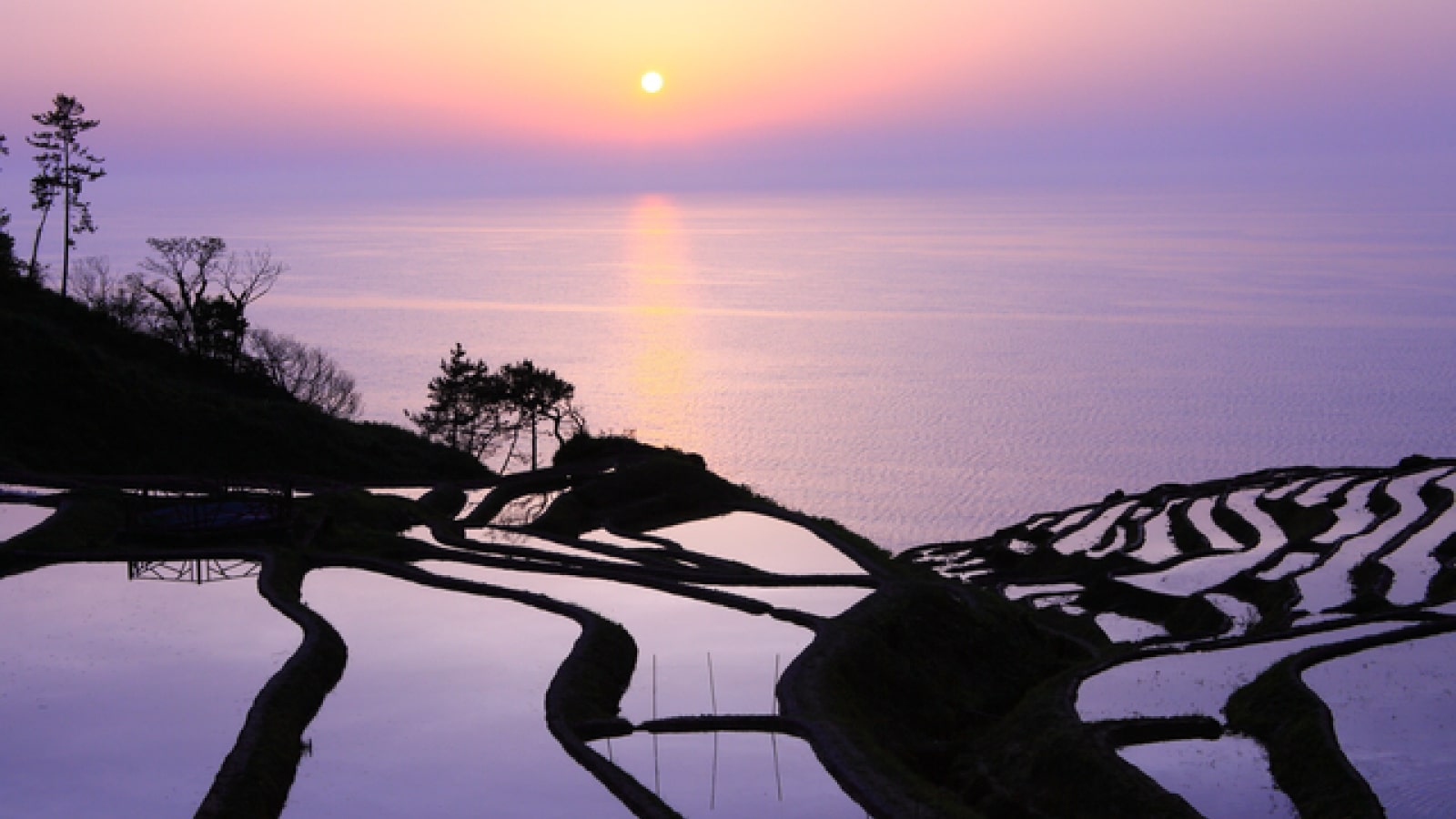
日本の秘境20選!私たちはまだ、本当の日本を知らない
そんなに広くもない日本ですが、まだまだ秘境というべき場所があります。不便な交通に四苦八苦してやっと着いたら息をのむような景色が...
tabippo.netHow to Read Access Difficulty
The first axis is access difficulty. What matters here is not raw distance but how many public transit connections exist, whether mountain roads are open, and whether ropeways or gondolas are running. Two mountain viewpoints can demand completely different planning if one has regular bus service and the other requires a private car on a seasonally restricted road.
Each spot in this article is rated on a three-level scale:
| Rating | Difficulty | What It Means |
|---|---|---|
| ★☆☆ | Easy | Reasonably well connected from a station or major hub, with a clear route to follow |
| ★★☆ | Moderate | Manageable when you factor in bus frequency, transfers, and seasonal schedules |
| ★★★ | Hard | Leans toward car access, or strongly affected by road and ropeway conditions |
Ginzan Onsen, for instance, connects smoothly from the Shinkansen to a direct bus and sits on the easy end. Sukawa Kogen Onsen is reachable by bus but involves longer travel time, placing it in the moderate range. Mountain areas like Zao's Okama or the Gassan eighth station have dramatic scenery but also clear access thresholds, so planning with the "hard" rating in mind reduces surprises.
I weight this axis heavily. Preferences for scenery are personal, but access conditions determine whether a trip actually works. It is natural to pick candidates based on beautiful photos, but on the ground, differences like "miss the morning bus and the whole plan falls apart" or "the road is only open a few months" make or break an itinerary.
Walking Demands at a Glance
The second criterion is walking load. Tohoku's remote-feeling scenic spots range from viewpoint-and-done experiences to places where the real payoff comes from sustained walking. Confusing these two types leads to a gap between expectations and reality.
This article groups walking demand into three tiers: minimal walking / 30 to 90 minutes / 2 hours or more, with brief notes on minimum footwear and rain gear.
| Walking Load | What to Expect | Shoe and Rain Gear Baseline |
|---|---|---|
| Minimal | Short distance from parking or bus stop, mainly viewing | Sneakers fine; a rain shell beats an umbrella |
| 30–90 min | Boardwalk loops, short out-and-back trails | Comfortable athletic shoes recommended; separates rain gear helps |
| 2+ hours | Extended riverside walks, hike-like terrain | Grippy soles essential; rain shell as standard kit |
Under this framework, Mototaki Fukuryusui is the type that delivers a sense of mystery in very little time. About 10 minutes on foot from the parking area, it works well as a stop on a travel day. Oirase Gorge, on the other hand, stretches roughly 14 km, and walking the full length takes 4 to 5 hours. The trail follows the stream without punishing climbs, but stopping for photos along the way makes it feel longer than the numbers suggest. Combining bus rides or a rental bicycle can compress it to 2 to 3 hours, making the perceived difficulty highly adjustable for the same location.
Seasonal Fit and Weather Risk
The third criterion is seasonal suitability and weather dependence. Tohoku transforms dramatically across fresh green season, summer, autumn foliage, and snow, so the same spot can deliver very different satisfaction depending on when you visit. Whether the star of the show is water, forest, or sky also changes what counts as a good-weather day.
For each spot, this article notes which season is prime (fresh greens, summer, autumn color, or snow) and whether it demands clear skies, tolerates overcast, or offers a rainy-day alternative. Settling this early speeds up the shortlisting process.
Zao's Okama, for example, depends on sky and lake surface color for its impact, so a clear day with open visibility is worth far more. Ryusendo cave, by contrast, shrugs off weather entirely and fits neatly into an itinerary as a reliable fallback. Oirase Gorge and Mototaki Fukuryusui hold up well under overcast skies because the density of water and moss does not diminish, and a soft, damp atmosphere can even suit them better. Naruko Gorge is all about peak autumn color, so seasonal timing has an outsized effect on the experience.
💡 Tip
A useful mental shortcut: water-focused scenery tends to hold up under clouds, while mountain panoramas are heavily weather-dependent. Sorting candidates this way reduces the chance of a wasted day.
Snow scenery is a major draw in Tohoku, but snow is not just decoration; it changes the logistics of getting around. Winter landscapes are more practical to evaluate when you consider whether a spot is hot-spring-town style or mountain style. Ginzan Onsen works so well in winter because the scenery and the stay are inseparable, which is fundamentally different from a summit viewpoint.
The Tohoku Nature Trail as a Framework
When thinking about nature travel in Tohoku, it helps to think in lines rather than dots. The best example is the Tohoku Nature Trail (Shin Oku-no-Hosomichi), managed by Japan's Ministry of the Environment. This long-distance footpath connects nature, history, and culture across the region through 229 courses plus linking routes.
What makes it interesting is that it is not only for hardcore through-hikers. The underlying philosophy pairs well with walking trips connected by public transit: start from a station or bus stop, walk a section, and end at a hot spring town or village. Browsing the Ministry of the Environment's Tohoku Nature Trail pages reveals a mindset of walking through local context rather than collecting individual viewpoints.
The spots in this article overlap with that philosophy. Mixing short-visit scenery, half-day immersive walks, and hot-spring-linked landscapes is deliberate. Beyond single-destination car trips, combining buses, ropeways, gondolas, and walking paths gives Tohoku's scenery real depth.
Each spot below is presented with the same set of fields: Access Difficulty, Walking Load, Best Season, Public Transit / Car Access, and Time Required. As you read, comparing these five dimensions side by side, not just the photos, will help you find the spots that genuinely fit your itinerary.
8 Hidden Scenic Spots in Tohoku, Japan
- Oirase Gorge
Oirase Gorge (Oirase Keiryu) in Towada City, Aomori Prefecture, stretches roughly 14 km from Nenokuchi on Lake Towada to Yakeyama. It is one of Tohoku's defining stream landscapes. Waterfalls, rapids, moss-covered rocks, and forests of beech and maple follow one after another without letup, and the density of scenery barely drops as you walk. Rather than heading toward a single landmark, think of it as a place where you immerse yourself in the flow itself.
Location: Towada City, Aomori Prefecture, Japan Highlights: A 14 km riverside trail from Nenokuchi (Lake Towada) to Yakeyama. Named features like the Ashura Rapids and Kumoi Waterfall appear in rapid succession, and the continuity of water and forest stands out. Best Season: Fresh greens in May–June, autumn color in mid to late October Time Required: Walking the full stretch with photo stops and breaks takes around 4 to 5 hours. Combining bus and bicycle rental can cut it to 2 to 3 hours. Access (Public Transit / Car): Route buses serve the Nenokuchi and Yakeyama ends. By car, the standard approach uses parking areas on the Lake Towada side or the Oirase side. Access Difficulty: ★★☆ Walking Load: 2+ hours (4 to 5 hours for the full distance) Check Before You Go: Bus frequency, peak-season traffic operations Sensory Notes: Cold spray on your skin, the constant voice of running water, the feel of wet leaves underfoot
From a planning standpoint, the most flexible approach is to skip the full-distance ambition and instead pick the sections you most want to see, combining walking with other transport. Walking all 14 km with photo stops and rest breaks settles into a 4-to-5-hour rhythm that feels longer than the number suggests. Going the other direction, buses and rental bicycles let you hit the richest stretches while conserving energy. The stream is a constant companion: water is always in your ears, and if you hold out a hand, you can feel the chill carried in the spray.
- Mototaki Fukuryusui
Mototaki Fukuryusui in Nikaho City, Akita Prefecture, is one of the easiest places in Tohoku to reach a genuine sense of remoteness in a short time. Water seeps across a moss-covered slope about 5 meters high and 30 meters wide, creating not so much a waterfall as the impression that the mountain itself is quietly breathing. The lasting image is not dramatic vertical plunge but a curtain of water spread across an entire face of rock and moss.
Location: Nikaho City, Akita Prefecture, Japan Highlights: A distinctive landscape where seeping groundwater from Mt. Chokai covers a moss-laden slope roughly 5 m high and 30 m wide. A visual testament to the mountain's water abundance. Best Season: Late May to early June Time Required: About 10 minutes on foot from the parking area; roughly 30 minutes round trip including time at the falls Access (Public Transit / Car): Public transit options are limited; visiting by car is the more practical choice. Access Difficulty: ★★☆ Walking Load: Around 30 minutes Check Before You Go: Trail conditions on-site, parking area information Sensory Notes: A cool current of air, the blue-green scent of moss, the sound of water barely perceptible as it seeps from rock
What makes this spot rewarding is how sharply the atmosphere shifts relative to the short walk. Passing under the tree canopy, you feel the temperature drop distinctly. At the falls, the cold is not the dry blast of opening a refrigerator but a softer, moisture-laden chill that wraps around you. When the moss is at peak growth, the green seems almost to glow, contrasting sharply with the white of the water. Even on a day when long-distance walking is not realistic, this spot delivers high satisfaction, a rare type of Tohoku scenery.
- Zao's Okama Crater Lake
Zao's Okama is a crater lake straddling Zao Town in Miyagi Prefecture and Kaminoyama City in Yamagata Prefecture, sitting in the Zao mountain range. The lake measures roughly 1 km in circumference and 330 m across, and its surface color shifts with weather and light, ranging from vivid emerald on clear days to a harder blue-green under other conditions. Among Tohoku's mountain scenery, few spots match its combination of scale and immediate visual impact upon arrival.
Location: Zao Town (Miyagi Prefecture) / Kaminoyama City (Yamagata Prefecture), Japan Highlights: The contrast between raw volcanic terrain and a lake that changes color. A short walk from the viewing area delivers the core of a mountain landscape. Best Season: Clear days from snowmelt through autumn Time Required: 30 to 60 minutes, mainly viewing Access (Public Transit / Car): Public transit is limited. The standard approach is driving via the Zao Echo Line and Zao High Line. Access Difficulty: ★★★ Walking Load: Minimal Check Before You Go: Mountain road opening status, visibility conditions Sensory Notes: Wind noise at altitude, a faint sulfur trace in the air, the crunch of dry volcanic gravel underfoot
This is not a spot that deepens with walking but one where the scenery is fully formed the instant you arrive. The walk from the parking area to the viewpoint is short, but weather and wind dominate the experience. On windy days, conversation gets swept away, and what fills your ears is not rustling leaves but wind tracing the contour of the crater rim. A faint volcanic sulfur scent confirms this is something beyond a typical highland overlook.
ℹ️ Note
Unlike streams and wetlands where water anchors the scene, Okama depends entirely on whether the sky is open. When combining Tohoku's scenic spots in a single day, avoid stacking water scenery and mountain panoramas together; keeping them on separate days protects overall trip satisfaction.
- Ryusendo Cave
Ryusendo in Iwaizumi Town, Iwate Prefecture, is a limestone cave with a total surveyed length of 4,088 meters, of which about 700 meters are open to the public. It is recognized as one of Japan's three great limestone caves. Among Tohoku's hidden scenic spots, it stands out for being largely immune to weather, delivering a strong experience even on rainy days. The centerpiece is a series of underground lakes with strikingly deep blue clarity.
Location: Iwaizumi Town, Iwate Prefecture, Japan Highlights: Underground lakes of exceptional transparency and blue color, the scale unique to limestone caves, and a quiet, almost sacred atmosphere shaped by subterranean water Best Season: Year-round Time Required: 45 to 60 minutes for the tour Access (Public Transit / Car): Reachable by bus; also accessible by car. Access Difficulty: ★★☆ Walking Load: Low to moderate (stairs involved) Check Before You Go: Bus frequency, cave tour route details Sensory Notes: Constant cool temperature and humidity, the sound of dripping water, footsteps echoing off rock walls
Ryusendo's appeal lies in how quietly the scenery unfolds. No matter what the sky is doing outside, the cave interior holds steady in temperature and humidity, and your body shifts into an underground register almost immediately. Water drops echo in thin, sustained notes through the dark, and the moments when only the blue surface of an underground lake seems to float in the blackness carry a depth entirely different from Tohoku's forests and gorges. The walking distance is not long, but stairs make the experience more of a three-dimensional tour than a stroll.
- Naruko Gorge
Naruko Gorge (Naruko-kyo) in Osaki City's Naruko Onsen area, Miyagi Prefecture, is where V-shaped canyon geology and autumn color collide head-on, producing one of Tohoku's premier fall landscapes. Bridge, cliff face, and slopes plunging to the valley floor merge into a single composition, and even if you know the photographs, the real-life depth hits harder. The undisputed star season is mid-October to early November.
Location: Naruko Onsen, Osaki City, Miyagi Prefecture, Japan Highlights: The contrast of a V-shaped gorge with red, yellow, and orange autumn foliage. Both overlook viewing and short trail walks are available. Best Season: Mid-October to early November Time Required: About 30 minutes for viewing only; up to 60 minutes with a short walk Access (Public Transit / Car): JR Naruko Onsen Station serves as the base, with bus and walking connections to the gorge. Also easily reached by car. Access Difficulty: ★★☆ Walking Load: 30–90 minutes Check Before You Go: Peak-season traffic flow, trail availability Sensory Notes: Cold air rising from the valley floor, the scent of fallen leaves, the sound of branches scraping in the wind
Naruko Gorge is less about admiring individual leaves up close and more about taking in a massive block of color shaped by the terrain. Standing at the viewpoint, you feel cold air rising from the valley against your face, a sensation that places you one layer deeper into autumn than the flatlands. Walking demands are moderate, but for a trip built around peak foliage, the weight of timing is enormous. Pairing it with Naruko Onsen (hot spring) adds density to the trip relative to the distance traveled.
- Ginzan Onsen
Ginzan Onsen in Obanazawa City, Yamagata Prefecture, creates its sense of remoteness not through grand natural vistas but through the layering of snow and hot-spring-town atmosphere. Wooden ryokan (traditional inns) line both sides of the river, and as gas lamps light up from evening into night, a distinctly Tohoku winter stillness settles in. From Tokyo, the route is roughly 3 hours by Yamagata Shinkansen followed by about 40 minutes on a direct bus, making it one of the more plannable destinations. For detailed walking routes and evening highlights, see our Ginzan Onsen strolling guide on this site. Location: Obanazawa City, Yamagata Prefecture, Japan Highlights: Snow scenery with gas lamps, the unified streetscape of wooden ryokan along the river, nighttime atmosphere Access Difficulty: ★☆☆ Walking Load: Minimal Check Before You Go: Direct bus schedule, winter road conditions Sensory Notes: Snow absorbing sound, the smell of steam, the warmth of wooden buildings, the hard tap of wooden geta sandals
What makes Ginzan Onsen memorable is how the scenery changes even the sound. When snow piles up, ambient noise gets absorbed, and what emerges instead is the scent of hot spring steam and the quiet creaking warmth of wood. Walking distance is short, yet the sense of satisfaction runs deep because the scenery and the overnight experience are not separate things. Photographers chase the night shots, but the pale blue-white light of an early morning before anyone else is moving leaves a strong impression too.
- Gassan Eighth Station: Midagahara Wetland
Midagahara Wetland at the Gassan Eighth Station in Nishikawa Town, Yamagata Prefecture, offers high-altitude wetland scenery in a relatively compact timeframe. A boardwalk loop takes about 60 minutes, threading past ponds, grasslands, and changing alpine flora. It is not as strenuous as a mountain climb but carries an elevation that flat-ground walks cannot replicate, fitting well into the nature-trail style of Tohoku travel.
Location: Nishikawa Town, Yamagata Prefecture, Japan Highlights: A high-altitude wetland explored via boardwalk; ponds, early-summer wildflowers, autumn grass color Best Season: Early summer through autumn Time Required: About 60 minutes for the boardwalk loop Access (Public Transit / Car): Driving to the eighth-station parking area is the standard approach. Public transit depends on seasonal bus availability. Access Difficulty: ★★☆ Walking Load: 30–90 minutes Check Before You Go: Road status to the eighth station, seasonal bus schedules Sensory Notes: The slight spring of the boardwalk underfoot, the humid green scent of the wetland, grasses rustling in the wind
The best thing about Midagahara is how it naturally slows your pace. The boardwalk returns a light bounce with each step, different from walking on dirt, and that rhythm lets your gaze drift between near and far. Pond surfaces mirror the sky, and even a slight breeze changes their expression. Early summer brings bright wildflowers; autumn brings muted grass tones. The same one-hour loop delivers a noticeably different impression depending on the season. For travelers who want genuine mountain air without a demanding climb, this is a strong pick.
- Mt. Moriyoshi and the Ani Gondola Area
The area around Mt. Moriyoshi (Moriyoshi-zan) and the Ani Gondola in Kita-Akita City, Akita Prefecture, lets you gain altitude efficiently via gondola and access alpine plants, wetlands, and mountain panoramas. The gondola base is about 25 minutes by car from JR Ani-Ai Station, and once you are up top, you can adjust how much walking you do. The main draw runs from summer through autumn as flowers, greenery, and grass color cycle through.
Location: Kita-Akita City, Akita Prefecture, Japan Highlights: Alpine flora, wetlands, and sweeping mountain views reached quickly via the Ani Gondola Best Season: Summer through autumn Time Required: 60 minutes to half a day Access (Public Transit / Car): About 25 minutes by car from JR Ani-Ai Station. Going by public transit alone requires creative connections. Access Difficulty: ★★★ Walking Load: 30–90 minutes to half a day Check Before You Go: Gondola seasonal operation schedule, trail options on-site Sensory Notes: Strong highland sun and wind, flower scent on the breeze, a sudden expansion of silence when the terrain opens up
This area changes character depending on how far you walk. The gondola eliminates most of the elevation gain, so you can keep things light with a short stroll or push further into a half-day outing. Up on the highland, sunlight is intense, and when the wind hits, your body temperature shifts instantly; during flower season, scent drifts in and out. Unlike Oirase, where water sound envelops you, Mt. Moriyoshi leaves its impression through the sense of release when the view suddenly opens wide.
Best Spots by Season: Fresh Greens, Summer, Autumn Color, Snow
Fresh Greens
If your trip falls in May or June, spots where water and moss take center stage are the strongest picks. Oirase Gorge, Mototaki Fukuryusui, and Midagahara Wetland all qualify as "green season" destinations, yet each feels entirely different. Want new-growth forest wrapping around you while you walk? Oirase. A brief, almost mystical water encounter? Mototaki. High-altitude air still carrying the trace of melting snow? Midagahara.
Oirase Gorge in this period has strong water flow from snowmelt, and moss colors deepen noticeably. Walking the full 14 km becomes a half-day commitment, but in May and June, the walk itself becomes the point, and the length turns into an asset. The white of rapids, the green of streamside moss, and the soft light filtering to the forest floor layer together in a density distinct from autumn's showiness. Morning light works especially well for photography, catching leaf translucence and the brightness of spray.
Mototaki Fukuryusui offers a huge payoff for minimal walking: about 10 minutes from the parking area to that wall of water. In the cooler early-summer air, the transparency of the water curtain intensifies. Mornings drop the temperature noticeably, and the dampness of moss and the presence of seeping water push forward in your awareness, making even a short visit feel substantial. For travelers who want a concentrated dose of Tohoku's green season without a long walk, it is hard to beat.
Midagahara Wetland in this period carries an expression of spring only just reaching the mountains. The 60-minute boardwalk loop fits easily into an itinerary, and morning coolness at altitude is part of the appeal. Before the grasses grow tall, the relationship between ponds and sky is especially visible, and calm conditions yield quieter photographs. "Fresh greens" usually conjures images of forest, but the open, spacious green of a high-altitude wetland leaves its own mark.
Summer
In July and August, building your itinerary around highlands, wetlands, and caves rather than packing in lowland tourist sites tends to produce better results. Tohoku summers can be hot in the cities, but gaining a bit of elevation changes the feel immediately. Narrowing the field for this season, the three pillars are Midagahara Wetland, Mt. Moriyoshi, and Ryusendo as a heat-escape alternative.
Midagahara Wetland in summer shows its highland character clearly. Walking the boardwalk with ponds and grassland stretching around you feels cooler than the temperature reading suggests. Sunshine can be strong, but a gust of wind brings instant comfort, the signature trait of high places. When wildflower season coincides, your eyes bounce between the trail at your feet and the far distance, and even a one-hour loop packs in a lot.
Mt. Moriyoshi suits travelers looking for a mountain that genuinely rewards walking in summer. The Ani Gondola handles the elevation gain, so the experience does not default to pure mountaineering; instead, you can spend a half day with alpine plants and wetlands, adjusting distance as you go. The scenery type is not the enveloping green of Oirase but the wide-sky openness of a mountain landscape. Even in warm weather, sweat dries fast where the wind reaches, and photos pick up that bright summer-mountain quality.
When extreme heat or afternoon weather deterioration is a concern, Ryusendo becomes the reliable card to play. Roughly 700 meters of public access within a total surveyed length of 4,088 meters gives it real scale, without heavy physical demands. Stepping inside from bright sunshine instantly shifts the mode, and the temperature contrast itself becomes part of the experience. For the common summer dilemma of wanting scenery but not wanting to trudge through blazing heat, Ryusendo offers a practical answer.
💡 Tip
In summer, Tohoku rewards you more for "going up a bit in elevation" than for "going further north." For walking-oriented travel, the Ministry of the Environment's Tohoku Nature Trail (Shin Oku-no-Hosomichi) philosophy of linking mountains and wetlands works particularly well.
東北自然歩道(新・奥の細道) | 長距離自然歩道を歩こう! | 国立公園に、行ってみよう! | 環境省
「国立公園に、行ってみよう!」の東北自然歩道(新・奥の細道)ページです。
www.env.go.jpAutumn Color
Aim for mid to late October and Tohoku's scenery surges with color density. The top candidates are Oirase Gorge, Naruko Gorge, and Mt. Moriyoshi. But in this season, satisfaction depends less on which spot is famous and more on reading the time lag in coloring created by elevation differences. Color starts high and gradually descends, so within the same week, mountain and valley can look completely different.
Oirase Gorge pairs autumn foliage with flowing water to striking effect; the white of rapids pulls together the surrounding reds and yellows. If the fresh-green season is about meditative immersion, autumn is about visual overload, with color shifting in bursts around every waterfall and rapid. Walking the full length means the peak color zone actually moves through different sections, adding an extra layer of interest.
Naruko Gorge suits travelers who want concentrated autumn impact in a short time. The V-shaped canyon amplifies the scene, delivering a punch from the first moment the view opens up. This is not about slow riverside absorption but about standing at an overlook and feeling, viscerally, that you are in Tohoku's autumn. The depth of the valley stacks color in visible layers, and the effect holds even under thin cloud cover, not only bright sun.
Mt. Moriyoshi earns its place when you want to catch mountain autumn slightly early. Summer's flowers and green give way to grass color and canopy tones that bring the visual center of gravity lower. Adjustable walking distance lets you experience highland autumn without committing to a full hike, and the appeal is distinct from both Naruko's overlook drama and Oirase's streamside palette.
For this season, planning by the month is less effective than making final destination calls based on real-time foliage reports. Even within late October, high-altitude spots may have peaked while valley-level sites are just hitting their stride. Holding two or three candidates rather than locking in a single destination works better for autumn in Tohoku.
Snow Scenery
December through February is when Tohoku's sense of remoteness runs deepest. The two main camps split between hot spring atmosphere and mountain-scale snow. For mood, Ginzan Onsen. For sheer snowy spectacle, Zao. When most people picture winter Tohoku in photographs, they are imagining one of these two.
Ginzan Onsen's nighttime snow scene is overwhelmingly strong. Wooden ryokan, the riverside lane, and the color of gas lamps come together into a winter landscape that goes far beyond simple whiteness. Snow absorbs sound, so the memory that stays is not just visual but includes the stillness of the air itself. Unlike mountain scenery where reaching the spot carries its own tension, Ginzan lets you step into winter atmosphere with almost no walking demand.
Zao's snow monsters (juhyo, frost-encrusted trees) alone justify a winter visit. The white, hulking shapes look nothing like any other season's Zao. However, Okama crater lake is generally not a winter destination. Mountain roads like the Zao Echo Line are closed for winter, with opening and closing dates varying by year and snowfall. Always check official road information from Zao Town and road authorities before departing. Winter at Zao works best framed not as "seeing Okama" but as "experiencing snow monsters and mountain winter atmosphere."
For a bad-weather fallback, Ryusendo once again proves its worth. Snow-scenery trips default to outdoor settings, but on days of blizzard or poor visibility, pivoting to the cave's blue underground lakes stabilizes the overall itinerary. The experience quality barely changes in winter, and its independence from outdoor conditions makes it the single most reliable insurance policy for a Tohoku trip.
Season-at-a-Glance Table
To narrow candidates by month, start with the table below. ● marks the primary season; △ marks a secondary option. Weather dependence is noted alongside: ☀ = strongly sun-dependent, ☁ = standard, ☂ = high weather resilience.
| Spot | May | Jun | Jul | Aug | Mid-Oct | Late Oct | Dec | Jan | Feb | Weather Dep. |
|---|---|---|---|---|---|---|---|---|---|---|
| Oirase Gorge | ● | ● | △ | △ | ● | ● | off-peak | off-peak | off-peak | ☁ |
| Mototaki Fukuryusui | ● | ● | △ | △ | off-peak | off-peak | off-peak | off-peak | off-peak | ☁ |
| Midagahara Wetland | △ | ● | ● | ● | △ | △ | off-peak | off-peak | off-peak | ☁ |
| Mt. Moriyoshi | off-peak | △ | ● | ● | △ | ● | off-peak | off-peak | off-peak | ☁ |
| Ryusendo | △ | △ | ● | ● | △ | △ | △ | △ | △ | ☂ |
| Naruko Gorge | off-peak | off-peak | off-peak | off-peak | ● | ● | off-peak | off-peak | off-peak | ☁ |
| Ginzan Onsen | off-peak | off-peak | off-peak | off-peak | △ | △ | ● | ● | ● | ☁ |
| Zao (snow monsters / winter) | off-peak | off-peak | △ | △ | △ | △ | ● | ● | ● | ☀ |
For trip-building purposes, the most practical summary is: fresh greens pair with waterside spots, summer with highlands and caves, autumn with elevation contrast, winter with hot spring towns and snowy mountains. Choosing by month alone makes Tohoku confusing; this framework cuts through the noise.
Public Transit-Friendly Spots vs. Car-Recommended Spots
Spots That Work With Public Transit
There is a common assumption that Tohoku's remote-feeling scenery requires a car, but several spots actually have clear, readable routes from a hub station. "Easy access" here means not just short travel time but also how intuitively you can picture the connection from station to site. Ranked by planning ease, the first candidates to consider are Oirase Gorge, Ginzan Onsen, and Naruko Gorge. Ryusendo is also reachable by public transit, but bus frequency becomes the deciding factor in trip quality.
Oirase Gorge is among the more plannable nature destinations in Tohoku. Its 14 km from Yakeyama to Nenokuchi translates to a 4-to-5-hour walking experience if you cover the full distance, but thinking of it as walk-only is a trap. Building around route buses and choosing which sections to walk keeps the scenery dense without overextending yourself. Rental bicycles and e-bikes add another option, reducing physical strain compared to a full through-walk. The reason it works for public transit is that the long landscape can be broken into segments.
Ginzan Onsen has an access ease that belies its atmosphere of seclusion. From Tokyo, the Yamagata Shinkansen gets you into Yamagata Prefecture, and from there a direct bus takes about 40 minutes, a refreshingly clear path. Not having to drive the mountain road yourself is a real advantage in snowy conditions, letting you direct your energy toward the scenery and the stay itself. Walking demands are light, and the spot pairs naturally with travelers who want hot-spring-town mood as the main event.
Naruko Gorge benefits from JR Naruko Onsen Station as a natural starting point. The window is narrow, since autumn foliage defines the visit, but the station-based access makes it easy to slot into a short fall trip. Canyon depth is the main attraction, so a viewing-focused visit with limited walking yields strong impressions. Rail connections from the Sendai side are straightforward, and the spot stays viable even in a one-night, two-day Tohoku trip.
Ryusendo is a valuable public-transit-accessible hidden gem. Bus service means it is not entirely car-dependent, and the cave's immunity to rain and strong sun adds schedule resilience. The real question, though, is not whether you can get there but how much time you can secure on-site. Planning with the density mindset of urban sightseeing leaves things feeling tight; treating the whole day, including transit legs, as a single-destination affair produces a cleaner result.
Spots That Benefit From a Car
On the other side, some spots translate their scenic scale and setting directly into car-trip advantages. Public transit is not always impossible, but factoring in limited service and seasonal schedules, having a car opens up a different order of flexibility.
The clearest example is Zao's Okama. It is a mountain-road destination, making it difficult to build into a public-transit itinerary. The walk from the rest house to the viewpoint is short, but the road conditions to get there are the crux. The Zao Echo Line and surrounding mountain roads have seasonally variable opening schedules, so matching an open road with clear weather is what determines satisfaction. With a car, you can decide to head up when visibility opens, which pairs perfectly with scenery that rewards clear skies above all else.
Mototaki Fukuryusui is another case where the on-site experience is light but the access tilts toward cars. Ten minutes on foot from the parking area to that wall of water means arrival is easy; the challenge is the last leg from the nearest hub, which does not map well to public transit. With a car, a short stop delivers high value, and you can easily combine it with other spots around Kisakata or the base of Mt. Chokai. The ability to grab concentrated natural beauty without adding walking time is what makes this spot car-trip friendly.
Gassan Eighth Station, Midagahara Wetland sees its difficulty shift dramatically with or without a car. The 60-minute boardwalk loop on-site is not taxing, but getting up to the eighth-station parking area is the real trip. A seasonal bus runs from JR Tsuruoka Station, but the travel time is long and schedule flexibility limited. A car lets you decide between wrapping up at the wetland or extending toward Mt. Gassan, and you can adjust plans based on highland weather as it develops.
Mt. Moriyoshi and the Ani Gondola are not impossible by public transit, but a car smooths things considerably. JR Ani-Ai Station sits about 25 minutes by car from the gondola base, and the question is whether you can cover that last stretch on your own. Alpine flora and mountain views justify a half-day visit, but a car lets you start earlier and respond to crowd levels or weather shifts. Mountain scenery changes character based not just on whether you arrive but on whether you arrive at the right time of day.
Access Difficulty Summary and Planning Tips
In practice, what matters most for public transit trips is planning clarity: not the raw number of transfers, but whether you can predict wait times and secure enough on-site hours. Spots like Oirase Gorge and Ginzan Onsen, where the access skeleton is obvious, feel natural even on a first Tohoku trip. A spot like Ryusendo, by contrast, requires you to sketch out the full day including the return leg before you go; otherwise, your time on-site gets squeezed.
The strength of car travel is the ability to make real-time decisions based on weather and road conditions. For Okama, where visibility defines value; for Midagahara, where highland weather shifts impressions; for Mototaki, where a quick detour is all you need, this advantage is enormous. If public transit means fitting travel around time, driving means fitting travel around conditions, and that framing captures the difference well.
A compact summary of access difficulty:
| Spot | Public Transit | Car | Difficulty |
|---|---|---|---|
| Oirase Gorge | ○ | ○ | ★★☆ |
| Ginzan Onsen | ○ | ○ | ★☆☆ |
| Naruko Gorge | ○ | ○ | ★☆☆ |
| Ryusendo | △ | ○ | ★★☆ |
| Zao's Okama | × | ○ | ★★★ |
| Mototaki Fukuryusui | △ | ○ | ★★☆ |
| Gassan 8th Stn. / Midagahara | △ | ○ | ★★★ |
| Mt. Moriyoshi / Ani Gondola | △ | ○ | ★★☆ |
⚠️ Warning
For public transit trips, build around spots with a clear single connection from a hub station. For car trips, prioritize high-altitude, mountain-road, and quick-stop locations. This mirrors the Ministry of the Environment's Tohoku Nature Trail philosophy of linking walking and transit, and it keeps your candidate selection from drifting.
As a planning heuristic, on public transit, do not overpack a single day; by car, do not stack multiple mountain destinations in one day. The former loses time to transfer waits; the latter loses time to weather and road conditions that eat into the schedule faster than expected. Especially for spots involving mountain roads or seasonal services, plan with the assumption that "the same destination can vary enormously depending on conditions," and you will build itineraries closer to reality.
Respecting Nature While Enjoying It: Trail Etiquette
Stay on the Path and Mind Your Camera
Many of Tohoku's scenic landscapes are preserved precisely because people keep a respectful distance. Wetland boardwalks, riverside trails, and crater-rim paths serve as viewing infrastructure and ecological boundaries in equal measure. Midagahara's wetland in particular has ground that is more fragile than it appears. Stepping off the boardwalk risks crushing alpine plants and wetland vegetation, and the footing is unstable too, so staying on the route protects both the environment and your own safety.
The same applies at walk-oriented spots like Oirase Gorge. Across its roughly 14 km of trail, tempting detours appear frequently, but waterside rocks and mossy slopes are slippery enough to catch you off guard. Stepping just one foot off the path for a photo can mean losing your footing or blocking other visitors, so settling your position before composing the shot works out better.
During busy periods, separating "your shot" from "shared space" removes a lot of friction. Avoid monopolizing a section of trail with a tripod, offer to trade turns at popular photo spots, and keep stops short on narrow boardwalks where people are flowing through. None of this is dramatic etiquette; it is what actually works at Tohoku's high-density nature spots. Even mountain overlooks that seem uncrowded can fill up quickly on clear days when viewing space is limited.
Drone use deserves extra caution. Many natural parks and scenic sites prohibit or require permits for aerial photography, and the noise disrupts the very quiet that draws visitors. Keeping distance from wildlife and refraining from feeding animals falls along the same line. In natural settings, the instinct to "get closer because you can" is worth resisting; maintaining distance is itself a way to raise the quality of the experience.
Gear and Weather Preparation
Tohoku's highlands and mountain zones can drop in perceived temperature sharply, even in midsummer, during mornings and evenings. At spots like Mototaki Fukuryusui, where waterside chill is prominent, or Okama and Midagahara, where wind exposure is high, flatland clothing falls short surprisingly fast. Approaching these spots with a light-hiking mentality rather than a sightseeing one produces more consistent comfort.
A waterproof shell and an insulating layer are the first things to pack. The shell blocks wind as much as rain, and at altitude that difference matters enormously. Early-morning viewpoint visits can strip body heat through wind alone even under sunshine; a thin fleece or light insulated jacket buys breathing room for lingering. Highland conditions do not always match the calendar, and the gap between "it's summer, I'll dress light" and what your body actually feels can be wide.
Footwear with reliable grip is baseline gear. Moss, wet boardwalks, volcanic gravel, and gravelly slopes are all slipperier than they look. At Mototaki Fukuryusui or streamside paths, weak traction alone shortens your stride and eats into the mental space you need to enjoy the scenery. Sneakers work in some conditions, but on any day that might include wet surfaces, the confidence from proper soles is striking.
A headlamp is a less obvious but useful addition. This is not about pre-dawn mountaineering; it is about keeping your hands free when entering a dim trail from a parking area, or when fog and rain darken the surroundings. Mountain tourist sites often present conditions where "the walk is short but the environment is alpine," and shifting your start time earlier without matching your gear creates gaps.
💡 Tip
When planning a highland walk, I dress for "an hour or so outdoors" rather than "a city stroll." Even at Midagahara, where the boardwalk loop takes about 60 minutes, wind chill and standing still for photos add up to more cold than you would expect.
Trash, Restrooms, and Sharing the Quiet
The single most reliable rule in natural settings is carrying out what you carry in. Rather than assuming trash bins will be available, starting with the intention to pack everything out avoids any planning gaps. Empty water bottles, snack wrappers, and wet wipes are the items most easily dropped, so tucking a sealable plastic bag into your pack keeps things tidy.
Restroom logistics also differ from city travel. Facilities at trailhead parking areas or visitor centers are common, but once you start walking, they often vanish. At Oirase Gorge, where walking times can extend considerably, and Gassan's eighth station, where you start at elevation, using facilities before departure directly determines comfort. Carrying a portable toilet adds peace of mind in some locations, and a bag for packing out used supplies serves double duty.
Quiet, too, deserves to be treated as part of the landscape. The sound of water at Mototaki Fukuryusui, the current at Oirase, the wind across the wetland, the echo inside the cave, these are not background but core to the experience. Playing music through a speaker lets sound dominate a space before scenery can. Lowering conversation volume slightly, defaulting to headphones for video playback, small adjustments like these shift the atmosphere noticeably.
How you handle crowds follows the same logic. Rather than standing in one spot on a boardwalk or viewing deck for an extended stretch, letting the flow of people pass before settling in for your own moment keeps the whole area calmer. Approaching nature as a space you are "temporarily entering" rather than "consuming" tends to align your behavior naturally.
Checking Volcano, Road, and Ropeway Updates
Reaching a Tohoku scenic spot does not guarantee you will see it. In mountain areas, road, ropeway, and volcanic information carry as much weight as weather conditions. Zao's Okama is the textbook case: viewing itself takes minutes, but access hinges on the opening status of the Zao Echo Line and High Line. Mountain roads have annual winter closures, and conditions just after spring opening or near autumn closing shift with the weather.
In volcanic zones, calm-looking scenery does not necessarily mean relaxed regulations. Around crater lakes like Okama, visibility and wind are not the only concerns; volcanic gas levels and restricted-access perimeters also come into play. Mountain scenery cannot be fully assessed with "it's sunny, so I'll go," because road closures and access restrictions can upend an entire day.
Ropeways and gondolas also follow seasonal schedules. The Ani Gondola on Mt. Moriyoshi operates differently depending on the season, and arriving at the base does not guarantee a ride up. The Adatara Ropeway, by reference, operates within a window such as 8:30 AM to 4:30 PM. A half day in the mountains is shorter than a half day in the flatlands, and arriving in the afternoon thinking there is plenty of time can leave less margin than expected.
For car travel, road conditions are the key variable; for public transit, ropeway and seasonal bus schedules carry more weight. The Gassan Parkline leading to the eighth station, mountain roads around Zao, and winter pass crossings all appear connected on maps but are firmly governed by the season. In these areas, leaving some slack in the schedule on mountain days, rather than packing tight, ends up giving you more time at the actual viewpoints.
Sample 1-Night or 2-Night Itineraries
Model 1: Aomori and Akita
Day 1 flows naturally by starting at Lake Towada to absorb the lake's scale, then moving into Oirase Gorge. The gorge covers roughly 14 km, but for itinerary purposes, a 2-to-3-hour section walk is more practical than a full through-hike, which requires a half-day-plus level of stamina. If you plan to include a cruise on Lake Towada, note that fares, schedules, and reservation policies change annually; always check the latest information from the operating company (such as Towada Kanko Dentetsu) before your trip. For spatial orientation, searching Lake Towada and surroundings on Google Maps helps.
Transport mode splits the planning sharply between public transit-centered and rental car-centered approaches. For public transit, the backbone is a Shinkansen arrival at Shin-Aomori or toward Hachinohe, with route buses connecting to Lake Towada and Oirase. Fitting both Mototaki Fukuryusui and Mt. Moriyoshi into Day 2 is tight by public transit due to limited transfer flexibility. A realistic public-transit version of a one-night trip either focuses Day 2 on Mototaki Fukuryusui or shifts entirely to the Mt. Moriyoshi side. Extending to two nights opens the option of transiting through Akita City or the Kakunodate area on the middle day before heading to Kita-Akita.
With a rental car, the freedom to cross from the Lake Towada area into Akita is much greater, and the route outlined above translates directly into a drive plan. That said, stacking mountain and gorge destinations burns energy through driving alone, so keeping daily driving distance around 200 km is a useful ceiling. Northern Tohoku takes longer to traverse than maps suggest; lakeshore roads and mountain-base routes keep average speeds low. For a two-night version, splitting Day 1 for Lake Towada and Oirase, Day 2 for Mototaki Fukuryusui with an overnight near Yuri-Honjo or Nikaho, and Day 3 for Mt. Moriyoshi produces a more relaxed rhythm.
Model 2: Miyagi and Yamagata
To combine hot spring atmosphere with mountain spectacle in one night and two days, a solid flow is Day 1 at Naruko Gorge into Naruko Onsen, Day 2 at Zao's Okama into Ginzan Onsen. The headliners rotate cleanly from autumn foliage to crater lake to hot spring town, and the sequence works well for photography-focused trips. For a sense of the area, search Naruko Gorge, Zao Okama, and Ginzan Onsen on Google Maps side by side.
Day 1 at Naruko Gorge works best when you build around viewing rather than extensive walking. During peak foliage, the visual impact is intense, and the angle of light shapes your impression more than how long you stay. Spending the late afternoon there and then settling into Naruko Onsen for the night produces higher satisfaction than cramming in extra stops. Staying in Naruko Onsen also sets up a clean morning departure the next day, keeping a one-night trip from feeling rushed.
Day 2 puts Okama at center stage if the weather cooperates. Viewing is the core of the experience and arrival itself is not strenuous, but mountain-top weather can diverge from conditions below. On a day when visibility opens up, the impact is powerful: a crater lake roughly 1 km in circumference and 330 m across appears almost without warning. The walk from the Zao Summit Rest House to the viewpoint takes only 2 to 3 minutes, making the time commitment predictable. Weather permitting, even a short visit leaves a strong mark.
Flowing from there to Ginzan Onsen shifts the register from mountain tension to soft hot-spring-town warmth. Especially in the snowy months, restraining the urge to chase mountain panoramas during the day and anchoring the trip in Ginzan Onsen's evening and nighttime stroll produces a more cohesive result. As light levels drop, the streetscape atmosphere rises, and even within a tight two-day trip, the journey transitions naturally from seeing to soaking in.
For public transit, the Yamagata Shinkansen anchors the backbone nicely. Ginzan Onsen sits about 3 hours from Tokyo by Shinkansen plus roughly 40 minutes by direct bus. However, linking both Naruko Gorge and Okama by public transit alone within one night and two days generates too many transfers and eats into activity time. A more stable public-transit version anchors on Naruko Gorge and Naruko Onsen, with Day 2 pivoting toward Zao Onsen town or the Yamagata side. If you are set on including Okama, combining a rental car just for the Zao segment is the most workable hybrid.
By rental car, you can connect Naruko to Zao to Ginzan Onsen in a single thread. Distances stretch, though, so the 200 km daily guideline helps maintain balance. On an Okama day, mountain road driving time needs to be factored separately from raw distance. A clear-sky Okama experience is compelling, but spending too much time there risks missing Ginzan Onsen's best hours, so framing the day around two main events rather than three keeps things grounded.
Google マップ
maps.google.comModel 3: Iwate Plus Fukushima Extension
For a two-night, three-day trip mixing nature and hot springs, consider Day 1 at Ryusendo with an overnight near Morioka, Day 2 at Mt. Moriyoshi or Midagahara Wetland, Day 3 at Fukushima's Adatara Ropeway. Cave, highland, and ropeway walks never overlap in type, so even consecutive days avoid monotony. Tracing Ryusendo, Midagahara Wetland, and Adatara Ropeway on Google Maps in sequence gives you the spatial picture.
Day 1's Ryusendo works well as a travel-day headliner. With about 700 meters of public access within a total surveyed length of 4,088 meters, and minimal weather sensitivity, arrival-time slippage does not break the plan. Placing a low-exertion but high-impact spot on a long-travel first day, rather than starting with a strenuous mountain walk, sets a better rhythm for the three days. Staying near Morioka gives you directional flexibility for Day 2.
Day 2 adjusts its headliner by season. Summer through early fall favors Mt. Moriyoshi; if flowers or grass color are the priority, Midagahara Wetland is the smoother fit. Midagahara's 60-minute boardwalk loop captures highland scenery efficiently. Mt. Moriyoshi uses the gondola to reach the top but fills a half-day more comfortably when you plan for it. This is the big-scenery day, so positioning the overnight further south or toward Yamagata sets up a lighter Day 3 in Fukushima.
Day 3's Adatara Ropeway closes the trip well with a highland walk. Operating hours vary by season, but a reference window is 8:30 AM to 4:30 PM. Mountains compress the afternoon, so even on the final day of a three-day trip, placing the visit from morning through midday gives the experience real weight. Starting underground at Ryusendo, moving through highlands, and finishing with an open-view walk at Fukushima keeps "nature" as the constant without repeating the same impression.
Reproducing this exact model by public transit alone is a higher-difficulty proposition. Shinkansen access to Morioka and Fukushima is straightforward, but the cross-cutting segments linking Ryusendo, Mt. Moriyoshi, and Midagahara face bus seasonality and frequency gaps that can make transit the main event rather than scenery. A more realistic public-transit version treats Ryusendo plus Morioka and Fukushima's Adatara as separate blocks, with the middle day leaning toward a city overnight.
By rental car, this model opens up considerably. However, spanning Iwate to Yamagata to Fukushima stretches distances fast, so the 200 km daily guideline is worth respecting to avoid fatigue buildup. For instance, driving from Morioka to Midagahara on Day 2 and then all the way to Fukushima on Day 3 looks connected on a map but carries heavy driving load. For a manageable three-day version, position the Day 2 overnight further south to separate driving days from scenery days.
Google マップ
maps.google.comRainy-Day Alternatives
The most effective pivot in a Tohoku road trip is not overhauling the entire itinerary but dropping summit-level destinations and protecting experience quality at a lower altitude. Forcing a visit to Okama or Mt. Moriyoshi in poor visibility costs more satisfaction than redirecting to a cave, a hot spring town, or a quick-access waterside spot.
On a northern Tohoku route, swapping in Ryusendo for Mt. Moriyoshi is the strongest move. The cave's experience holds steady regardless of rain, and it slots easily into a first or middle day. Alternatively, cutting the mountain panorama and leaning into an extended hot spring stay keeps a one-night trip from feeling thin. Mototaki Fukuryusui, with its short walking time, can actually benefit from light rain: the dampness in the air suits the scenery.
On a Miyagi-Yamagata route, replacing Okama with Midagahara Wetland or Zao Onsen town is the easiest adjustment. Okama swings between spectacular and invisible, so not clinging to a visibility gamble stabilizes the whole trip. In the snowy months, centering the trip on Ginzan Onsen's evening stroll alone provides a solid anchor. If overcast skies mute the color at Naruko Gorge, shifting time back to Naruko Onsen keeps the mood intact.
ℹ️ Note
On rainy days, choosing spots with strong "near views" over those built on "far views" tends to protect the experience. Ryusendo's underground lake, Mototaki's moss and water curtain, and hot-spring-town alleys all hold their value when the sky refuses to open.
By transport mode: on public transit, the default rain-day pivot is to pull destinations closer to stations and hot spring towns, which also reduces transfers and paradoxically increases the day's density. By car, you have more freedom to redirect, but avoiding mountain roads in poor visibility makes caves and hot spring towns the logical landing spot. Across all models, rainy days reward "lowering the headliner's elevation by one step" more than "trying to add more stops."
Wrapping Up: A Tohoku Nature Trip for Those Who Seek Quiet
Tohoku's nature travel rewards you most when you choose based on the quality of quiet rather than spectacle. Whether you want solitude to clear your head, a shared sense of travel atmosphere with a partner, the thrill of a perfect photograph, or the simple unwinding power of hot springs, the right spot differs clearly. If I were planning: solo travel pairs well with Ryusendo and early-morning Oirase, couples with Ginzan Onsen and Midagahara, photography trips with Naruko Gorge and Okama, and hot-spring-focused trips with Ginzan Onsen as the hub, adding surrounding nature as satellites. Carrying an awareness of preserving the untouched feel, the quiet, and the travel atmosphere changes how you receive the same Tohoku scenery. Come back in a different season, and genuinely different expressions will be waiting.
Related Articles
8 Day-Trip Onsen with Stunning Open-Air Baths in Japan: Kanto vs. Kansai
What makes a day-trip onsen unforgettable often comes down to the view from the bath itself. This guide selects 8 open-air baths across Kanto (1 metropolis, 6 prefectures) and Kansai (2 urban prefectures, 4 prefectures) organized by scenery type, with side-by-side comparisons of admission fees, hours, access, and best times to visit.
15 Hidden Scenic Spots in Japan That Locals Actually Recommend
Tired of crowded observation decks and the same postcard views? This guide pulls together 15 lesser-known landscapes across Japan where the quiet still lingers, complete with best seasons, ideal timing, and practical access details.
12 Hidden Autumn Foliage Spots in Japan: Beat the Crowds with Timing and Access Tips
Want to enjoy koyo (autumn foliage) without fighting through packed tourist sites? This guide narrows it down to 12 quieter spots across Kanto and Kansai, starting with a comparison table so you can zero in on the right fit fast.
12 Weekend Overnight Trip Itineraries in Japan You Can Actually Pull Off
Planning a weekend getaway in Japan works better when you start with travel time, budget, and transportation rather than a wish list of attractions. This guide compares 12 itineraries across the country using concrete benchmarks: Tokyo to Hakone in about 90 minutes, Tokyo to Niigata in roughly 2 hours, and Fukuoka Airport to downtown in just 10 minutes.