
7 Best Destinations for Pottery Experiences and Kiln Town Visits in Japan
7 Best Destinations for Pottery Experiences and Kiln Town Visits in Japan
Visiting kiln towns and trying pottery workshops in Japan goes far beyond buying ceramics. Each production area, from Mashiko and Shigaraki to Hasami and Arita, has its own distinct character. Whether you choose hand-building or the electric wheel also shapes your satisfaction. The author visited multiple pottery regions in February 2026 (visit period: February 2026).
Visiting kiln towns and trying pottery workshops in Japan is not just a shopping trip for tableware. It is a chance to step into the workshops where artisans shape clay and to feel how each region's landscape influences its ceramic style. That said, production areas like Mashiko (Tochigi, Japan), Shigaraki (Shiga, Japan), Hasami (Nagasaki, Japan), and Arita (Saga, Japan) each carry very different atmospheres, and your choice between hand-building and the electric wheel will change what you take away from the day. The author visited several of these pottery regions in February 2026. Drawing on that firsthand experience, this guide is organized so that beginners can fold a pottery session into their travel plans without overcomplicating things.
Three Things to Know Before Choosing a Pottery Destination
What Is a Kiln Workshop (Kamamoto)?
The first term worth understanding when planning a pottery trip is kamamoto (kiln workshop). A kamamoto is a studio or business that fires ceramics in a kiln, and sometimes the term refers to the artisan who runs it. While a kamamoto may look similar to a pottery shop, the key distinction is that it houses an actual production facility, not just a retail space.
Once you grasp this difference, your criteria for picking a destination sharpen. Arita, for instance, lends itself to exploring the history of white porcelain and blue-and-white painted ware. Shigaraki, on the other hand, is where you encounter earthy textures and the vivid fire-marks that come from wood-firing. Each cluster of kiln workshops preserves a regional style tied to its local clay and traditions. Questions like "Why this shape?" or "Why this color?" start to answer themselves when you pay attention to the kamamoto behind the piece.
What makes these destinations rewarding as travel is that you absorb not just the finished work but the whole context behind it. The air inside a workshop, rows of drying vessels, stacks of raw clay, conversations about glazes — all of it brings you closer to a region's ceramic culture. A trip focused on tableware becomes much richer the moment you stand where the pieces are actually made.
How to Enjoy a Kiln Town Tour
A kiln town tour means visiting workshops and galleries, watching production up close, talking with artisans, and picking up pieces you connect with. As the Toki City Tourism Association's kiln tour page illustrates, this is not simple retail therapy; it works as an experience that brings you into the world of craft.
There are broadly two approaches: the strolling style and the destination style. Strolling works well in areas where kiln workshops cluster tightly. Hasami's Nakao-yama district is a prime example. According to the Rakuten Travel Hasami guide, 18 kiln workshops stand within Nakao-yama, making it ideal for wandering up hillside lanes and poking into studios as you go. Shigaraki, too, has kilns and galleries dotting the road from the station onward — with over 20 workshops in the area, you can build a half-day to full-day itinerary with ease.
The destination style means picking a specific workshop or experience studio in advance. This suits anyone who wants an in-depth conversation with an artisan or who plans to make the hands-on session the highlight. For couples or solo travelers, narrowing it down to two or three stops keeps you from spending more time in transit than actually looking at ceramics. From personal experience, cramming in too many kiln visits tends to leave you with stronger memories of driving than of the pottery itself. If you want to soak in the production area, a pace of "morning stroll, afternoon workshop" feels about right.
Event timing is also a major factor. The Hasami Pottery Festival runs April 29 through May 5 in 2026, with a second venue extending to May 6. The Mashiko Pottery Fair runs April 29 through May 6 for the 2026 spring edition. During these periods, kiln workshops and distributors converge in one place, making comparison shopping far more efficient. Hasami's festival draws around 150 vendors, which is excellent for anyone who wants to survey a wide range of styles in a short time. On the flip side, if you prefer to experience workshops at a quieter pace, visiting outside festival season is the better call. Your ideal timing depends not just on the region's character but on whether you are chasing festival energy or everyday town atmosphere.
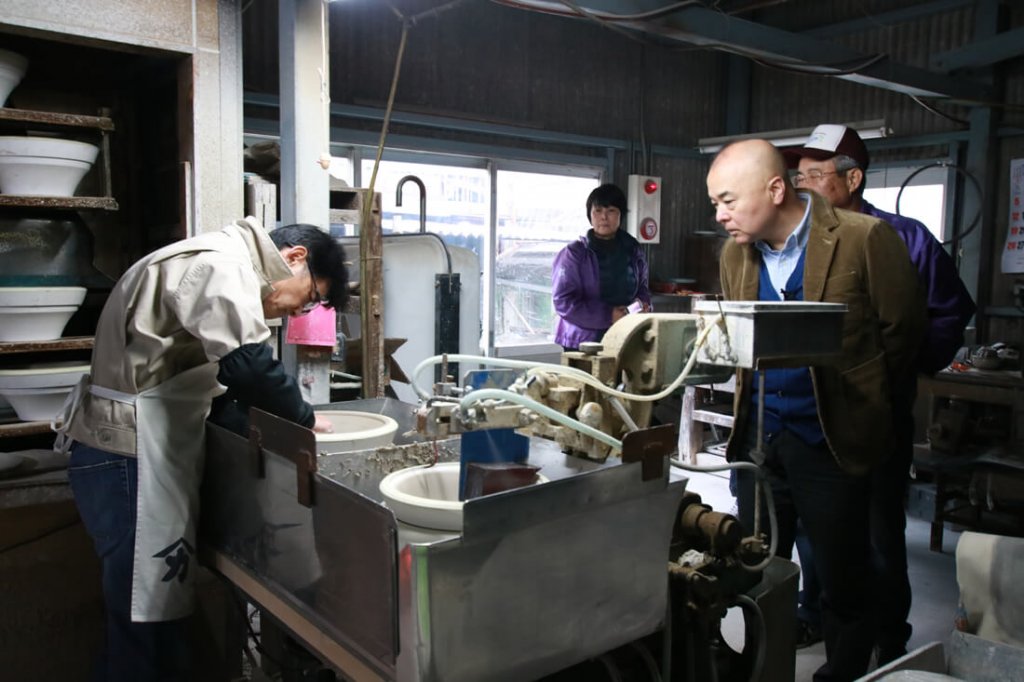
窯元めぐり | 土岐市観光協会
窯元めぐりとは、観光ガイドが観光客を先導し、複数の窯元へ案内します。 窯元へ着くと、窯元の職人が工房の中を先導し、やきものの製造現場 やギャラリーヘ案内します。 初めて土岐市を訪れた人でも、土岐の歴史やおもしろ話を聞きながら、楽しく迷わず窯
toki-kankou.jpTypes of Experiences (Hand-Building, Electric Wheel, Painting) and Time Required
The three main forms of pottery experience are hand-building (tebineri), the electric wheel (denndou rokuro), and painting/decorating (etsuke). Getting clear on these upfront makes it much easier to fit a session into your trip.
Hand-building involves shaping clay by stretching, coiling, and pressing with your hands. Fingerprints and gentle irregularities show up naturally, giving even a first-timer a strong sense of having made something personal. A single teacup or yunomi (Japanese tea cup) typically takes one to two hours. That is on the longer side, but the tradeoff is creative freedom — a good match for anyone who wants a calm, focused stretch of making at their destination.
The electric wheel has you pulling a vessel upward on a spinning platform. It looks intimidating, but a first-time session usually wraps up the shaping stage in about an hour, including instruction and setup. The shaping itself can move along in as little as 15 minutes, so it will not eat into a half-day of sightseeing. The forms come out cleaner, and the sense of accomplishment runs high, making this the pick for anyone after that unmistakable "I did real pottery" feeling.
Painting lets you decorate a pre-formed piece with designs or patterns. Work time runs 30 to 90 minutes, making it the lightest commitment of the three. It pairs well with family outings involving small children or with travelers who want a quick creative break during a town walk. At the Noborigama Hiroba Exhibition Workshop in Tokoname (Aichi, Japan), painting experiences are listed at 750 to 2,200 yen (~$5 to ~$15 USD) with a one-hour session, according to Tokoname tourism listings — easy to slot in as one segment of a sightseeing day.
Here is how the three compare from an itinerary-planning perspective:
| Type | Best Suited For | Approximate Duration | Fit with Travel Plans |
|---|---|---|---|
| Hand-building | Beginners; those who value creative freedom | 1–2 hours | Works when you can dedicate an afternoon |
| Electric wheel | Those wanting the classic pottery experience | Around 1 hour | Pairs well with half-day sightseeing |
| Painting | Families with children; short-session seekers | 30–90 minutes | Drops into a town walk or shopping day |
One thing worth noting: participants typically handle only the shaping stage. Drying, trimming, glazing, firing, and finishing are usually done by staff after you leave. Rather than walking out with a finished piece that day, think of it as "the trip continues when your piece arrives later." Some simple painting projects offer same-day takeaway, but anything involving a proper kiln firing will ship later. When building pottery into your trip, consider not just the on-site time but whether your piece will be mailed or picked up locally — it subtly changes how the trip feels in retrospect.
💡 Tip
If sightseeing is the priority, go with painting or the electric wheel. If you want the hands-on session to be the main event, choose hand-building. Matching time allocation to your goal keeps satisfaction high.
Hand-Building vs. Electric Wheel: Which to Choose on a Trip?
Comparison Table
The common source of confusion is hearing "hand-building is better for beginners" while also being told "the electric wheel is quicker and feels more like real pottery." In practice, skill level matters less than how much time you can carve out for the experience that day. If you also want to walk around town and visit kilns, the electric wheel fits more naturally. If you want the pottery session itself to anchor the trip, hand-building is the way to go.
| Factor | Hand-Building | Electric Wheel |
|---|---|---|
| Beginner-friendliness | High | Medium to high |
| Duration | 1–2 hours typical | Under 1 hour typical |
| Creative freedom | High | Produces clean, symmetrical forms |
| Child-friendliness | Generally suitable | Requires careful, steady hands |
| Couples | Easy to chat while working | Shared sense of achievement |
| Itinerary flexibility | Takes a longer block | Easier to fit in |
| Character | Shows finger marks and handmade warmth | Clean shapes; satisfying wheel-throwing motion |
Hand-building lets you stretch, stack, and hollow clay at your own pace, which means even a complete beginner can relax into it. A single teacup or yunomi might take one to two hours, but the upside is the creative latitude — deciding on a shape, embracing slight imperfections, and ending up with something that genuinely carries the memory of the trip.
The electric wheel, by contrast, can reach the shaping stage in as little as 15 minutes, with total on-site time around one hour including instruction. That makes it straightforward to pair with a morning of kiln hopping and still have the afternoon free. The sensation of clay rising under your hands on a spinning wheel is distinctive, and even a short session delivers a solid feeling of "I actually did pottery today."
A Selection Guide for First-Timers
For complete beginners who want to minimize mishaps, hand-building is the safer bet. The freedom of form means you never need to aim for perfect symmetry; slight wobbles become character. If your schedule allows a relaxed one-to-two-hour block at the destination, satisfaction tends to run high. In walkable pottery towns like Hasami or Shigaraki, a good rhythm is to stroll in the morning and settle into a hand-building session in the afternoon.
For families with children, hand-building generally works better. Kids enjoy the tactile cause-and-effect of pressing clay into shape, and parents can watch without stress. The electric wheel demands sustained focus — one slip and the form collapses — which makes it a tighter fit when small children are around. For family trips where you want to avoid an overpacked schedule, hand-building or the even shorter painting option tends to sit more comfortably.
For couples, the deciding factor is what kind of memory you want to bring home. If you picture yourselves chatting while working, hand-building gives you that relaxed, side-by-side atmosphere. If you are drawn to the photogenic drama of wheel-throwing and the shared rush of pulling off a clean form, the electric wheel delivers. The wheel packs event-like intensity into a short window, which can make it a trip highlight. On the other hand, hand-building lets each person's personality show up in their piece, so comparing your creations afterward becomes its own fun.
At Kasama Craft Hills (Ibaraki, Japan), pricing runs roughly 4,400 yen (~$30 USD) for the wheel course, 2,640 yen (~$18 USD) for hand-building, and 1,650 yen (~$11 USD) for painting (tax included as the standard; firing and shipping fees may apply separately). Check the official listing for current prices and conditions before booking.
ℹ️ Note
If you want to combine pottery with a half-day of sightseeing, the electric wheel is the practical pick. If you want the experience to be the trip's centerpiece, hand-building gives you more to work with.
Receiving Your Finished Piece: Shipping and Pickup Notes
A pottery workshop does not end with a finished object in your hands. At most studios, participants handle the shaping stage only. Drying, trimming, glazing, firing, and finishing are all done by staff. Rather than collecting your piece during the trip, plan on having it shipped to your home afterward and the scheduling becomes much simpler.
Painting wraps up in 30 to 90 minutes, but pieces that need a full firing can take several weeks to ship — rough estimates range from 1.5 to 8 weeks, though the actual timeline depends on workshop workload, peak seasons, and kiln schedules. Confirm the expected delivery window and shipping cost when you book.
Shipping fees are another detail that is easy to overlook. Some studios include firing in the experience fee but charge separately for postage. Others bundle everything. Rather than comparing on sticker price alone, look at what is included in the experience fee for a fairer picture. This matters especially when a family or couple produces multiple pieces, since the number of items shipped changes the total cost noticeably.
From a trip-planning standpoint, it helps to not treat the finished piece as a same-day task. For example, the Tokoname Pottery Footpath (Aichi, Japan) offers walking routes of about 1.6 km (roughly 1 hour for Course A) and 4 km (roughly 2.5 hours for Course B), and both have plenty to absorb. If you try to squeeze in both the walk and the piece pickup, neither gets full attention. Defaulting to shipping frees you to enjoy the town. And when the finished piece arrives weeks later, it brings a second wave of that trip feeling — pottery workshops are experiences that extend well beyond the day itself.
7 Destinations for Pottery Experiences in Japan
Mashiko Ware (Mashiko, Tochigi, Japan) — Rustic Warmth and the Spirit of Mingei
Mashiko ware is defined by the generous thickness of its stoneware, its earthy rusticity, and a mingei (folk craft) warmth that settles naturally into daily use. Ceramic shops, kiln workshops, and galleries are scattered across the entire town. According to the Mashiko Town Tourism Association, there are roughly 160 kiln workshops. The experience is less about a compact downtown loop and more about walking along the main roads, noticing how the feel of the clay changes from one shop to the next. The atmosphere is unhurried, blending well with antique hunting and cafe visits, and it is comfortable to explore solo.
The town scores well for kiln-hopping accessibility, though focusing on a specific area keeps things efficient. Workshop options span hand-building, the wheel, and painting, so you can tilt the day toward shopping or making depending on your mood. For a deep session, budget a half day; for a lighter touch, shorter experiences fit between walks. Keeping "time to browse" and "time to create" as separate blocks prevents your schedule from falling apart. The spring and autumn Mashiko Pottery Fairs are the headline events. According to the Uchiru Mashiko Pottery Fair guide, the 2026 spring fair runs April 29 through May 6, from 9:00 to 17:00 (closing at 16:00 on the final day), with paid parking at 1,000 yen (~$7 USD). During the fair, arriving early gives you first pick at popular booths; outside fair season, the lighter foot traffic makes it easier to have real conversations with artisans while choosing pieces. For public transit, the Moka Railway's Mashiko Station is the base for getting around. During events, double-check the latest access information; by car, off-season offers more freedom, but expect parking queues during the pottery fair. For experience details and event-period transport routes, the Mashiko Town Tourism Association's official page is the most reliable source.
【2026 益子陶器市 】徹底ガイド!基本情報やおすすめ作家さん紹介 - うつわと暮らしのよみものメディア
毎年春と秋に開催される「益子陶器市」について、日程やアクセスなどの基本情報から、注目のおすすめ作家さんまで詳しくご紹介。初めて訪れる方もリピーターの方も楽しめる見どころや、効率よく回るコツや、ランチ情報など、より陶器市を楽しんでもらえるよう
uchill.jpKasama Ware (Kasama, Ibaraki, Japan) — Free-Spirited Ceramics with Strong Artist Identity
Kasama ware is interesting precisely because it does not fit neatly into a traditional craft mold. Built on a foundation of warm stoneware, it gives contemporary artists wide latitude with glazes and forms. This makes it a strong destination for anyone whose goal is to hunt for one-of-a-kind artist pieces. The vibe leans slightly toward the art-gallery end of the spectrum, and when you combine Kasama Art Forest Park with surrounding shops, browsing ceramics naturally merges with a pleasant walk.
Kiln workshops are spread across the city, so a car makes things easier, but anchoring your visit at Kasama Craft Hills works well even on public transit. From JR Kasama Station, the sightseeing loop bus reaches the area in about 10 to 15 minutes; from JR Tomobe Station, the loop bus takes about 10 minutes. Starting at a single hub for both workshops and shopping is a practical advantage. On the hands-on side, Kasama Craft Hills is the most accessible option, with the GOOD LUCK TRIP listing showing the wheel course at 4,400 yen (~$30 USD), hand-building at 2,640 yen (~$18 USD), and painting at 1,650 yen (~$11 USD). The wheel session, including instruction, fits into roughly one hour, so a morning of browsing and buying followed by an afternoon of making is easy to arrange. The main event is the Kasama Himatsuri ceramic festival. According to official announcements, the 2026 edition runs April 29 through May 5 at Kasama Art Forest Park. Hours in recent years have been 9:00 to 17:00, and the scale exceeds 200 vendors. During the festival, admission fees may apply, and traffic congestion fills parking lots early, so getting there in the morning is practically a requirement. Outside festival season, the same area is quiet enough to browse and chat with shop staff at your own pace — that is quintessential Kasama. For workshop booking conditions and detailed festival schedules, check the Kasama Craft Hills and Himatsuri official pages directly.
Shigaraki Ware (Shigaraki, Shiga, Japan) — Raw Earth Textures and Kiln Workshops in a Mountain Village
Shigaraki ware is a production area where you feel the clay's raw character intensely — earth tones, fire-marks, ash deposits from the firing. Most people know Shigaraki for its tanuki (raccoon dog) statues, but walking the area reveals ruggedly beautiful flower vases and vessels that carry the trace of wood-fired kilns. The workshops are scattered among the gentle hills of a satoyama (rural mountain) landscape, and the atmosphere has not been over-commercialized. This is the kind of place that resonates most with people who care less about a polished finish and more about the story a kiln leaves on the surface.
Getting around works best when you treat the station area as a starting point and then spread out by car. Shigaraki has over 20 kiln workshops, and summaries like the Mappuru Web guide to Shigaraki studios tend to describe it as a dispersed production area. By public transit, the Shigaraki Kogen Railway's Shigaraki Station is the gateway, with the Shiga Prefectural Ceramic Art Forest about a 20-minute walk from the station. The station neighborhood alone gives you a taste of the atmosphere, but visiting multiple workshops is noticeably easier with a car. The orientation here leans more toward "see and learn" than casual sightseeing — combining exhibitions, workshop visits, and hands-on sessions builds a richer picture. The Shiga Prefectural Ceramic Art Forest hosts rotating exhibitions and workshops that serve as a bridge between viewing art and making it yourself. Compared to production areas known for large Golden Week pottery fairs, Shigaraki's appeal stands out more in the quiet of a regular weekday. This is less a "flood in for the festival" destination and more a place for layering a satoyama drive with kiln visits. For exhibition and workshop details and the latest access information, the Shiga Prefectural Ceramic Art Forest's official site is the place to look.
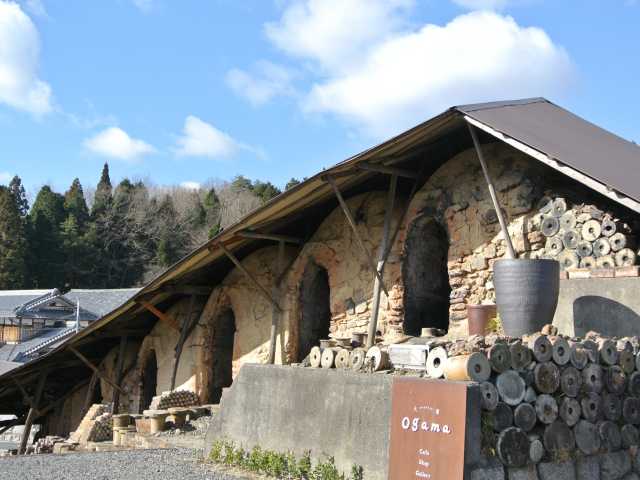
滋賀【信楽】信楽を観光しよう♪ 工房&窯元めぐり - まっぷるウェブ
20以上の窯元があり、日本遺産に認定されている信楽焼の里。 信楽駅前から続く道沿いに点在する窯元やギャラリーをめぐって、お気に入りの器を見つけましょう。 また、信楽は朝宮茶の産地としても有名です。 信楽焼の里をゆっくり散策したあとは、信楽焼
www.mapple.netHasami Ware (Hasami / Nakao-yama, Nagasaki, Japan) — Modern Tableware and a Walkable Pottery Town
Hasami ware stands out for its contemporary, everyday appeal. Light forms, clean color palettes, and designs you can put straight into daily use — these qualities make it one of the most approachable entry points for a pottery trip in Japan. Nakao-yama is especially worth visiting, with its hillside lanes, brick chimneys, and stone walls forming a landscape that practically invites a slow wander. The Rakuten Travel Hasami guide lists 18 kiln workshops in the district, so the feeling of "traveling through a pottery town" never fades as you walk.
Accessibility for kiln-hopping is respectably high, depending on your objective. In a compact area like Nakao-yama, walking is genuinely enjoyable; for a wider sweep, a car helps. Experiences range from beginner-friendly painting and workshop tours to more involved making sessions. The Hasami Ceramics Industry Cooperative's Pottery Tour Map makes it straightforward to plan which workshops to visit and which offer hands-on programs. Spring is event season, with the Hasami Sakura Pottery Festival 2026 on April 4–5 and the Hasami Pottery Festival 2026 running April 29 through May 5. According to the Nagasaki Travel Net, the pottery festival draws around 150 vendors, and the Golden Week period generates serious shopping energy. During events, popular shops fill up from early morning; in the off-season, the pleasure of climbing Nakao-yama's slopes at your own pace and comparing shops takes center stage. By car, access from the Hasami-Arita interchange area is convenient. Public transit involves combining nearby train stations and buses, so the trip requires a bit more advance planning. For festival-period venue layouts and temporary transport arrangements, rely on Hasami's official announcements for the current year.
陶芸見学マップ|波佐見陶磁器工業協同組合(公式ホームページ)
www.hasamiyaki.or.jpArita Ware (Arita, Saga, Japan) — Porcelain History, Exquisite White Clay, and Blue-and-White Designs
Arita ware draws you in with the refined beauty of white porcelain and sometsuke (blue-and-white painted decoration), and with the chance to walk through the living history of Japanese porcelain. The atmosphere differs markedly from an earthenware-focused trip. Here, the townscape, museums, and historic architecture combine into a journey built around appreciating the elegance of porcelain. It suits anyone drawn to the clarity of white glaze, the delicacy of indigo brushwork, or who finds that museum and history exhibits directly add to travel satisfaction.
The stretch between Arita Station and Kami-Arita Station lines up with the main points of interest, giving this area strong compatibility with public transit. During festival periods, the main venues spread across the same corridor, making shop-hopping on foot a major plus. Hands-on options differ by facility — painting, wheel-throwing, raku firing — and it is easier here than in many pottery towns to allocate more time to learning over making. The Arita Town Tourism Association's experience page lists multiple facilities, and the layout naturally connects history tours with workshop visits within a single day. The centerpiece event is the Arita Pottery Fair, held April 29 through May 5 in 2025 with hours around 8:00 to 17:00; multiple sources indicate the same dates for 2026. During the fair, the entire town transforms into an enormous open-air market. Early risers have the advantage: hit the popular shops in the morning and shift to museums and back streets in the afternoon to avoid the densest crowds. In the off-season, foot traffic calms down and you can take your time asking shopkeepers about the stories behind their pieces — the quality of your selections often goes up, not down. JR access is convenient for planning; by car, traffic restrictions and special parking arrangements during the fair can disrupt your rhythm, so rail travel has the edge during events. For workshop operating days and fair-period transportation plans, check the Arita Town Tourism Association and the official pottery fair page for the current year's details.
Seto Ware (Seto, Aichi, Japan) — Setomono Culture and an Urban Pottery Walk
Seto's appeal lies in the depth of its setomono culture — a word so synonymous with ceramics in Japanese that it became a generic term for tableware. This is a place where you absorb not just a single style but the breadth of everyday pottery production, distribution, and town history. It is not a flashy tourist destination, and the modest scale from the station makes it easy to get your bearings. A half-day or day trip comes together without much effort.
A strong starting point that links kiln-area walking with cultural context is the Seto-gura Museum. It is about a 5-minute walk from Meitetsu Seto Line's Owari-Seto Station. The Aichi Now listing shows general admission at 520 yen (~$3.50 USD). Viewing the exhibits first gives you a framework: when you step outside and start walking past pottery shops and kiln-wall ruins, everything reads differently. The museum itself offers programs that vary by season, so if a hands-on session is your goal, plan that separately at a dedicated workshop in the city. Splitting "where you learn" from "where you make" actually simplifies your itinerary.
Tokoname Ware (Tokoname, Aichi, Japan) — Hillside Kiln Ruins and Easygoing Painting Workshops
Tokoname's standout quality is how thoroughly you can experience a pottery town on foot. The reddish clay tones, sloping streets, walls built from clay pipes and shochu bottles, and brick chimneys create a continuous visual narrative. It doubles as a townscape walk alongside a ceramics trip, and the photogenic streets mean that companions with no particular interest in pottery still find plenty to enjoy.
Among the seven production areas covered here, Tokoname ranks highly for walkability. Anchoring your route on the Tokoname Pottery Footpath keeps navigation simple. Course A covers about 1.6 km in roughly an hour; Course B extends to about 4 km over 2.5 hours. Meitetsu Tokoname Station is just a 5-minute walk from the trailhead, so a public-transit-only trip works perfectly well. The experience sweet spot here is not a heavy studio session but rather slipping a painting workshop or a small making project into the middle of a town walk. As mentioned earlier, the Noborigama Hiroba Exhibition Workshop offers painting at 750 to 2,200 yen (~$5 to ~$15 USD) with a one-hour session — light enough not to break the walking rhythm. During event periods the footpath fills with visitors, but Tokoname in its quieter everyday mode lets you set your own walking speed. Head into the footpath early in the morning, fit a workshop in before lunch, and drift toward cafes and galleries in the afternoon — that pacing distributes the fatigue from all the hills nicely. You can drive here too, but the footpath itself is best enjoyed on foot. For parking details and individual workshop reception hours, check the tourism association and each facility's official information.
Choosing by Regional Character: Rustic, Modern, or Town-Walk
When you are stuck deciding on a destination, it helps to separate two questions: "What kind of ceramics am I drawn to?" and "How do I want to move around on the trip?" Choosing on style alone can lead to a surprise — "I didn't realize this town was so spread out" or "I needed a car." Choosing only on convenience risks ending up somewhere whose pottery does not speak to you. Laying both dimensions side by side makes the match much clearer.
| Type | Best-Fit Areas | Style Focus | Travel Ease | Quick Take |
|---|---|---|---|---|
| Rustic | Mashiko, Kasama | Warm clay textures, mingei leanings, handmade feel | Mashiko is strong during events; Kasama is easy to navigate from a single hub | Mashiko: scale of the pottery fair. Kasama: breadth of artist styles |
| Earth & Fire | Shigaraki | Raw clay, fire-marks, ash deposits | Easier with a car | The intensity of wood-fired ceramics hits differently in person |
| Modern | Hasami | Clean lines, everyday use, contemporary design | Shopping and strolling work together | Walking Nakao-yama makes the town atmosphere visible |
| History | Arita | White porcelain, sometsuke, refined precision | Walkable for sightseeing | A town walk that doubles as a history lesson |
| Town-Walk | Seto | The breadth of setomono culture; town and tableware as one | Works on public transit | Start at the museum and let the route unfold |
| Craft Diversity | Kasama | Contemporary artist pieces, wide expressive range | Especially dense during events | The fun of a production area that refuses to be pinned to one style |
Rustic
If you gravitate toward rustic pottery, Mashiko and Kasama both deserve a spot on your shortlist. Both let you feel the texture of the clay, though the trip atmosphere differs. Mashiko carries a mingei calm alongside the electric buzz of its pottery fairs — a strong pick for anyone who wants to compare a large volume of everyday tableware. With roughly 160 kiln workshops per the Mashiko Town Tourism Association, the sheer range of styles provides a rich foundation.
Kasama adds contemporary artist flair to that rustic base. If Mashiko is "the town that shows classics in depth," Kasama is "the town that widens your options." Using the area around Kasama Art Forest Park as a base lets you combine exhibitions, shopping, and workshops efficiently, which simplifies planning. Within the rustic category, choose Mashiko for the reassurance of well-established traditions and Kasama if you also want to discover one-of-a-kind pieces with more individual expression.
On the travel-ease front, Mashiko is relaxed in the off-season but truly defined by its pottery fairs. The energy of ceramics fans converging in one place is unmatched, and it clicks best with anyone who wants the event to be the trip's main draw. Kasama's anchor is the Himatsuri festival, but the Craft Hills hub also makes off-season visits easy to structure, which suits travelers who prefer a manageable half-day pace.
Earth & Fire
If you are pulled toward the gritty texture of unglazed stoneware, the force of a wood-fired surface, and the unpredictable marks left by flame and ash, Shigaraki is the clear answer. It offers a high-purity "trip to see earth-fired ceramics," with raw clay character, fire-marks, and ash deposits as the direct purpose of the visit. The Mappuru Web guide lists over 20 workshops, and even within Shigaraki ware, the variation from one kiln to the next is striking.
This is a production area where pieces look dramatically different in person than in photographs. The roughness of a surface, the irregular patches of color from firing, the heft of a thick rim — these qualities only register when you hold the piece. What makes Shigaraki special for earth-and-fire enthusiasts is that the value lies in the kiln's imprint, not in polished perfection. The trip is less about balanced beauty and more about enjoying raw material at its most expressive.
For getting around, a hybrid approach works best: start with a station-area walk, then expand by car in the afternoon. This is a workshop-visit trip rather than a town-stroll trip. Rather than linking cafes and boutiques, you get the most out of Shigaraki by going in with a clear theme — "today is about clay" — and staying focused.
Modern
For anyone after clean silhouettes, light color schemes, and tableware that slides right into everyday life, Hasami is the strongest contender. Hasami ware reads as approachable even to people with no prior ceramics knowledge, because the pieces make it easy to picture exactly where they would land on your table.
Nakao-yama is the showcase. The Rakuten Travel Hasami guide counts 18 kiln workshops in the district, and the density makes wandering and window-shopping feel natural. Combine that with the Hasami Ceramics Industry Cooperative's Pottery Tour Map and you can build a route that mixes shopping with a hands-on session without forcing either. Hasami works for the modern-style seeker because both the selectability of the ceramics and the walkability of the town meet you at the same level.
Events add energy too. The Hasami Pottery Festival draws around 150 vendors in some years, making it exceptionally efficient for a shopping-focused trip. In the off-season, Nakao-yama becomes a quiet hillside ramble where you compare shops at your own rhythm. For anyone who wants shopping and strolling in equal measure, this range is just right.
History
If you want a trip that extends beyond the ceramics themselves to cover a region's origins and Japan's broader porcelain history, Arita is the match. Arita's draw is not only the beauty of white porcelain and sometsuke designs but the fact that walking through the town is, in itself, a way of tracing the story of Japanese porcelain. The direction is different from a trip centered on earthy stoneware — here you follow precision, technique, and the accumulation of decorative tradition.
Points of interest line the corridor between Arita Station and Kami-Arita Station, and following the town on foot is a natural way to absorb the narrative. Peering into shops one by one, registering the subtle differences in the white glaze, the fineness of the brushwork, the way old buildings complement the ceramics on display — it turns shopping into something closer to reading the culture of a place. Arita resonates with history buffs and art lovers because its ceramics serve not just as functional tools but as objects of contemplation.
During events the town becomes one enormous marketplace; in the off-season the quieter atmosphere lets you appreciate the layers behind each piece. That contrast is part of what makes Arita fascinating. Festival days favor volume comparisons; regular days favor a long look at a single plate. For the history-minded traveler, Arita stands out as a town where every step deepens your understanding.
Town-Walk
If you want to split your time roughly evenly between looking at ceramics and exploring a town, Seto comes together most naturally. Rather than zeroing in on one style, Seto invites you to feel the whole sweep of setomono culture within the fabric of the town — strolling and learning connect seamlessly. The approach from the station is intuitive, and a day trip or half-day visit is easy to plan, keeping your schedule flexible.
The flow that works best in Seto is "learn first, then make." Starting with a museum visit keeps the subsequent walk from becoming aimless window-shopping. Use the Seto-gura Museum as your orientation point for exhibitions, and book a separate workshop elsewhere in the city for hands-on making. Building a half-day to day-trip itinerary around walking keeps things manageable.
💡 Tip
If you are unsure which pottery town suits you best, start with two filters: style preference — stoneware, porcelain, or modern — and travel preference — walking a compact town, driving a wider circuit, or riding the buzz of a festival. Mashiko is defined by festival energy, Shigaraki by the force of its clay, Hasami by the ease of its shopping, Arita by history on foot, Seto by the cohesion of its town walk, and Kasama by the diversity of its craft scene.
Tips and Practical Notes for Kiln Town Visits
Checking Reservations and Business Days
The single fastest way to derail a kiln-town itinerary is arriving to find that a workshop you planned to visit "is closed to visitors today" or that a hands-on session you assumed was walk-in "actually requires a reservation." Kiln workshops vary enormously in how they operate — a large showroom-style facility runs on a completely different rhythm from a small studio that opens its doors to visitors only on certain days. A place may have its retail shop open while the workshop tour or experience is a separate booking entirely.
For that reason, look beyond aggregated tourism pages and go straight to each facility's or kiln workshop's own page for reservation requirements and business-day policies. Kasama Craft Hills, for example, lists reservations as the standard for its wheel, hand-building, and painting courses. If the experience is the backbone of your trip, build the rest of the schedule around that time slot rather than fitting it in after meals and shopping. Conversely, in areas like Hasami or Arita where you visit multiple kiln workshops, each one may have different closures and visitor policies, so narrowing your candidates to two or three and checking each individually is the realistic move.
Business-day fluctuations deserve their own attention. Even permanent facilities may close for exhibition prep, kiln firing, event setup, or unscheduled maintenance. Solo-artist studios often prioritize production over visitor reception and may only be open certain days. To avoid the "arrived first thing and could not get in" scenario, check not just the regular closing days but that month's announcements or the experience calendar. Periods around public holidays and long weekends are especially prone to unexpected schedule changes.
Navigating Festival Periods
During pottery fairs and festivals, the entire approach to getting around needs to shift from your regular-season mindset if you want to come away satisfied. On a normal visit, "walk into a shop that catches your eye and browse while chatting" works beautifully. During a festival, the number of vendors you can compare jumps dramatically, but crowds and access constraints tighten at the same pace. The Hasami Pottery Festival draws around 150 vendors, and areas like Nakao-yama that are a pleasure to stroll in the off-season become places where the order in which you visit matters.
In a production area like Mashiko where events reach a large scale, the difference is particularly sharp. The 2026 spring Mashiko Pottery Fair runs April 29 through May 6, 9:00 to 17:00 (closing at 16:00 on the final day), with paid parking at 1,000 yen (~$7 USD). At events of this size, parking fills early and popular artist booths may draw lines from opening. If there is a specific artist or established favorite shop you are after, use the early morning hours for securing your target rather than for leisurely comparison.
That said, festival periods bring advantages you cannot get at other times: special pricing, limited-edition pieces, the sheer efficiency of seeing so many makers in one place, and the low-commitment ease of buying something on impulse. On the flip side, anyone who wants quiet conversation with an artisan or wants to study the differences between clay bodies and firings will have a better time in the off-season. Festivals deliver "volume and energy"; regular visits deliver "dialogue and detail." Framing it that way makes the choice straightforward.
ℹ️ Note
A helpful framework for festival days: "morning is for priorities, afternoon is for wandering." Tackle the popular booths and the parking areas that fill up fastest early in the day, then shift to town walking and light shopping in the afternoon. It keeps the crowds from dictating your pace.
What to Wear and Bring
On a day that includes a hands-on session, prioritize ease of movement over appearance and you will be more comfortable throughout. Hand-building involves sustained pushing, stretching, and scraping of clay, and sleeves and knees get dirtier than you might expect. The electric wheel throws off clay spatters too, and even painting can leave pigment or water on your hands and cuffs. Start with clothes you do not mind getting dirty, and either bring an apron or confirm whether the studio provides one — it makes the town walk after your session far more relaxed.
Two small details make a surprising difference: nails and sleeves. Long nails leave grooves in clay and make fine shaping harder. Wide sleeves pick up water and slip on the wheel. On kiln-visit days, the author finds it more comfortable to leave accessories behind and wear sleeves that roll up easily. Separating your "dress-up day" from your "workshop day" prevents regret.
For gear, a hand towel large enough to properly dry your hands beats a pocket handkerchief. If you are mostly shopping, you do not need to carry your own packing materials, but if you plan to buy multiple pieces at outlet prices or bring back a workshop creation, having an extra bag is worth thinking about. Wrapping quality varies from shop to shop, so rather than preparing newspaper and boxes in advance, just stay aware of how each place handles packaging as you go.
Receiving Your Finished Piece and Shipping
An easy-to-miss detail is the combination of shipping costs and pickup options. Some workshops default to shipping; others let you pick up in person. If you plan to revisit the area, in-person pickup might work, but for most travelers coming from a distance, shipping is the natural choice. Keep in mind that pieces requiring kiln firing can take several weeks or sometimes longer depending on workshop congestion, so always confirm the timeline, shipping cost, and delivery method before your session.
Choosing Between Car and Public Transit
The transportation decision works best when you base it on how you plan to move around rather than on the production area's size alone. In areas where walking is the main pleasure, public transit can actually feel better than driving. Nakao-yama's cluster of kiln workshops invites lingering and detours, and the Tokoname Pottery Footpath starts just a 5-minute walk from Tokoname Station. With Course A at about 1.6 km (roughly 1 hour) and Course B at about 4 km (roughly 2.5 hours), connecting shops, galleries, and a quick workshop while on foot fits naturally. Without a parking lot to loop back to, you are free to duck into any lane or storefront that catches your attention.
On the other hand, in a dispersed area like Shigaraki, a car opens things up considerably. Walking from the station covers the basics, but linking multiple workshops across a wider area calls for an afternoon behind the wheel. The more your list grows — "I want to see this studio too, and that gallery" — the more a car pays off.
During event periods, add another layer of adjustment. A production area that normally suits driving may become frustrating during a major festival, when traffic jams and parking queues throw off your timing and public transit or shuttle buses end up being smoother. The practical rule: in the off-season, choose based on terrain; during events, choose based on crowd flow. Walkable towns pair with trains for agility; wide-ranging production areas pair with a car for efficiency; but during festival weeks, reconsider from scratch. Keeping those categories in mind makes kiln-town planning far more manageable.
Building a 1-Night-2-Day or Day-Trip Itinerary
Day-Trip Model
For a day trip, the most stable sequence is browse in the morning, make in the afternoon. Spending the morning looking at kiln workshops and gallery pieces loads your mind with the region's style, so by the afternoon you have a clearer idea of what shape you want to create. Flipping the order — jumping into a workshop first — tends to leave you satisfied after making, with less energy for shopping and exploring. The shorter the trip, the more this sequence matters.
From the Kanto region, Mashiko and Kasama are the easiest to structure. Both offer clear paths from morning browsing into afternoon hands-on sessions.
A smooth day in Mashiko might look like this: Arrive around 9:30 — 10:00 to 12:00 strolling kiln workshops and the cooperative sales center — 12:00 to 13:00 lunch at a nearby cafe — 13:30 to 15:00 pottery experience — 15:30 onward for a road station stop or one or two more ceramic shops. For the afternoon session, the electric wheel fits when you want to keep things brisk; hand-building is the pick if you want to dig in. The wheel tends to wrap up on-site in around an hour, so even on a day trip it avoids a cramped feeling. Mashiko is best known for its pottery fair, but the high number of kiln workshops means that a regular-season morning still provides plenty of substance.
Kasama leans on Kasama Craft Hills as its organizing anchor. A personal itinerary might go: arrive around 10:00 to browse exhibitions and shops, shift to a cafe for lunch around 11:30, start a workshop around 13:00, and leave time for a park walk or extra shopping around 15:00. Experience fees at Kasama Craft Hills run roughly 4,400 yen (~$30 USD) for the wheel, 2,640 yen (~$18 USD) for hand-building, and 1,650 yen (~$11 USD) for painting, with sessions around 70 minutes.
Factoring in food along the way, a day trip moves more smoothly when you keep lunch light and add a cafe stop after the workshop. Hand-building takes one to two hours, and a full meal right before can make the session feel heavy. The electric wheel or painting slots in well in the early afternoon, after which you can wind down at a road station or sweet shop. If driving, adding a single day-use onsen (hot spring bath) on the way home can round out the day nicely. Looking at ceramics, touching clay, then soaking tired hands and feet in hot water — it creates a sense of closure even on a one-day outing.
If you are visiting on an event day, shift your usual order slightly earlier to stay ahead of the crowds. The 2026 spring Mashiko Pottery Fair runs April 29 through May 6, from 9:00 to 17:00 (16:00 on the final day). On those dates, finish your priority shopping in the morning, arrange shipping for heavier purchases, and move to your pre-booked workshop in the afternoon. Hauling bags through a packed fairground all day is tiring. Splitting the morning into shopping and the afternoon into making reduces fatigue and keeps the schedule from unraveling.
1-Night-2-Day Model
With an overnight stay, the destinations that shine are the wider-ranging production areas that a day trip cannot comfortably cover. From Kansai to Kyushu, Shigaraki and a Hasami-plus-Arita combination structure well. Rather than trying to do everything in a single day, devoting Day 1 to "seeing and learning" and Day 2 to "making and eating" keeps transit time from eating into your sightseeing.
Shigaraki works best when you separate the station-area introduction from the wider kiln circuit. The Mappuru Web guide lists over 20 workshops, and walking alone cannot cover them all. A suggested flow: Day 1 — arrive in Shigaraki around 11:00, lunch, afternoon visiting exhibition facilities and galleries near the station, check in to your accommodation by evening, relax at an onsen or large bath. Day 2: start around 9:30, drive to a few kiln workshops that caught your interest, fit a pottery experience in around 13:00, cafe break around 15:00, head home. Spending Day 1 looking at finished works means that by Day 2 your workshop session has direction — "I want to make something with that thick Shigaraki character" — which makes the experience more rewarding.
For a richer two-day trip, linking Hasami and Arita delivers a satisfying contrast. Hasami brings modern, daily-use tableware; Arita brings porcelain history and rewarding town walks. Seeing them back to back makes the differences vivid. Nakao-yama in Hasami has 18 kiln workshops clustered for walking and comparing.
A model itinerary: Day 1 — arrive in Hasami around 10:30, walk Nakao-yama kiln workshops 11:00 to 13:00, lunch, workshop session 14:30 to 16:00, head to accommodation. For the afternoon session, the electric wheel keeps things light if you have been walking; painting is a comfortable fit for families or beginners. Staying in the Hasami area or on the Saga side, choosing a place with an onsen speeds recovery from a day on your feet.
Day 2 shifts to Arita: 9:30 to 12:00 town walk with museum and shop visits, lunch, 13:30 to 15:00 for an extra workshop or final shopping, cafe break and head home. This pace gives you room to appreciate Arita's porcelain heritage without rushing. The Arita Pottery Fair runs April 29 through May 5, with hours roughly 8:00 to 17:00, so during the fair an earlier start is even more worthwhile. The Hasami Pottery Festival also runs April 29 through May 5 with around 150 vendors per the Nagasaki Travel Net. Both areas have overlapping event dates, which amplifies the shopping intensity. On a one-night trip, allocating early Day 1 to Hasami and early Day 2 to Arita divides the energy well.
If you are visiting during festival dates, use your accommodation as a way to lighten your load. Arrange shipping for Day 1 purchases at the point of sale and avoid spreading everything out in the hotel room. On Day 2, limit yourself to small items you can carry. Keeping shopping and workshop time in separate blocks — event mornings for browsing and buying, afternoons for making — is all it takes to keep the trip's density balanced.
Rainy-Day and Family-Friendly Adjustments
On rainy days or trips with children, the mindset shift that works is cutting outdoor walking time and raising the quality of time spent indoors. A pottery trip may conjure images of outdoor strolling, but in practice the key elements — galleries, museums, workshops, cafes — are almost all indoor activities. When the weather turns, trading a wide town circuit for a single-venue deep dive usually preserves satisfaction better.
For families, afternoon workshops tend to work best as painting or a shorter wheel session. Painting gives kids a clear sense of what they are making and a visible goal, which holds attention well. Keep the morning to one or two gallery or exhibition stops, break for lunch, then move to the afternoon workshop, followed by a cafe rest. That rhythm lets everyone reset between activities. Tilting the day toward shopping tends to leave children waiting too long, so making the workshop, not the shopping, the main event brings more stability to a family trip.
For a rainy day in Kanto, Kasama Craft Hills is convenient: exhibitions, shops, workshops, and a cafe all within close range. The basic plan of morning viewing and afternoon making holds; just cut the outdoor walking. In Kansai, lean on Shigaraki's exhibition facilities and museums. In Kyushu, use Hasami's pottery tour map to keep your walking route through the densest area short. The idea is to minimize time under an umbrella without giving up the core experience.
💡 Tip
On rainy days or family trips, resist the urge to overdo the morning itinerary and start the afternoon workshop a bit earlier. Even with fewer steps, a day that includes "seeing a kiln workshop," "making something," and "relaxing at a cafe" still leaves you with a solid sense of having traveled.
Combining with an onsen also pays off on rainy or family days. When outdoor walking is limited, shortening the kiln tour and heading to a hot spring or large bath by late afternoon transforms how tired you feel by evening. Especially on a one-night trip: consolidate Day 1 into sightseeing plus a workshop, soak in the onsen that evening, and keep Day 2 light with final shopping and lunch. That structure holds up well against both children's moods and weather shifts. Road stations also work as convenient reset points — meals, souvenirs, and restroom breaks wrapped into one stop without derailing the pottery-trip rhythm.
If a rainy day coincides with a festival, leaning even harder into the early-morning start pays off. Move through the vendors you care about most before crowds build, arrange shipping for purchases, and retreat to an indoor workshop for the afternoon. That pivot keeps the day from becoming "just crowded shopping" or "exhausting and wet." A pottery trip works best when you pre-select a morning focus, an afternoon making session, and the meals and rest stops in between — and paradoxically, that light framework gives you more freedom to improvise than a wide-open plan would.
Recommendations by Traveler Type
Even within the world of pottery travel, what makes a trip satisfying shifts dramatically depending on who you are traveling with. The most practical starting point is to ask: "Do I want quiet contemplation?" "Do I want shared making time as the highlight?" "Do I need to minimize travel friction?" Picking a destination by prestige alone is less reliable than choosing one that matches your group size and conversational rhythm.
Solo Travelers: Mashiko and Seto
For a solo trip, the ideal is a production area where you can compare artist pieces at your own pace and have unhurried conversations with shopkeepers or artisans when you feel like it. Mashiko and Seto fit that description well.
Mashiko's depth of kiln workshops and artists is substantial — about 160 workshops per the Mashiko Town Tourism Association. During events the town buzzes, but in the off-season it becomes a place where you can test impressions like "I like this clay texture" or "the slightly thick rim on that bowl interests me" without anyone rushing you. The solo trip here is less about deciding whether to buy and more about the process of articulating your own taste — and that is where the enjoyment lives. The large-scale pottery fair offers its own thrill of surveying everything at once, but the quieter off-season is often better for absorbing differences in style.
Seto suits the solo traveler who wants a small dose of learning mixed into a town walk. Starting at the Seto-gura Museum, about a 5-minute walk from Owari-Seto Station (admission around 520 yen / ~$3.50 USD per the Aichi Now listing), gives you historical context before you step into the surrounding streets. For solo trips, that museum-first, shopping-second order transforms the experience from generic browsing into an informed deepening of personal preference — and that is Seto's real strength. Travelers who value quiet observation and one-on-one conversation over lively events tend to come away most satisfied here.
Couples: Hasami and Tokoname
For couples, the impression a trip leaves depends not just on the quality of what you make but on whether you both walk away with a shared "we did that" feeling. That is why Hasami and Tokoname, where the electric wheel fits naturally into the itinerary and the post-workshop town walk is its own reward, work so well.
Hasami's modern, daily-use ceramics make it easy for two people to stand in front of a shelf and discuss "which one would work at home." The 18 kiln workshops in Nakao-yama give the walk itself a date-like quality at a comfortable density. Browse in the morning, shift to a wheel session in the afternoon, and the pieces you saw earlier naturally influence what you try to shape. The electric wheel wraps up quickly enough to leave room for both a focused creative stretch and the relaxed conversation that follows. As a place where conversation happens organically, Hasami is hard to beat.
Tokoname's strength is the sheer polish of its walking route. The Pottery Footpath's Course A covers about 1.6 km in roughly an hour; Course B stretches to about 4 km over 2.5 hours, so you can calibrate walking volume around the workshop. Clay-pipe slopes, chimneys, and aged workshop facades provide a continuous backdrop, which means the trip memory is not just the workshop but the walk itself. For couples who want to bring home the streetscape along with their handmade pieces, Tokoname is the easier one to build around.
Families: Kasama and the Shiga Ceramic Art Forest Area
For family trips, what matters more than the quality of the finished piece is how predictable the time commitment is and whether there is breathing room for kids after the workshop. On both counts, Kasama and the Shiga Prefectural Ceramic Art Forest area deliver.
Kasama Craft Hills bundles experiences and nearby facilities into a tight radius. Pricing runs roughly 2,640 yen (~$18 USD) for hand-building, 1,650 yen (~$11 USD) for painting, and 4,400 yen (~$30 USD) for the wheel course, with sessions around 70 minutes. When booking for multiple people or requesting shipping, confirm the total including firing and delivery fees for a smooth experience.
The Shiga Prefectural Ceramic Art Forest area also pairs well with families. Beyond viewing Shigaraki ceramics and exhibitions, the spacious grounds include outdoor installations and open areas, so you are never stuck indoors for too long. Workshops are organized around specific programs, but the facility as a whole makes it easy to alternate between "looking at art" and "walking in nature." The roughly 20-minute walk from Shigaraki Station also means families with a car will find it especially smooth to manage. The practical advantage of this spot is that you can switch the scenery before kids lose patience.
ℹ️ Note
On family trips, keeping the shopping component modest and combining one workshop session with park or plaza time tends to stabilize the whole day. Even a short window of looking at ceramics is enough when the memory of making something sticks.

滋賀県立陶芸の森
滋賀県立陶芸の森は、やきものを素材に創造・研修・展示など多様な機能を持つ公園として、また、人・物・情報の交流をとおして地域産業の振興や新しい文化創造の場とするとともに、滋賀から世界へ情報を発信することを目的に整備され、平成2年6月に竣工、開
www.sccp.jpWhen Budget Drives the Decision, Compare Experience Types
If budget is your primary filter, looking at what you make rather than which town you visit gives you clearer guidance. Generally, painting sits at the lightest price point, hand-building in the middle, and the electric wheel toward the upper end. At some Shigaraki facilities, hand-building starts around 1,800 yen (~$12 USD) and the electric wheel from 4,000 yen (~$27 USD) — the spread within "pottery experience" is larger than you might assume.
That gap feeds directly into trip design. A family of four going all-in on the electric wheel will feel the cost; mixing in painting or hand-building keeps the total manageable. A couple might allocate toward two wheel sessions and offset by choosing a simpler lunch. Solo travelers have the option of skipping the hands-on session entirely and visiting an exhibition facility instead — the Seto-gura Museum at 520 yen (~$3.50 USD) is one example of starting with a low-cost route to deepen your understanding of a production area.
For the budget-conscious, choosing based on price alone matters less than asking whether the experience delivers satisfaction relative to its duration. On a short trip, even a painting session in the few-hundred to low-thousand yen range leaves you feeling "I did more than just look." With a longer block of time, hand-building or the electric wheel earns its place as the trip's main event. Keeping your traveler-type match intact while adjusting the budget is the most realistic approach.
Wrapping Up and Next Steps
From here, decide whether you want the bustle of a pottery fair or the calm of an off-season visit where conversations and hands-on making take center stage. Then match hand-building or the electric wheel to the time you have available. Folding in an onsen or cafe stop rounds out the balance between browsing and creating. If you want to explore cultural travel more broadly, articles on recommended cultural experiences in Kyoto and top sake brewery tours offer a useful next step for finding a weekend trip that fits your interests.