
5 Best Kimono Rental Walking Spots in Japan (2026) — Picked for Photo Quality and Walkability
5 Best Kimono Rental Walking Spots in Japan (2026) — Picked for Photo Quality and Walkability
If you're trying kimono rental for the first time in Japan, skip the cheapest option and focus on two things first: whether the backdrop is worth photographing, and whether the walking route is manageable in zori sandals. This guide compares five beginner-friendly areas across Kyoto, Asakusa, and Ginza, then maps out the full flow from check-in to strolling, shooting, and returning the kimono — ready to drop straight into your itinerary.
If you're renting a kimono for the first time in Japan, price alone is a poor filter. What actually drives satisfaction is proximity to photogenic backdrops and whether you can walk comfortably in zori sandals. This guide lines up five beginner-friendly areas — centered on Kyoto, Asakusa, and Ginza — and walks through the entire flow from check-in to strolling, shooting, and return, laid out so you can slot it directly into your travel plans.
Some spots, like the area around Kiyomizu-dera Temple (Kyoto, Japan), deliver classic Japanese scenery at every turn. Others, like Asakusa and Ginza (both in Tokyo, Japan), keep things simple with clear routes from the nearest station and enough landmarks to fill a short visit. Plan prices can look cheap on the surface, but extras like hair styling, accessories, and damage coverage shift the real total fast — so this guide flags exactly what to check before you book.
By the end, including the half-day and full-day sample itineraries, you'll have enough to decide not just which neighborhood to rent in, but what time to reserve, where to shoot, and when to return.
What Makes Kimono Walking Special, and How to Pick the Right Area
Walking in a kimono flips the usual sightseeing mindset. Instead of rushing between landmarks, you're exploring — noticing side streets, shopfronts, the light along a canal, the curve of a bridge. Shorter distances with more pausing and photographing tend to beat ambitious itineraries. Picture this: after visiting Kaminarimon Gate, you stroll toward Sumida Park and stop for a shot with Tokyo Skytree in the background. Or you drift along Gion Shirakawa's canal, pausing by the willows and Tatsumi Bridge for a few frames. That kind of "a few hundred meters at a time" pace is where kimono and walking fit best.
One reason kimono rental pairs so well with sightseeing is how little preparation it takes. Most shops provide the full set, so even mid-trip you can step in without adding luggage. Beyond convenience, wearing a kimono shifts how a place feels. Streets that look like tourist stops in Western clothes suddenly feel like you belong there — stone-paved slopes, temple gates, willow-lined canals, old-town shopping arcades. The camera picks up on it, too. Your photos stop looking like souvenir shots and start feeling like scenes from the trip itself.
Building a real itinerary means accounting for the time before you walk out the door. The typical sequence runs: reservation, arrival, check-in and payment, kimono selection, dressing, then departure. According to Rika Wafuku's rental guide, 45 minutes to 1 hour and 20 minutes from check-in to departure is a realistic window. That chunk of time is easy to overlook when planning a travel day, and underestimating it eats into your shooting time. Spring and autumn are particularly busy, and the earliest morning slots mean quieter streets — if photography is the goal, a morning booking is the easiest to build around. Kiyomizu-dera typically opens at 6:00 AM and closes at 6:00 PM (extended to 6:30 PM in July and August). At spots like Kiyomizu-dera where early morning light matters, your departure time directly shapes the quality of your photos.
Four Criteria for Choosing a Walking Area
Start with scenery. Not fame — whether the backdrop naturally complements a kimono. Around Kiyomizu-dera, stone pavement, slopes, temples, and traditional townhouses all line up, creating a classic setting for Japanese-dress photography. Ninen-zaka and Sannen-zaka are historic approach streets in Kyoto's Higashiyama ward, recognized as a Preservation District for Groups of Traditional Buildings, which gives the scenery real depth. Gion Shirakawa draws from willows, canal-side paths, and the quiet mood of the old townscape — more subdued elegance than flashy sightseeing. Asakusa packs Kaminarimon Gate, Nakamise-dori shopping street, and Senso-ji Temple into a tight cluster, making it instantly legible as a tourist destination. Ginza offers a different angle: the wa-modern atmosphere around Kabukiza Theatre, where kimono stands out against a refined urban backdrop rather than a classical one.
Next: walkability. In kimono, surface quality matters more than distance. Ninen-zaka and Sannen-zaka feature stone pavement, slopes, and steps — photogenic, but taxing in zori sandals. Spending half a day around Kiyomizu-dera means noticeably more fatigue in your soles and calves compared to flatter areas. Asakusa, by contrast, keeps its landmarks close together and the routes intuitive, even for first-timers. Walking from Kaminarimon to Sumida Park takes about 10 to 15 minutes, and the flat terrain lets you mix in photo stops without strain. Gion Shirakawa also works well for short-distance strolling, suiting anyone who wants more photos with less walking.
Third: shop access. Areas with rental shops near the station simplify both the start and end of your walk. In Asakusa, some shops advertise locations 1 minute on foot from the station, with others at 2 to 3 minutes. When you can start sightseeing almost immediately in your zori, the experience feels seamless. Shops like Kimono Rental Aiwafuku highlight their station-adjacent Asakusa locations alongside multilingual support, making it easy for first-timers to visualize the flow. Station proximity pays off at the end, too — when return time approaches, having shops clustered near the station makes backtracking painless. Planning a kimono walk works better when you reverse-engineer from "when do I need to return?" rather than "where do I start?" For example, if return is late afternoon, budget 30 to 60 minutes before that for your last photo location, then allow time to fix any loosened layers and collect your belongings.
Fourth: shooting conditions. Photogenic and easy-to-shoot are related but not the same. A gorgeous backdrop loses its appeal if the foot traffic is relentless, the light is always backlit, or there's no room to stop. Ninen-zaka, Sannen-zaka, and Nakamise-dori look great in photos but are narrow and prone to crowding, making extended pauses awkward. Around Kiyomizu-dera during peak season midday, avoiding other people in the frame becomes nearly impossible. Gion Shirakawa and the Sumida River banks offer open backgrounds and side space to step into, so you can rack up shots in less time. Ginza's wider sidewalks allow room to compose, though near brand-name storefronts and theater entrances, being mindful of blocking access is expected.
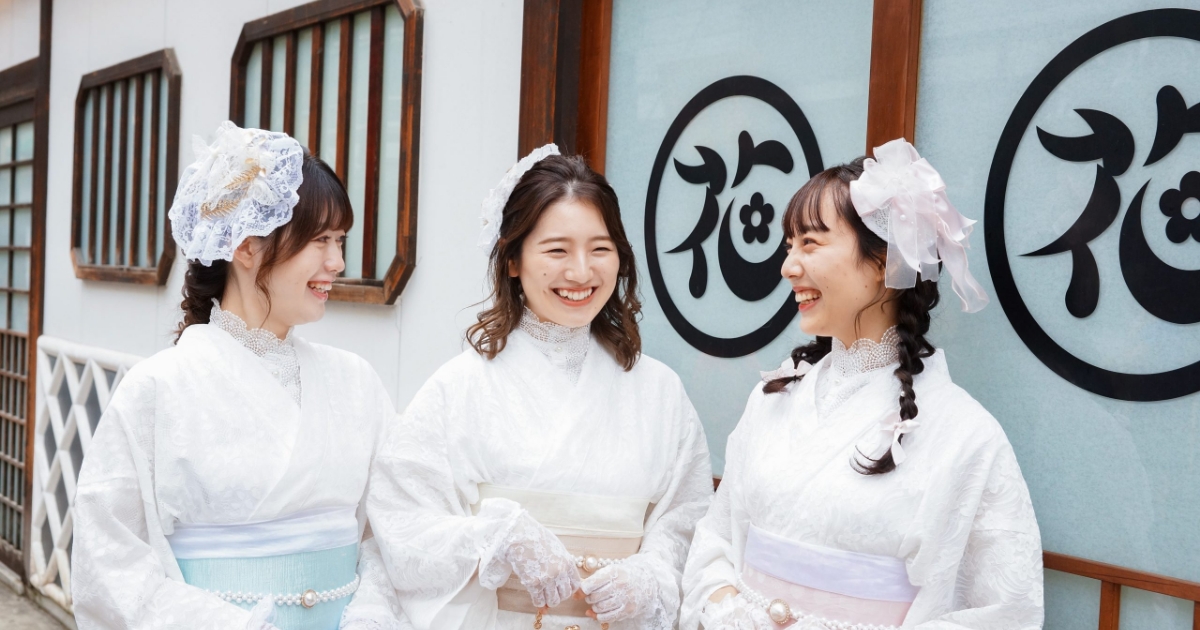
【着物レンタル 愛和服】京都6店舗・浅草3店舗|ヘアセット付・学割あり・当日予約OK
京都・浅草で着物レンタルなら愛和服。全プラン【ヘアセット付】で当日予約もOK。清水寺・祇園・嵐山・伏見稲荷・京都駅など人気観光地に近い京都6店舗、浅草3店舗を展開。レース着物や卒業式袴、成人式振袖まで幅広く対応し、学割・カップル割も人気です
aiwafuku.comSeasons Reshape How Each Area Looks
On top of these four factors, seasonal fit is easy to underestimate. The same area can look completely different under cherry blossoms, fresh green, autumn leaves, snow, or summer festival lanterns. Gion Shirakawa peaks during cherry blossom season, when willows and canal reflections create a soft spring atmosphere. Kiyomizu-dera and Arashiyama show dramatic shifts between fresh green and autumn color, with dense enough backgrounds to absorb seasonal mood effortlessly. Asakusa delivers reliable year-round tourist shots, but pair it with Sumida Park and you can layer in a cherry-blossom-and-Skytree seasonal axis. Summer brings festivals and golden-hour drama; winter's crisp air makes landmarks cut sharply against the sky. Thinking about "what color will this area be in this season" sharpens your choice considerably.
Focus on the Experience Design, Not Just the Price Tag
Kimono rental prices span a wide range. In Asakusa, some shops list rates starting at 1,880 yen per day (2,068 yen with tax / ~$13 USD) on their official sites, while experience listings on Jalan show plans from 6,600 yen (~$44 USD). That gap isn't simply expensive versus cheap — it reflects what's included. What matters most when comparing plans is what comes beyond the dressing itself. Hair styling is sometimes a separate charge or optional add-on, so a budget-looking plan can end up costing the same once you total everything. As Hananowafuku's pricing guide notes, sightseeing-oriented rentals tend to land at 3,000 yen (~$20 USD) or above as a practical baseline, and checking accessories, hair, and coverage all at once gives you a more honest picture. Damage coverage also varies by shop — for instance, one rental insurance example shows a plan at 1,000 yen (~$7 USD) covering repair costs up to 10,000 yen (~$67 USD).
💡 Tip
Kimono walks feel better when you plan for "2 or 3 backdrops in one area" rather than trying to hit more destinations. Think of it in clusters: Kaminarimon, Nakamise, and Sumida Park. Or Gion Shirakawa, Tatsumi Bridge, and the Shirakawa canal bank. Bundling nearby spots keeps walking effort down, too.
For visitors from overseas, shop selection criteria expand further. Some shops explicitly offer multilingual support including English, which tends to smooth out both the booking process and on-site communication. That said, even shops that advertise "come empty-handed" may require identification at check-in. VASARA's kimono rental flow guide mentions this step. Payment options also differ — cash-only shops, card-friendly shops, and shops that accept QR-code payments. For visitors with foreign-issued cards, these logistics can shape the experience more than they would for domestic travelers.
Operating hours, prices, and return policies are moving targets — cross-checking against official sources as of March 2026 reduces the chance of surprises on the day. For more on cultural experiences, see our guide "8 Best Cultural Experiences in Kyoto — Compared by Duration and English Availability," and for general trip planning, "How to Start Your First Solo Trip — Preparation, Choices, and Easing the Anxiety."
【エリア別に紹介】着物レンタルの料金相場はどれくらい?観光向けのお得な安いプラン&値段を抑えるコツを解説 | 浅草着物レンタル花乃和服
着物散策が人気のエリアは着物レンタル店が多数あり、どの店舗を選ぶべきか悩む方は多いです。 お得な着物レンタル店を選ぶためにも、まずは着物レンタルの料金相場を把握しましょう。 料金相場を知ることで、着物レンタル店のプランが 『…
kano-wafuku.comHow to Choose a Kimono Rental Shop Without Regrets
Before comparing prices, check whether the day's flow holds together without gaps. Kimono rental shops often promote "come empty-handed," but what actually determines satisfaction is what's included beyond the kimono itself — the set contents, return policy, ID requirements, and damage coverage. Budget plans in particular draw attention with the entry price, and it's only after adding a sash, accessories, hair styling, and photo options that the total climbs. As noted earlier, treating 3,000 yen (~$20 USD) and up as a realistic baseline for sightseeing-grade rentals helps avoid sticker shock at the counter.
First, Check What's Included to Walk Out the Door
The details that cause the most surprise are whether the set covers undergarments, tabi socks, zori sandals, a bag, and a shawl in addition to the kimono and obi sash. Missing any of these can mean extra charges on site or the assumption that you'll bring your own — neither of which matches the "come empty-handed" expectation. Hair styling varies too. It's not always included in the base price. Whether a hair ornament (kanzashi) is part of the hair set fee or the kimono plan fee also shifts the total.
For family trips or couples, availability of men's and children's sizes matters. Kyoto Kimono Rental Yumekura, for example, lists sizes from 85 cm to 150 cm for children, S to 4LW for women, and 5S to 5L for men — broad enough for groups with a range of body types. Shops with limited size options can make it harder to get the look you saw online. When scanning comparison charts, start with "who can actually rent here," then move to "what do we need to add before we can walk out." That order makes it harder for a low headline price to pull you off track.
京都着物レンタル夢館
安くて早くて可愛い!京都で着物レンタルをするなら夢館へ。人気のレース着物や浴衣など、豊富な着物をご用意。翌日宅配返却で帰りも楽々。夏は浴衣/カップル/大きいサイズあり/京都最大級の大型店。京都駅・清水寺・祇園など観光地へのアクセス抜群。高技
www.kyoto.yumeyakata.comWork Backward from Departure Time, Not Dressing Time
The biggest blind spot for first-timers: you don't step outside right after check-in. The standard sequence is reservation, arrival, check-in and payment, kimono selection, dressing, departure, then return. Allow 45 minutes to 1 hour and 20 minutes from check-in to departure, per Rika Wafuku's guide, and the rest of your itinerary stays intact. If you want to shoot in a popular area during the morning, grab an early slot and arrive a few minutes before your booking — that keeps the whole timeline from drifting.
Online booking cutoffs and walk-in policies also affect usability. Some shops accept web reservations up to 10 minutes before the time slot, but that's closer to "you can squeeze in if there's space." During spring and autumn peaks, early-morning slots fill first. Rather than anchoring the plan to the shop, anchor it to where you want to be shooting. If you want Kiyomizu-dera in the morning light, pin the departure time first, then reverse-calculate which booking slot gets you there.
ℹ️ Note
Instead of cutting photos short to make the return deadline, leave yourself one easy shooting spot near the shop at the end. It's a more relaxed way to close out the day.
着物レンタルの流れ|梨花和服
着物レンタル 梨花和服がご予約方法から着付け、ヘアセット、荷物預かり、着物レンタルをして出発してからご返却までの流れを簡単にわかるようにまとめました!初めて着物レンタルをご利用の方は、ご覧ください!
ewha-yifu.comTreat the Return Window as a Hard Deadline, Travel Time Included
Return policy deserves attention before you even look at pricing. The three things to check: final return time, extension fees, and whether next-day return is available. Planning an afternoon return while wandering far from the shop is a recipe for a rushed walk back — especially when you've been absorbed in shooting. Station-adjacent shops shine here not because they're easier to start from, but because they're easier to get back to. Asakusa, where major landmarks are tightly clustered, makes it natural to drift back toward the shop as the day winds down.
Next-day return unlocks more freedom, but it usually changes the pricing structure significantly. Extension fees also vary — some charge by the half-hour, others apply a flat surcharge after a certain time. These details differ enough between shops that mapping them out like a travel schedule makes comparisons cleaner. If the basic framework of "morning dressing, midday strolling, late-afternoon return" looks like it might slip, scaling back on locations rather than rushing between them almost always produces a better overall impression.
Compare ID Requirements and Coverage by Clarity, Not Just Availability
Even "come empty-handed" shops sometimes require photo identification at check-in. ID verification at arrival is standard practice at many locations, as noted in VASARA's rental process guide. Whether a deposit is collected and how payment works (cash only, cards accepted, or full cashless support) also directly affects how smoothly check-in goes.
Damage coverage, too, needs more than a yes-or-no check. What you want to see is the scope of coverage (stains, tears, accessory damage), what's excluded, the claim ceiling, and how payment works. One rental insurance example covers repairs up to 10,000 yen (~$67 USD) for a 1,000 yen (~$7 USD) premium, but this structure isn't universal. Shops that clearly spell out what counts as covered — food spills, mud splashes, hem wear, broken accessories — and what doesn't are much easier to evaluate on a first visit. Think of coverage less as "peace of mind" and more as "how quickly can this be resolved if something happens."
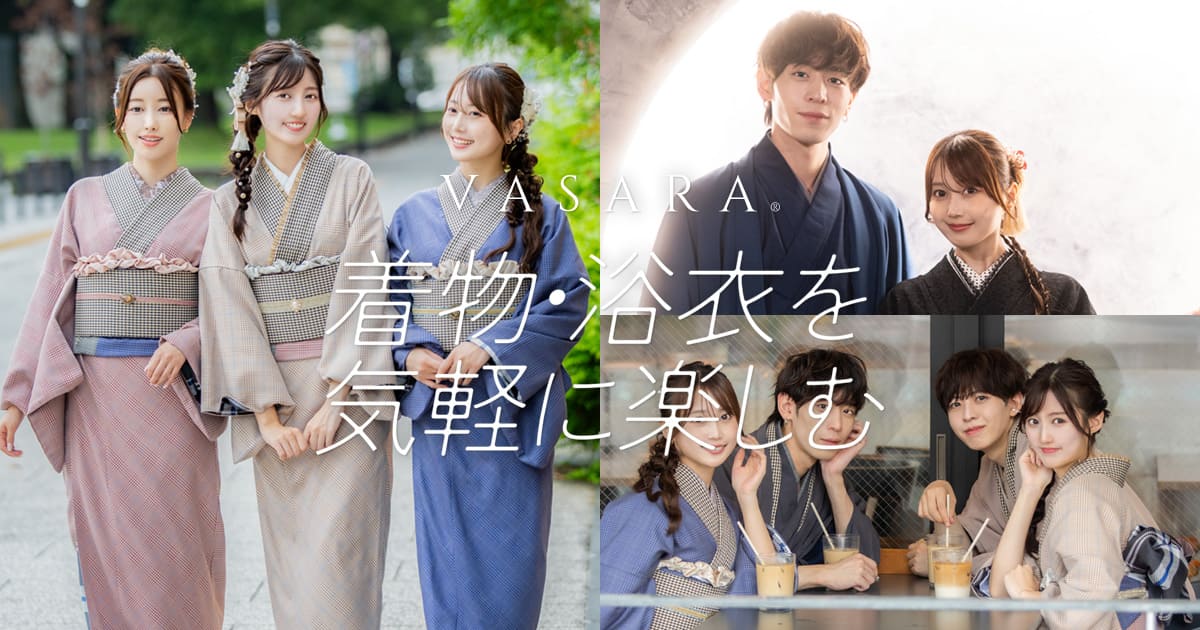
京都、浅草で着物・浴衣を気軽にレンタル
着物レンタルVASARAではより着物を身近に楽しんでいただけるよう様々なサービスを提供してまいります。より可愛く、よりオシャレにあなたの時間を彩ります。
vasara-h.co.jpCheck How Deep the Language Support Goes
If you're visiting Japan from overseas, or traveling with someone who needs communication in another language, multilingual support dramatically changes the shop-selection picture. Some shops do offer it — Kimono Rental Aiwafuku in Asakusa, for example, pairs station-adjacent convenience with language accessibility. The question isn't only whether the booking page has an English version. Shops where pricing explanations, return rules, and etiquette guidance at temples are all available in your language are far less likely to produce misunderstandings on the day.
If your walking route includes religious sites, whether the shop naturally communicates cultural norms makes a difference in how comfortable the experience feels. Temples and shrines have their own unspoken rules around where to stand for photos and how to move through the grounds — and wearing traditional clothing in these spaces makes awareness of those norms more relevant, not less. Shops with solid language support tend to cover basics like prayer etiquette and walking manners in brief, which quietly raises the comfort level of the whole outing.
Lay It Out in a Table So Your Decision Doesn't Drift
Choosing a shop on feel alone leaves you vulnerable to whichever impression hits hardest — "cheap," "cute photos," "close to the station." A simple comparison table with fixed criteria cuts through that. Once you actually line up a few candidates, you'll notice that condition differences dwarf price differences.
| Criteria | What to Look For |
|---|---|
| Price | What's included in the base rate. Is the full total — with obi, accessories, and photo options — visible? |
| Set contents | Undergarments, tabi, zori, bag, and shawl all included? |
| Hair styling | Separate fee? Hair ornaments included? |
| Return | Final return time, extension fees, next-day return option |
| Coverage | Damage/stain coverage ceiling, exclusions, premium |
| ID requirement | Photo ID needed? Deposit collected? |
| Language support | Booking and on-site explanations available in English or other languages? |
| Payment | Cash, credit card, QR-code payment coverage |
| Booking cutoff | Online reservation deadline, walk-in availability |
| Dressing time | Estimated minutes from check-in to departure |
Line up three or four candidates this way, and the differences jump out. The four items that most affect your actual experience are hair styling fees, return time, coverage, and ID requirements. Shops that have these four nailed down tend to produce more consistent satisfaction on a first visit than shops that just look appealing. The most volatile details are operating hours, prices, and cancellation terms — including when cancellation fees kick in and the deadline for changes — so align the same criteria when comparing.
5 Best Areas for Photogenic Kimono Walking in Japan
Quick Comparison
For a bird's-eye view, laying scenery character and walking effort side by side is the fastest way to orient. Kyoto trades "classic Japanese scenery" for more stone pavement and slopes; Tokyo trades "intuitive routes from the station" for heavier foot traffic. In every area, factoring in 45 minutes to 1 hour and 20 minutes from check-in to departure — per Rika Wafuku's guide — and working backward from your preferred shooting window makes scheduling smoother.
| Area | Scenery | Photo Highlights | Walking Effort | Nearest Shop Access | Time Needed | Best Hours | Seasonal Fit | Crowd Strategy |
|---|---|---|---|---|---|---|---|---|
| Kiyomizu-dera area, Kyoto | Stone paths, slopes, temples, townhouses | Kiyomizu-dera, Ninen-zaka, Sannen-zaka, continuous traditional scenery toward Yasaka Pagoda | High | Many rental shops in Kyoto; easy to find ones positioned for Kiyomizu-dera access | 2–4 hours | Early morning | Strongest in spring and autumn | Enter the approach right after opening for easier walking |
| Gion Shirakawa, Kyoto | Canal, willows, townhouses, bridges | Tatsumi Bridge, Shirakawa canal bank, quietly elegant townscape | Low | Easy walking access from Gion-Shijo area | 1–2 hours | Early morning, evening | Spring, early summer, autumn | Weekday mornings give the cleanest backgrounds |
| Arashiyama, Kyoto | Bamboo grove, bridge, mountains, river | Bamboo Grove Path, Togetsukyo Bridge, varied natural backdrops | Medium–High | Rent in Arashiyama or dress in central Kyoto and head over | Half day | Early morning, evening | Spring, fresh green, autumn | Arrive first thing from your accommodation to beat the crowds |
| Asakusa (Kaminarimon / Senso-ji) + Sumida Park, Tokyo | Temple, gate-front district, riverside, Skytree backdrop | Kaminarimon, Nakamise-dori, Senso-ji, Tokyo Skytree across the Sumida River | Low | Shops within 1–3 min walk from the station are common | 1.5–3 hours | Morning, evening | Year-round; spring cherry blossoms are strongest | Shoot Kaminarimon first, then drift toward the park |
| Ginza, Tokyo | Modern architecture, wa-modern, theater facades, boulevards | Kabukiza Theatre, Wako Building intersection, street lamps and shop windows | Low | Good station access around Ginza / Higashi-Ginza for nearby shops | 1–2 hours | Evening–night | Autumn/winter, illumination season | Step one block off the main intersection for easier shooting |
💡 Tip
For pure photo quality, Kiyomizu-dera. For ease and quick results, Asakusa. For a calm, grown-up atmosphere, Gion Shirakawa or Ginza. If you have a full half day, Arashiyama's variety of backdrops delivers high satisfaction.
Kiyomizu-dera Area, Kyoto
If you want the most "Kyoto" photos in the shortest time, the Kiyomizu-dera area remains hard to beat. Beyond the presence of Otowa-san Kiyomizu-dera Temple itself, the stone paths of Ninen-zaka and Sannen-zaka and the townscape stretching toward Kodai-ji Temple create an unbroken sequence of backdrops that pair naturally with traditional dress. When you look back at the photos later, every frame says exactly where you were — that instant recognition is one of this area's biggest strengths.
The trade-off is walking effort, the highest among all five areas. Ninen-zaka and Sannen-zaka are a continuous run of stone pavement, steps, and slopes that wear on your feet and calves in zori. Rather than a leisurely long-distance walk, this area rewards a "pick your spots, move between them" approach. Especially in the morning, even 30 minutes to an hour on the approach and temple grounds produces plenty of strong shots.
Rental shop density isn't as tight as Asakusa's, but Kyoto has extensive kimono rental options, and choosing a shop positioned for easy access into the Higashiyama district keeps transit efficient. Kyoto Kimono Rental Yumekura, known for its wide size range, is one example — a useful option when your group spans different body types. More than whether shops cluster right at Kiyomizu-dera, what matters is whether the shop makes it easy to enter the Higashiyama area.
Allow 1 to 2 hours for Kiyomizu-dera alone, or 2 to 4 hours if you're including Ninen-zaka and Sannen-zaka. Starting early at Kiyomizu-dera and then doubling back to the approach streets for shooting feels like the smoothest way to structure the day. Kiyomizu-dera opens at 6:00 AM, and the morning quiet is a genuine advantage. Spring cherry blossoms and autumn foliage are a spectacular match, and fresh-green season also makes kimono colors pop.
On rainy days, the stone slopes get slippery, so scaling back outdoor ambitions is the wiser call. An alternative is to walk the covered approach near Kodai-ji Temple, browsing shops while keeping exposure to the rain short. For temple grounds where interior photography rules apply, shifting to exterior-focused compositions keeps things workable.
Here are the practical details for planning:
| Detail | Information |
|---|---|
| Key spots | Otowa-san Kiyomizu-dera Temple, Ninen-zaka, Sannen-zaka |
| Address | Higashiyama-ku, Kyoto (Kiyomizu-dera and Ninen-zaka / Sannen-zaka area) |
| Access | City bus to "Gojo-zaka" or "Kiyomizu-michi," then about 10 min on foot. Ninen-zaka / Sannen-zaka are 5–10 min on foot from "Kiyomizu-michi" or "Higashiyama-Yasui" bus stops |
| Hours | Kiyomizu-dera: usually 6:00 AM–6:00 PM; 6:30 PM closing in July–August. Ninen-zaka / Sannen-zaka are public roads, open 24 hours |
| Admission | Kiyomizu-dera: 400 yen (~$3 USD). Ninen-zaka / Sannen-zaka: free |
| Nearest station/bus | Keihan "Gion-Shijo" with bus or walking route; city bus is most practical |
| Reference | Kiyomizu-dera official: https://www.kiyomizudera.or.jp/ — Kyoto City Tourism Navi: https://ja.kyoto.travel/tourism/single01.php?category_id=7&tourism_id=267 |
Gion Shirakawa, Kyoto
Gion Shirakawa appeals differently from the "postcard Kyoto" of the Kiyomizu-dera area. The Shirakawa canal, willows, traditional townhouses with crimson-ochre latticework, and the scenery around Tatsumi Bridge come together in a cohesive, understated way. Rather than dramatic tourism backdrops, it's the atmosphere itself that lifts the kimono look. If you're aiming for a more sophisticated, subdued mood, this is the match.
Walking effort is light. The area is compact, with far fewer steep slopes and stone stairways than Kiyomizu-dera, making it comfortable even for kimono beginners. Shooting locations — a bridge corner, a canal-side path, a pulled-back townscape view — sit close enough to each other that you can rotate backgrounds in a short walk. One to two hours produces genuinely satisfying results.
Access-wise, the clear route in from the Gion-Shijo station area is a strength. Starting from a station-area rental shop and walking into Gion Shirakawa makes the return timeline predictable. Kyoto's rental shops, many of which are oriented toward Higashiyama and Gion, pair well with short, photo-focused strolls.
Early morning or late afternoon are the prime windows. Mornings especially keep other people out of the frame, and the narrow canal views come through cleanly. Spring cherry blossom illumination is famous here, though the crowds that come with it are intense. Early-summer greenery and autumn's muted palette also complement kimono beautifully.
For crowd avoidance, weekday mornings work best. On rainy days, the Gion-Shijo area's indoor cafes and shops offer easy fallback, and rather than insisting on outdoor shots, leaning into covered backgrounds like kabuki theater facades or wagashi shop entrances can actually enhance the mood.
| Detail | Information |
|---|---|
| Key spots | Gion Shirakawa, Tatsumi Bridge area |
| Address | Higashiyama-ku, Kyoto (Tatsumi Bridge to Shirakawa canal / Gion-Shijo area) |
| Access | About 3 min on foot from Keihan "Gion-Shijo" Station |
| Hours | Public space; walking access available all day |
| Admission | Free |
| Nearest station | Keihan "Gion-Shijo" Station |
| Reference | Kyoto City official event guide: https://ja.kyoto.travel/event/single.php?event_id=4544 |
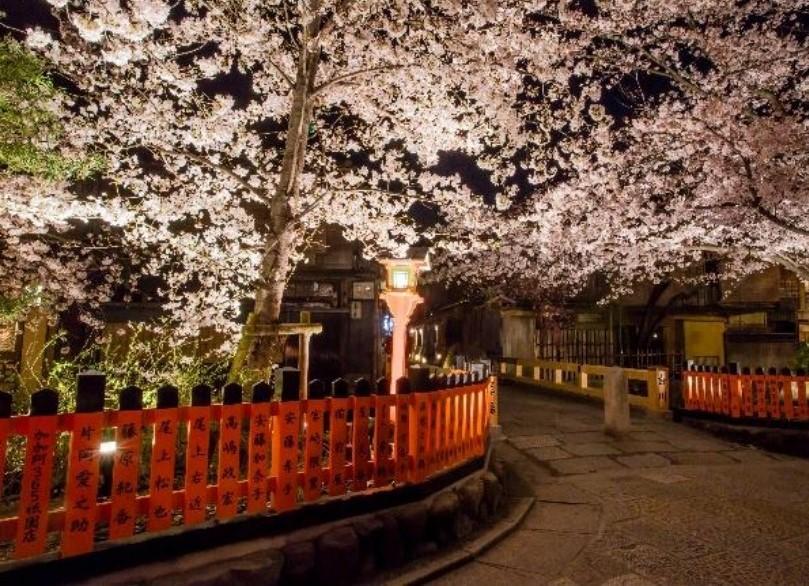
第33回衹園白川宵桜ライトアップ|【京都市公式】京都観光Navi
京都の祭りや季節の行事、アートイベント、体験・ツアー、寺院の特別公開まで。今知りたい、旬の観光情報を発信しています。
ja.kyoto.travelArashiyama, Kyoto
When backdrop variety is the priority, Arashiyama delivers. The vertical lines of the Bamboo Grove Path, the wide-open view from Togetsukyo Bridge, the layered mountains and river — a single area produces distinctly different photos. In terms of visual range across your shots, Arashiyama stands a clear step above the other four areas.
The price you pay is more walking. Arashiyama is bigger on foot than it looks on the map. The bamboo grove alone, or the bridge alone, can be done quickly, but stringing both together comfortably means planning for half a day. Flat sections exist, but you end up walking with the tourist flow for extended stretches, and fatigue in kimono accumulates quietly. If photos are the main objective, decide on your hero location — bamboo or bridge — before you set out, and the rest falls into place.
For rental shops, the decision is whether to rent locally in Arashiyama or dress in central Kyoto and travel over. Central Kyoto has more options by raw count, but renting closer to Arashiyama reduces the risk of your kimono loosening during transit. Since this area tends toward longer outings, prioritizing "total fatigue including getting there and back" over shop variety is the better trade.
Mornings are the best shooting window. The Bamboo Grove Path fills with a steady stream of visitors by midday, making clean background shots difficult. Togetsukyo Bridge carries a different mood in the evening, when softening light flatters kimono colors. Cherry blossoms, fresh green, and autumn foliage are the seasonal sweet spots — anyone who wants nature as the primary backdrop will find Arashiyama highly versatile.
For rain plans, the covered commercial area near Arashiyama Station and nearby temple interiors offer manageable alternatives. Rather than pushing through the bamboo in the wet, shooting briefly near Togetsukyo Bridge and then retreating indoors produces a tidier result.
| Detail | Information |
|---|---|
| Key spots | Bamboo Grove Path, Togetsukyo Bridge |
| Address | Saga-Arashiyama area, Ukyo-ku, Kyoto |
| Access | About 10–15 min on foot from JR Saga-Arashiyama Station (south exit) to the Bamboo Grove Path; about 10 min from Randen "Arashiyama" Station |
| Hours | Bamboo Grove Path and Togetsukyo Bridge are public roads, open 24 hours |
| Admission | Free |
| Nearest station | JR Saga-Arashiyama, Randen "Arashiyama" |
| Reference | Arashiyama tourism info available via Kyoto City Tourism Association and individual temple/facility official pages |
Asakusa (Kaminarimon / Senso-ji) + Sumida Park, Tokyo
For a first-time kimono rental with the lowest chance of a bad experience, Asakusa is the standout. Kaminarimon Gate, Nakamise-dori, and Senso-ji Temple sit tightly together, and crossing to Sumida Park extends the route to include Tokyo Skytree as a backdrop. You get both the classic temple atmosphere and a modern landmark in one outing, so even a short visit feels substantial.
Walking effort stays light. Nakamise-dori can be crowded, but the area's layout is straightforward, and the flat terrain takes less out of you than Kyoto's slopes. The path from Kaminarimon to Sumida Park is easy to trace, and once you cross toward the park, the backdrop opens up dramatically. This combination works in about 30 to 60 minutes of focused shooting, and even with a relaxed pace, 1.5 to 3 hours wraps everything up comfortably.
Shop access here is the clearest of all five areas. Asakusa has rental shops within a 1-minute walk of the station, with several more at 2 to 3 minutes. Kimono Rental Aiwafuku, for example, promotes its station-adjacent Asakusa location. Returning the kimono is just as easy — when shops cluster near the station, drifting back at the end of the day requires no detour. Sightseeing convenience isn't only about scenery; it's about how predictable the return trip is. In that respect, Asakusa is consistently reliable.
Best hours are morning and evening. Mornings keep the Senso-ji area more walkable; evenings bring out the riverside and Skytree scenery along Sumida Park. Spring cherry blossoms layered with Skytree are a strong combination, and summer festival season carries its own atmosphere. The year-round usability is a Tokyo advantage.
For crowd management, move through Nakamise without lingering and head to the Senso-ji grounds or Sumida Park side early. On rainy days, Tokyo Skytree Town's indoor facilities and observation deck offer a fallback that keeps the outing going in kimono. The ability to pivot from old-town scenery to a futuristic backdrop without much travel is unique to the Asakusa area.
| Detail | Information |
|---|---|
| Key spots | Kaminarimon Gate, Nakamise-dori, Senso-ji Temple, Sumida Park |
| Address | Asakusa, Taito-ku, Tokyo; Sumida Park along the Sumida River |
| Access | About 2–3 min on foot from Tokyo Metro Ginza Line "Asakusa" Station; about 2–3 min from Toei Asakusa Line Asakusa Station Exit A4; about 5 min from Tobu Asakusa Station. Sumida Park is also within walking distance |
| Hours | Senso-ji: free admission, grounds open for walking. Sumida Park: most areas open all day |
| Admission | Senso-ji: free. Sumida Park: free |
| Nearest station | Tokyo Metro / Toei / Tobu / Tsukuba Express "Asakusa" stations |
| Reference | Senso-ji official guide: https://www.senso-ji.jp/guide/ — Sumida Park: https://www.city.sumida.lg.jp/sisetu_info/kouen/kunai_park_annai/sumida_park/park33.html — Tokyo Skytree official: https://www.tokyo-skytree.jp/ |
Ginza, Tokyo
Ginza isn't a traditional "Japanese scenery" spot. But for making a kimono stand out against an urban canvas, it delivers something none of the other four areas can. The Japanese architectural motifs of Kabukiza Theatre, the classic Wako Building intersection, the clean boulevard lines and shop windows — all of it creates contrast with traditional dress that photographs powerfully. Classic kimono patterns work here, and so do slightly modern color schemes.
The walking surface is flat, and among all five areas, Ginza is the most physically comfortable. Keep the distance modest and 1 to 2 hours produces a solid set of images. The shooting approach that works best isn't camping at the main intersection — it's moving to the Kabukiza neighborhood or ducking one street over to find cleaner backgrounds. Ginza has heavy pedestrian traffic, but choosing your street thoughtfully yields polished, distinctly urban photos.
For shop access, Ginza doesn't have the "kimono rental street" density of Asakusa, but the transportation hub covering Ginza, Higashi-Ginza, and Yurakucho stations makes it easy to rent in another central area and arrive by train. Think of it as an urban-transit-friendly area rather than a rental-shop-dense one. The direct connection from Higashi-Ginza Station to Kabukiza Theatre is a quiet convenience for walking in kimono.
Best hours are evening into night. As shop windows and street lamps switch on, Ginza's particular glamour emerges. Autumn, winter, and illumination season pair especially well, and subdued kimono tones look striking against the city lights. Daytime works too — the building facades show crisp lines under direct light, so if Kabukiza's exterior is the focus, midday is perfectly viable.
For crowd management, avoid fixating solely on the Ginza 4-chome intersection. One block over, the walking experience changes noticeably. On rainy days, large commercial facilities like GINZA SIX and indoor wagashi shops or cafes keep the outing intact. Ginza's abundance of indoor fallback options makes it one of the most weather-resilient areas for kimono walking.
| Detail | Information |
|---|---|
| Key spots | Kabukiza Theatre, Wako Building area, Ginza Chuo-dori surroundings |
| Address | Ginza, Chuo-ku, Tokyo |
| Access | Tokyo Metro "Ginza" Station, "Ginza-itchome" Station, Yurakucho Station; Kabukiza is directly connected to "Higashi-Ginza" Station |
| Hours | Walking is possible all day. Kabukiza hours and performances vary by show |
| Admission | Walking is free. Kabukiza ticket prices depend on seat class and performance |
| Nearest station | Ginza, Higashi-Ginza, Yurakucho stations |
| Reference | Kabukiza official: https://www.kabuki-za.co.jp/ |
歌舞伎座
www.kabuki-za.co.jpPhotography Tips and Walking Etiquette in Kimono
The way a kimono photographs depends as much on posture and movement as on the backdrop. The first thing to get right: don't face the camera squarely. Angling your body roughly 45 degrees to the lens brings out the obi sash's dimension and slims the full-body silhouette. Turn your face slightly back toward the camera with a gentle chin tuck, and the collar-to-collar gap stays visible — that neckline space is where kimono elegance lives, and keeping it uncluttered makes a noticeable difference.
When you want the fabric pattern front and center, position the side with the main design toward the camera. A large floral or flowing motif on one panel gains much more presence just by angling that panel forward. For obi-focused shots, standing at an angle that's neither pure side nor full back lets both the kimono pattern and the obi share the frame. Straight-on memorial photos have their place, but a slight angle brings out the layering and depth of the fabric.
Sleeve and hem management also shapes the image. Letting the long sleeves (tamoto) hang completely loose looks untidy; lightly resting one hand against them feels natural. Gripping both sides tightly adds visible tension, so holding a kinchaku pouch in one hand while the other gently controls the sleeve is the right balance. Hems that fan out too wide read as disheveled; stepping too narrowly looks stiff. On stone pavement, slopes, and steps, paying conscious attention to keeping the hem from dragging matters. Ninen-zaka and Sannen-zaka, with their continuous stone steps, demand more foot awareness than they might seem to, and prioritizing photos over footing tends to undermine your whole look.
Capture Movement, Not Just Stillness
A single standing pose doesn't always convey what makes kimono special. The shots that work best capture the moment you start walking, the moment you turn around, the moment you step up. Even a hint of motion creates flow in the sleeves and hem, and the atmosphere of the trip enters the frame. Along canals and temple approaches, a shot where you're mid-stride with your gaze drifting away from the camera feels utterly natural. For friends or couples, a slightly distant shot of you walking and talking strips away the posed quality and reads as a genuine travel memory.
Stepping up onto a higher surface is photogenic but also the moment hems are most likely to shift. Small steps with your weight moving forward keep the kimono's lines clean. Kyoto's hilly areas put more load on your feet than flat city walks, and fatigue sets in faster over a half-day. In those areas especially, keeping your range short and your backdrop choices focused tends to preserve your posture — which, in the end, preserves the photos.
⚠️ Warning
One standing shot is good. Three shots while walking is better. Capture the first step, one stride in, and a glance back. The sleeve sway and natural eye lines tell a stronger story than any pose.
Use Accessories to Add Season and Light
Small additions raise photo quality more than you'd expect. Pairing a pastel kimono with a dark haori jacket tightens the outline, and in spring or autumn a light haori adds instant seasonal mood. A parasol draws the viewer's eye to your face, and a traditional wagasa umbrella anchors the composition even against a plain background. In open-sky locations like the Sumida River bank or along Gion Shirakawa's canal, the parasol's round shape balances the frame.
Backlit conditions tend to shadow the face, but holding a light-colored accessory in front picks up ambient light like a reflector. A pale kinchaku pouch or a light parasol pulls double duty as a visual accent and a face-brightener. When shooting with Skytree as the evening backdrop from Sumida Park, this small trick stabilizes how your expression reads.
Be Considerate When Shooting on the Street
Street-level shooting depends on where you position yourself more than anything. On narrow lanes and temple approaches, stopping for even a few seconds blocks foot traffic. Nakamise-dori in Asakusa, Ninen-zaka and Sannen-zaka, and the bridges at Gion Shirakawa are all spots where reading the flow and shooting quickly beats waiting for a gap. Moving to a wall edge or a slightly wider section of the path, rather than holding the center, reduces friction for everyone.
Lingering in front of storefronts and residences also warrants caution. Attractive facades don't give permission to block doorways or disrupt shoppers. Tripods are useful tools, but on crowded lanes and approach streets their footprint becomes a nuisance. For commercial photography or tripod use, check with the local ward office, park management, or facility administrators beforehand.
At Temples and Shrines, Respect Comes Before the Shot
Temples and shrines hold photography to a stricter standard than public streets. Stay to the side of the approach path and keep shots brief and unobtrusive. Interior halls, treasure houses, special exhibitions, and active ceremonies may prohibit photography entirely — follow posted signs and staff guidance on the day. The kimono photos that suit these spaces best are the understated ones: a shot of you stepping away after praying, or a quiet back-view as you walk through the grounds.
On Rainy Days, Make Reflections Work for You
Rain and kimono are a better match than most people assume. A clear umbrella or a traditional wagasa helps light reach your face and adds atmosphere. Clear umbrellas keep your expression visible; wagasa contribute a bold color plane. Wet stone pavement and road surfaces produce reflections, so in locations like Gion Shirakawa at dusk or Asakusa in the evening, including the ground in the frame adds depth.
That said, stone surfaces get slippery. Temple grounds, canal-side paths, and slopes all demand more foot awareness when wet. Slow your pace, and instead of walking shots, favor brief stops near covered areas. Kimono looks actually improve when you subtract movement to match the weather — less effort often means more grace.
Sample Itineraries: Half-Day and Full-Day Kimono Walks
Kyoto: Kiyomizu-dera to Ninen-zaka Half-Day Plan
For the most classic Kyoto shot, a half-day linking Kiyomizu-dera with Ninen-zaka and Sannen-zaka is the easiest to build. Stone pavement, slopes, temples, and townhouses concentrate in a short span, so your kimono silhouette never gets lost in the backdrop — and you don't need to overload the route for the photos to come together. Since the slopes hit harder than expected, "fewer spots, stronger backdrops" is the design principle.
A morning-weighted schedule flows smoothly. Allow 45 minutes to 1 hour and 20 minutes from check-in to departure, so the post-dressing stroll starts without friction.
- 9:00 AM — Check-in
- 9:10–10:00 AM — Kimono selection and dressing
- 10:00 AM — Depart
- Around 10:20 AM — Arrive near Kiyomizu-dera, visit and shoot
- Around 11:20 AM — Walk to Ninen-zaka / Sannen-zaka (about 5–10 min)
- 11:30 AM–12:20 PM — Stroll and shoot on the stone-paved slopes
- 12:20–1:00 PM — Break for sweets or a light meal nearby
- 1:00–2:00 PM — Additional shots from elevated viewpoints or along the approach
- 2:00–2:20 PM — Walk back to the shop
- 2:30–3:00 PM — Return
Total time from check-in to return: roughly 6 hours. Actual strolling fills about 3 hours, and given the slope-related fatigue, that's a comfortable half-day length. Budget at least 3,000 yen (~$20 USD) for the rental (in line with the earlier baseline), plus 400 yen (~$3 USD) for Kiyomizu-dera admission. Walking Ninen-zaka and Sannen-zaka is free, so costs center on the rental, admission, and refreshments.
The photographic core is the Kiyomizu-dera grounds and the stone-paved approach streets. Kiyomizu-dera opens at 6:00 AM (closing at 6:30 PM in July and August). For a midday half-day plan, secure the temple's front-facing shots first, then add walking shots on the slopes. Stone pavement in zori sandals wears on the soles and calves, so inserting a rest early keeps posture from deteriorating in the second half.
Rainy days are best handled by tightening the route to the temple visit and a short stroll. Avoid pushing through long stretches of slope; shoot near covered sections instead to limit both slipping risk and kimono disarray. To shorten the plan, cut off at "Kiyomizu-dera plus the top of Ninen-zaka." To extend, continue toward Kodai-ji Temple for more townscape variety.
Facility references for trip planning: Kiyomizu-dera official site: https://www.kiyomizudera.or.jp/ — Access info: https://www.kiyomizudera.or.jp/access.php — Kyoto City Tourism Navi: https://ja.kyoto.travel/tourism/single01.php?category_id=7&tourism_id=267. Access is via city bus to "Gojo-zaka" or "Kiyomizu-michi," about 10 min on foot. Admission: 400 yen (~$3 USD). Opens at 6:00 AM. Ninen-zaka and Sannen-zaka are in the Higashiyama-ku area near Kiyomizu-dera, 5–10 min on foot from "Kiyomizu-michi" or "Higashiyama-Yasui."
💡 Tip
Kyoto's slope areas feel like serious walking even in half a day. Narrowing your focus to three targets — Kiyomizu-dera, Ninen-zaka, and a rest spot — tends to keep both your outfit and your expression looking sharp in photos.
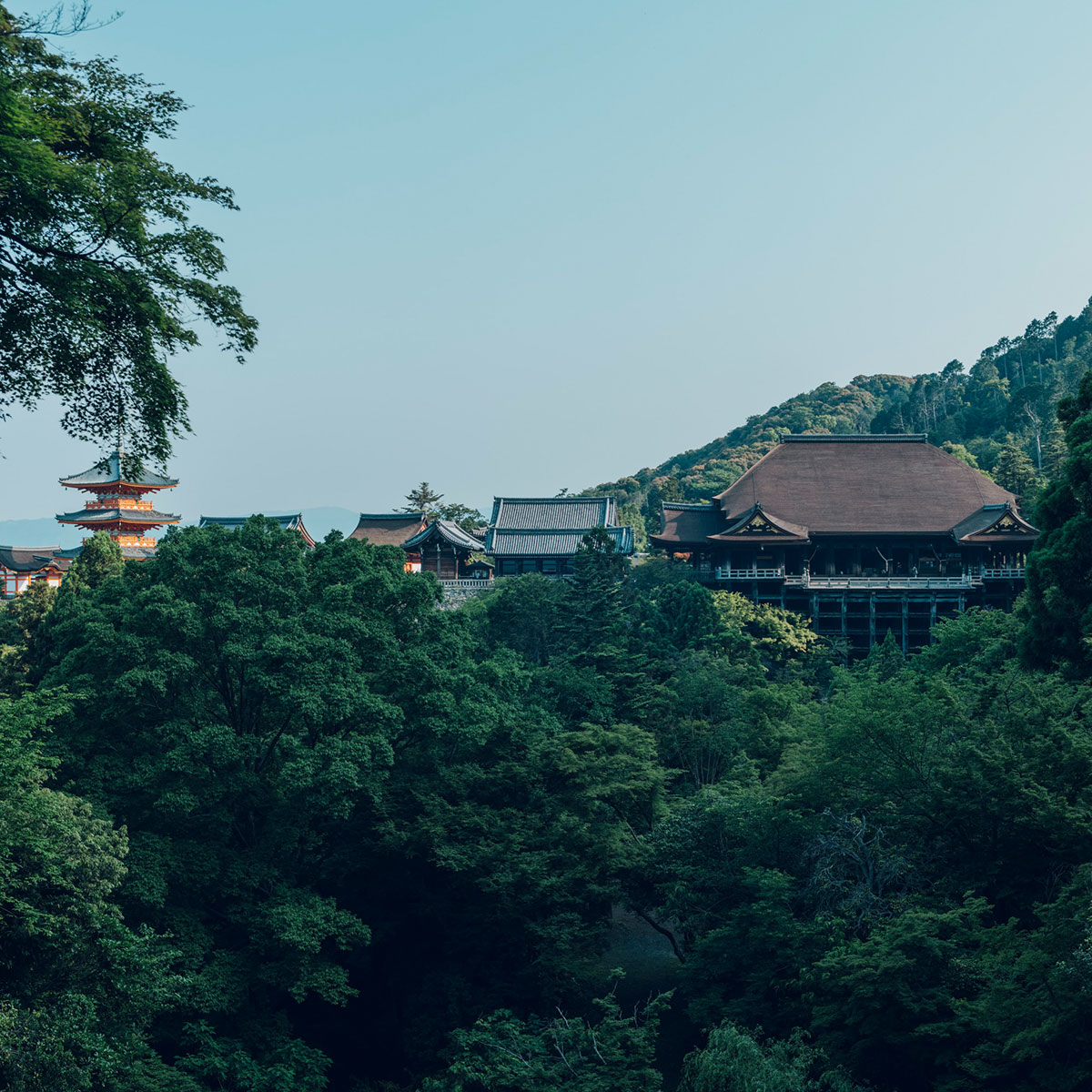
音羽山 清水寺
京都府京都市。「清水の舞台」で知られる寺院。北法相宗の本山(一寺一宗)。縁起、年中行事、境内案内。
www.kiyomizudera.or.jpAsakusa: Kaminarimon to Sumida Park Half-Day Plan
For a first kimono outing where ease of navigation matters most, Asakusa stands apart. Kaminarimon, Nakamise-dori, Senso-ji, and Sumida Park sit close together, and even with varied backdrops the route never gets confusing — making it natural to finish the day with both "I explored" and "I got the photos" checked off. Linking Kaminarimon to Sumida Park specifically gives you temple-district classics and Skytree-backdrop shots in one half-day package.
A late-morning start works well, and the timeline looks like this:
- 10:00 AM — Check-in
- 10:10–11:00 AM — Kimono selection and dressing
- 11:00 AM — Depart
- 11:05–11:25 AM — Shoot around Kaminarimon
- 11:25–11:45 AM — Stroll Nakamise-dori toward Senso-ji (the approach is about 250 m)
- 11:45 AM–12:15 PM — Visit and shoot at Senso-ji grounds
- 12:15–12:30 PM — Walk to Sumida Park
- 12:30–1:15 PM — Shoot along the Sumida River
- 1:15–2:00 PM — Break for sweets or a light meal
- 2:00–3:00 PM — Additional shots in the park; wait for evening light if the season allows
- 3:00–3:20 PM — Walk back to the shop
- 3:30 PM — Return
Total time: about 5 hours and 30 minutes. The walk from Kaminarimon to Sumida Park takes 10 to 15 minutes, keeping the effort predictable. Shooting time breaks down to roughly 15 minutes at Kaminarimon, 10 minutes walking, and 20 to 35 minutes at Sumida Park — plenty for a half-day. Budget-wise, Asakusa prices have the widest spread: one shop lists 1,880 yen per day (2,068 yen with tax / ~$13 USD) on its official site, while Jalan experience listings start at 6,600 yen (~$44 USD). Differences in set contents and return terms matter more than the rate alone.
For photo flow, lead with the recognizable Kaminarimon shot, follow up with a prayer scene at Senso-ji, and close with wide compositions at Sumida Park. Nakamise-dori is busy — short, walking-speed captures work better than extended pauses. At Sumida Park, the open river backdrop shows off sleeve and full-body silhouettes more naturally than the temple area.
Rainy days are best handled by centering the plan around Senso-ji with a shorter route. Scale back the outdoor-heavy Sumida Park portion and detour toward Tokyo Skytree's indoor facilities to keep the outing alive. To extend, stay until evening and catch the shifting light on Skytree from the park. To shorten, "Kaminarimon, Nakamise, Senso-ji" alone delivers solid first-timer satisfaction.
Facility references: Senso-ji official guide: https://www.senso-ji.jp/guide/ — Located in Asakusa, Taito-ku, Tokyo. About 2–3 min on foot from Tokyo Metro Ginza Line Asakusa Station; 2–3 min from Toei Asakusa Line Exit A4. Main temple grounds are free. Sumida Park: https://www.city.sumida.lg.jp/sisetu_info/kouen/kunai_park_annai/sumida_park/park33.html — A few minutes' walk from Asakusa, along the Sumida River, open all day. Tokyo Skytree: https://www.tokyo-skytree.jp/ — Observation deck hours 10:00 AM–10:00 PM, last entry 9:00 PM.
境内を巡る - 浅草寺
境内を巡るPRECINCT GUIDE 雷門 仲見世 宝蔵門 本堂 五重塔 影向堂 薬師堂 淡島堂 銭塚地蔵堂
www.senso-ji.jpGinza: Kabukiza Area Evening-to-Night Plan
For a more refined, grown-up kimono outing, Ginza works surprisingly well. Instead of temples and stone paths, you get the Japanese architectural motifs of Kabukiza Theatre set against Ginza's modern boulevard — a contrast that practically composes itself. Flat sidewalks and minimal slope make it easy on the body, and rather than spreading the walk across a full day, concentrating on the golden hour into nighttime gives the area its most distinctive character.
The structure here is "afternoon check-in, late-afternoon departure, shoot around sunset, return." Mapped to the clock:
- 3:00 PM — Check-in
- 3:10–4:00 PM — Kimono selection and dressing
- 4:00 PM — Depart
- 4:15 PM — Arrive at Higashi-Ginza / Kabukiza area, exterior shots
- 4:45–5:30 PM — Stroll through the Ginza streetscape
- 5:30–6:15 PM — Break at a cafe or for a light meal
- 6:15–7:00 PM — Shoot the transition from dusk to illuminated streets
- 7:00–7:20 PM — Walk back to the shop
- 7:30 PM — Return
Total time: about 4 hours and 30 minutes. Shorter than a half-day, but Ginza's backdrop density means this length actually keeps both fatigue and kimono loosening in check, and photo quality stays consistent. Budget is the rental plus refreshments. If you're shooting Kabukiza exteriors without attending a performance, no additional ticket cost applies. Show tickets are priced by seat class and production, so this guide leaves that figure flexible.
For the shooting sequence, start with Kabukiza while natural light is still available to capture the Japanese architectural details, then move to Ginza's avenues for wider urban compositions. Around Kabukiza, stepping back slightly and walking toward the camera makes a stronger image than a static frontal shot. As evening sets in, glass facades and shop window light prevent kimono colors from going flat. Ginza's flat terrain makes walking easy, but cycling through short movements across several locations reads more elegantly than parking at one spot.
Rainy days actually favor Ginza. Large commercial facilities keep the outing alive with minimal outdoor time, and you can still build compelling images. To shorten, focus exclusively on the Kabukiza neighborhood. To extend, head toward the Chuo-dori illumination zone during the holiday season for additional nightscape variety. Unlike temple-district plans, Ginza rewards "waiting for the light to change" more than "covering more ground."
Facility references: Kabukiza official: https://www.kabuki-za.co.jp/ — Located in Ginza, Chuo-ku, Tokyo, directly connected to Higashi-Ginza Station (Tokyo Metro Hibiya Line / Toei Asakusa Line). Hours and ticket prices vary by performance. The broader Ginza area centers on Chuo-ku, with main shooting axes around Kabukiza and Ginza Chuo-dori. GINZA SIX and similar large commercial facilities, with hours generally in the 10:00 AM–8:00 PM range, offer indoor alternatives on rainy days.
Who This Is For, and a Pre-Booking Checklist
Best Suited For
Kimono rental satisfaction hinges less on price and more on whether the outfit matches your travel purpose. For a photo-focused trip with friends, plans that include decorative obi accessories, hair ornaments, and a compact bag lean into the aesthetic. In Japanese-scenery settings like Kiyomizu-dera or Gion Shirakawa, patterned kimono and visible accessories fill the frame better than plain designs. Rather than matching colors exactly between friends, pairing one person in a pastel tone and the other in a deeper shade creates dimension when you stand side by side.
For couples, full coordination looks less natural than complementary-color pairing. A soft tone for one and a deep navy or forest green for the other keeps both figures visible against backdrops like Kaminarimon or Sumida Park. Short-visit compatibility is strong, too — in Asakusa's tightly packed sightseeing zone, a packed route isn't necessary for the outing to feel complete.
Solo travelers need to think about how photos will get taken. Shops with a photography service make it easier to get proper full-body shots, while self-timer setups favor locations with space that don't disrupt foot traffic. Along the Sumida River bank in Asakusa or the wider sidewalks around Ginza, shooting alone is practical. Continuous stone-step areas like Ninen-zaka and Sannen-zaka, where you're juggling a camera and your footing at the same time, tire you out faster. The slopes hit harder than they look — packing a spare pair of tabi socks helps if you're in for a longer walk.
Visitors from overseas will find kimono rental highly accessible as an experience. Shops with English support, multilingual day-of explanations, and non-cash payment options keep the flow from stalling. Asakusa in particular has clear station-to-shop routing, making it easy to fit into even a packed short stay.
Gear needs are minimal, but for a walking-and-shooting day, a few practical items make a difference. Smartphone, portable charger, handkerchief or small towel, and adhesive bandages are high priority. In cold months, stick-on heat packs; in summer, a folding fan and sunscreen. On rainy days, a clear umbrella stays out of the way in photos and suits traditional dress.
When to Book
Approach reservations not as "grab an available date" but as "lock down the time slot you want." Spring, autumn, weekends, and holidays fill the best morning slots first. The earlier your dressing finishes, the emptier the streets — which matters most to anyone prioritizing photography. At areas like Kiyomizu-dera where early-morning scenery is at its best, a later departure directly costs you in photo quality.
Build dressing time into the itinerary. The check-in-to-departure window of 45 minutes to 1 hour and 20 minutes is a reliable benchmark. That's significant pre-sightseeing time, so planning from "when I leave the shop" rather than "when I arrive at the shop" connects the rest of the day — meals, shooting, return — much more cleanly.
Booking cutoffs differ by shop. Some accept online reservations up to 10 minutes before the slot, but that assumes availability. During peak spring and autumn dates, early-morning openings fill first. The more conditions your booking carries — hair styling for a group, couples dressing simultaneously, a solo add-on photography package — the more advantage early booking provides.
Before reserving, scanning the practical details all at once makes comparisons faster:
| Item | What to Check |
|---|---|
| Price | What's included in the base rate — accessories separate? Hair separate? |
| Set contents | Undergarments, tabi, zori, bag, shawl included? |
| Hair | Styling included? Ornaments included? |
| Return | Final return time, next-day return option |
| Extension | Fee structure and trigger conditions |
| Coverage | Damage/stain claim scope |
| ID | Photo ID required? |
| Language | English or other language support available? |
| Payment | Cash, credit card, QR-code options |
| Dressing time | Estimated check-in to departure |
| Booking cutoff | Online reservation deadline, walk-in policy |
| Cancellation | When do fees start? Change deadline? |
ℹ️ Note
During peak spring and autumn dates, decide "what time do I want to be dressed and walking" before you start comparing shops. A morning photographer and an evening-light chaser need different availability from the same shop.
For Visitors from Overseas
When the booking includes international travelers, process clarity outweighs plan features. Whether ID is required, and how the name on the reservation maps to the person showing up — these details get missed easily in group travel. Some shops require identification from each individual, not just the group representative, which changes the check-in dynamic.
Language support isn't just about the booking page. Shops where the dressing-room guidance, return-time explanation, and damage-policy briefing all work in English (or another needed language) produce less anxiety on the day. Shops that actively promote English service tend to be practiced with international visitors, and the flow runs smoother as a result.
Payment method directly affects the experience. Shops accepting credit cards and QR payments make it easier to handle extras and options on the spot compared to cash-only locations. Visitors often prefer not to accumulate small change, so cashless support carries real convenience value. In a quick-turnaround area like Asakusa, not stalling at the register is itself a meaningful advantage.
Common Questions Worth Answering First
The questions that come up most before and after booking are predictable: how long does dressing take, how far can I walk in zori, what sizes are available, what about rain, and what if I'm late returning? First-timers especially worry about the dressing timeline and walkability — having clear answers to these before booking eliminates a lot of post-reservation second-guessing.
On sizing, kimono rental covers a wider range than many expect. Yumekura, for example, lists children at 85 cm to 150 cm, women at S to 4LW, and men at 5S to 5L. That's enough flexibility for family trips, couples with different builds, and international visitor groups.
Rain-day policy and late-return rules are satisfaction-sensitive topics. Whether the shop expects cancellation in rain or assumes you'll walk with a clear umbrella, and whether running a few minutes late triggers an extension charge or a flat penalty — these details, when clearly presented, make comparison shopping and same-day decision-making much more straightforward. For solo travelers and short-window visitors with little room to adjust on the fly, visible FAQ answers carry outsized weight.
Summary and Next Steps
Across all five areas, the right answer isn't "the most famous spot" — it's the intersection of the photos you want to take and how much walking you can handle. Classic Japanese scenery: Kyoto. Quick and low-risk: Asakusa. Calm sophistication or urban contrast: Gion Shirakawa or Ginza. Natural-backdrop variety: Arashiyama from Sumida Park area. For a first outing, starting with a forgiving area that minimizes the chance of a bad experience is the approach that makes sense.
The next steps are simple. Pick one area, compare station-adjacent rental shops, confirm rates and return times, and book. During busy seasons, secure an early time slot. Limit shooting locations to two or three, and keep the route from getting overloaded — that's the formula for a smooth day.
💡 Tip
Operating hours, prices, and return policies are moving targets. Cross-check each shop's and facility's official sources before booking to keep your plans solid (information as of March 2026).
Related Articles
How to Choose a Cultural Experience in Japan: Finding the Real Thing
When choosing a cultural experience in Japan, look beyond photo ops and name recognition. The best experiences connect to local life, festivals, crafts, and food traditions. From tea ceremony and wagashi to kimono, crafts, regional cuisine, and festivals, options span every interest. Kyoto excels at conveying quintessential Japanese culture, Tokyo offers quick English-friendly access, and rural areas bring you closest to living traditions.
8 Best Cultural Experiences in Kyoto, Japan — Prices, Duration & English Availability
Choosing a cultural experience in Kyoto works best when you look beyond the atmosphere photos and check the practical details first: how much time it takes, whether it runs on rainy days, whether English support is available, how kid-friendly it is, and how distinctly Kyoto the experience actually feels.
5 Best Temples for a Morning Zazen Experience in Japan
Sitting quietly in a temple before sunrise, focusing on nothing but your breath -- it is the perfect reset before a day of sightseeing. This guide compares five temples across Japan where beginners can try morning zazen (seated Zen meditation): Engakuji, Nanzenji, Daihonzan Eiheiji, Sotoshu Shumuchou, and Kasuisai. We cover session times, reservation requirements, duration, fees, and extras like calligraphy and tea.
15 Best Regional Food Destinations in Japan: Local Specialties by Prefecture
When researching what to eat on a trip to Japan, terms like gotouchi gourmet, kyodo ryori, and meibutsu ryori can blur together, making it hard to pick a destination. This guide sorts out those distinctions using official sources such as the Ministry of Agriculture's regional cuisine database, Japan Tourism Agency statistics, and B-1 Grand Prix data, then narrows the field to 15 prefectures for easy trip planning.