
8 Best Port Towns for Kaisendon (Fresh Seafood Rice Bowls) in Japan — Choosing by Seasonal Catches and Market-Direct Sourcing
8 Best Port Towns for Kaisendon (Fresh Seafood Rice Bowls) in Japan — Choosing by Seasonal Catches and Market-Direct Sourcing
Not all port town kaisendon in Japan are created equal. Some towns like Hakodate Morning Market offer easy station-front access from early morning, while Toyosu Market stands out for its expert wholesaler curation. Others like Sakaiminato and Tomonoura let you experience local fishing culture firsthand.
Kaisendon (fresh seafood rice bowl) at a Japanese port town is never the same experience twice. Hakodate Morning Market (Hokkaido, Japan) makes it easy to grab a bowl steps from the station starting at dawn. Toyosu Market (Tokyo, Japan) brings a different strength — the sharp eyes of its wholesalers mean every shop curates a distinct lineup. Then there are places like Sakaiminato (Tottori, Japan) and Tomonoura (Hiroshima, Japan), where the local fishing culture itself becomes the main course. If you are planning a seafood-focused trip through Japan, this guide compares eight port towns side by side, organized by what makes each bowl worth the trip and how to build your route around it. Once you understand the sourcing differences — market-direct, harbor-direct, morning market stalls, and fishery-run shops — narrowing down the right bowl and travel route becomes far more practical. Seasonal catches, budget ranges, crowd-avoidance tactics, and when to order a smaller-portion bowl are all covered here, so you can pick your destination based on facts rather than instinct.
Three Criteria for Choosing the Best Kaisendon Port Town
Market-Direct vs. Harbor-Direct Sourcing
Kaisendon satisfaction depends not just on how lavish the toppings look, but on where the seafood came from and how it reached the bowl. The first thing to check when comparing port towns is the sourcing model: morning market, market-direct, harbor-direct, or a fishery cooperative-run shop.
Market-direct here does not simply mean fish delivered straight from the harbor. As explained in resources like the Katayama Suisan guide and the Yokohama Market-Direct Shop Registry, it refers to a system where seafood moves through a central wholesale market and its middlemen (nakaoroshi) in a relatively short supply chain. The real advantage is that a trained wholesaler's eye filters every purchase. Toyosu Market is the clearest example — rows of kaisendon shops inside the market use fish procured each morning, and a place like Kaisen-don Oedo has been in business since 1909, handling over 40 varieties. The range, consistent quality, and ability to assemble the day's best fish into one bowl are strengths that only market-channel sourcing provides.
Harbor-direct sourcing, on the other hand, delivers the raw power of locally landed fish. Hunting for snow crab and local species in Sakaiminato, savoring sea bream and whitebait in Tomonoura, or going after tuna and raw shirasu in Shimizu Port (Shizuoka, Japan) — these are harbor-direct experiences. The tension in the flesh and the aroma that rises when you break into a piece of sashimi are most vivid where the distance between harbor and kitchen is shortest. The trade-off is real, though: shops that rely heavily on direct-from-harbor supply are more vulnerable to weather and rough seas. In Sakaiminato, some shops close without notice when conditions prevent a decent catch, so "today's star fish" can just as easily become "nothing available today."
For trip planning, the breakdown works like this: go with Toyosu Market or Sapporo Jogai Market (Hokkaido, Japan) for reliability; choose Sakaiminato or Tomonoura for deep local fishing culture; and pick Hakodate Morning Market for the thrill and walkability of an early-morning market crawl. Hakodate's roughly 250 shops clustered near the station, opening from early morning, make it uniquely accessible, while Toyosu pairs market touring with dining seamlessly. Fishery-run and harbor-direct shops can be extraordinary on their best days; market-direct shops are harder to get wrong. Understanding this difference makes kaisendon choices concrete.
Sourcing background also shows up in pricing. At Hakodate Morning Market, travel media examples show smaller-portion bowls around 1,500 yen (~$10 USD) and a ladies' size at 1,880 yen (~$13 USD) — easy to fit into a breakfast budget. Toyosu Market bowls typically run 1,200 to 3,000 yen (~$8–20 USD) with most clustering around 2,000 yen (~$14 USD), reflecting both variety and the market brand premium. Sakaiminato spans a wide range from 1,100 yen to 4,300 yen (~$7–29 USD) based on tourism board listings, covering everything from casual local-fish bowls to celebratory platters.

海鮮の市場直送とは?鮮魚専門店の店主が解説 | 魚のことなら片山水産 - 九州・玄界灘の魚の仕入れなら片山水産〜飲食店卸専門〜
海鮮の市場直送とは?産直とどっちが新鮮?お得?多数のお客様に市場から鮮魚をお届けする専門業者の店主が解説します。
katayamasuisan.co.jpReading the Seasonal Catch
Rather than choosing kaisendon by location alone, picking the port town that excels at the fish you actually want to eat raises satisfaction dramatically. Each port has its specialty — a town known for squid, one that competes on tuna, another with depth in crab and local species — and the same "seafood rice bowl" carries entirely different conviction depending on where you are.
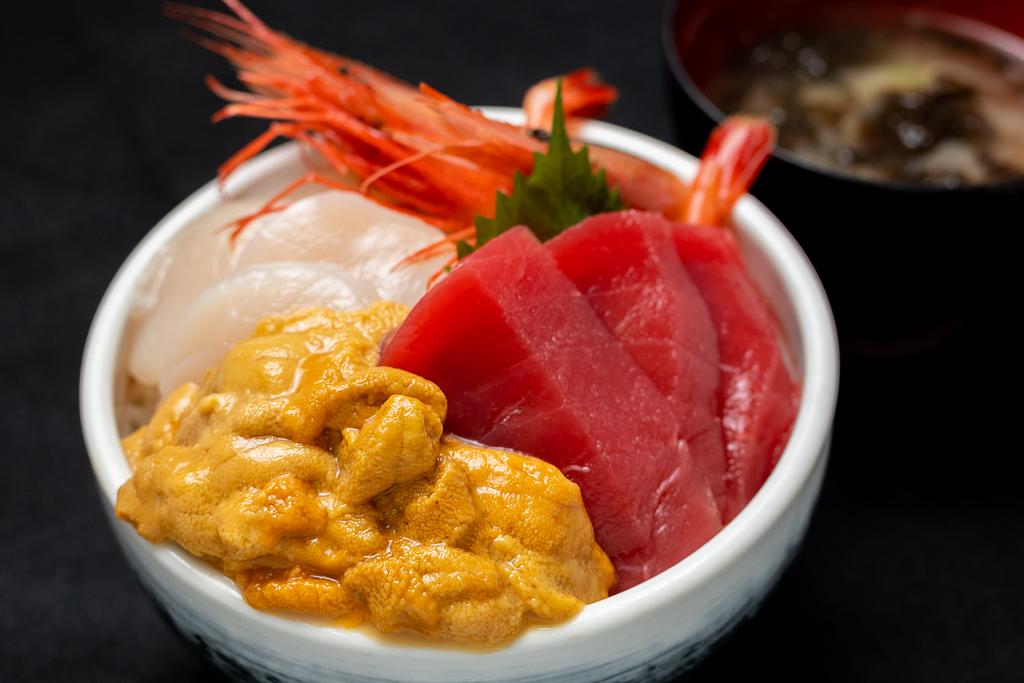
At Hakodate Morning Market, the classic combination is squid, uni (sea urchin), ikura (salmon roe), and scallops. Squid in particular defines the Hakodate identity, and eating it in the early morning hours — when the flesh is still translucent and sweet — makes the experience click. With shops operating from dawn right by the station, this town delivers a remarkably complete "first bowl of the trip." When squid anchors the bowl, Hakodate's local character comes through.
Toyosu Market is the opposite approach: rather than one signature species, it rewards you with the combined force of a multi-topping bowl. Tuna, shellfish, ikura, white fish, silver-skinned fish — each shop's personality shows directly in the bowl. The boundary between vinegared and plain rice blurs in kaisendon, but some popular Toyosu shops are known to pay close attention to their shari (sushi rice) balance, though practices vary by establishment. The skill of pulling together many toppings into one coherent bowl is itself worth appreciating.
For those who want to taste the land itself, Shimizu Port's tuna and raw shirasu, Sakaiminato's snow crab and San'in local fish, and Tomonoura's sea bream and chirimen-jako (dried baby sardines) are essential picks. Shimizu Port offers dependable tuna bowls, but when raw shirasu is in season, the character of the bowl shifts dramatically. Sakaiminato's vivid red crab meat catches the eye, but what truly determines satisfaction is the depth of local fish like horse mackerel and yellowtail amberjack. Tomonoura favors subtlety over spectacle — a town where the gentle Seto Inland Sea fish culture leads, and where pairing kaisendon with tai-meshi (sea bream rice) rounds out the experience.
A cross-comparison of the eight port towns, roughly organized:
| Port Town | Target Catch Direction | Price Examples |
|---|---|---|
| Hakodate Morning Market | Squid, uni, ikura, scallops | ~1,500 yen (~$10 USD), 1,880 yen (~$13 USD) per travel media |
| Toyosu Market | Tuna, shellfish, ikura, multi-topping | 1,200–3,000+ yen (~$8–20 USD), avg. ~2,000 yen (~$14 USD) per travel media |
| Sapporo Jogai Market | Uni, ikura, crab, scallop-heavy luxury bowls | "Aji no Niko" medium size reported at ~4,500 yen (~$30 USD) (varies by season) |
| Shimizu Port | Tuna, raw shirasu | Menu example at 1,500 yen (~$10 USD) |
| Numazu Port | Local fish, kaisendon in general | No standardized pricing; varies by shop |
| Sakaiminato | Snow crab, local fish, uni, ikura | 1,100–4,300 yen (~$7–29 USD) per tourism board/travel media |
| Tomonoura | Sea bream, chirimen-jako | 980–2,300 yen (~$7–16 USD) per travel media |
| Niigata Port area | Local fish incl. nodoguro (blackthroat seaperch), crab, shrimp | Market-run eatery example at 1,650 yen (~$11 USD) |
Timing matters too. At Hakodate Morning Market, arriving between 6:00 and 7:00 AM gives the widest selection with manageable crowds. Popular Toyosu shops see lines build toward lunch, so earlier is better. Numazu Port's visitor walkways move quickly in the morning, pairing well with a pre-noon visit. Sakaiminato, where catch quality fluctuates with weather, is best understood as a town where the day's haul determines the day's bowl — and that honesty is part of the appeal.
Choosing by Tourist Route (Station Access / Early Hours / Sightseeing Spots)
A kaisendon trip is shaped not just by flavor but by how smoothly you can move through the day. A town where you eat a bowl at dawn and flow into sightseeing creates a different rhythm than one where you explore first and sit down for a midday meal. Comparing the eight ports on station proximity, early-morning hours, and nearby attractions makes it easier to find the right fit.
For station access and early openings, Hakodate Morning Market stands out. About one minute on foot from JR Hakodate Station, the market area generally opens from early morning through midday. Arriving around 6 AM gives you easy shop selection, and slipping kaisendon into breakfast frees up the rest of the day for Motomachi or the Bay Area. Few port towns make a "morning bowl" this effortless. Smaller-portion bowls are easy to find here too, making it a natural match for food-walk itineraries.
For a combined market-tour-and-meal experience, Toyosu Market leads. Some restaurants open as early as 6 AM, and the market is walkable from Shijo-mae Station. Eating becomes part of a larger experience — walking through the distribution floor, absorbing the scale, then sitting down for your bowl. Popular shops see longer waits as noon approaches, so morning visits keep the pace smooth. Seeing the fish, catching the scent, then eating — the variety of toppings starts to make perfect sense.
Numazu Port (Shizuoka, Japan) and Sakaiminato stand out for building sightseeing directly into the dining route. Numazu Port connects easily to the Byuo floodgate observation deck, the Numazu Fish Market INO, and the harbor shopping area — the port walk itself becomes the trip's backbone. Sakaiminato pairs beautifully with Mizuki Shigeru Road; walking, eating, walking again flows naturally, and the density of things to do can fill an entire day even beyond kaisendon.
For car-based travelers, Shimizu Port and Numazu Port enter the picture easily. Shimizu combines harbor-side dining with pleasant strolls, well suited for a tuna-and-shirasu food trip. Tomonoura is not a station-front market town, but linking it with a street walk, hilltop views, and a short ferry to Sensuijima creates a trip where you absorb the port town atmosphere together with its fish culture.
💡 Tip
Towns with strong morning operations let you use kaisendon as the starting point of your day, while towns with rich sightseeing suit placing it midway through. Hakodate Morning Market and Toyosu Market fit the former pattern; Numazu Port, Sakaiminato, and Tomonoura fit the latter.
Budget ties into routing too. For a light morning meal, Hakodate's ~1,500 yen (~$10 USD) range is practical. Toyosu's ~2,000 yen (~$14 USD) center fits a proper sit-down meal. Areas like Sapporo Jogai Market, where a medium bowl can reach 4,500 yen (~$30 USD), work better as "the star meal of the day" rather than breakfast. The time of day you eat, the distance to your next sightseeing stop, and how much budget you allocate to a single bowl — when these three align, choosing the right port town becomes hard to get wrong.
The 8 Best Port Towns for Kaisendon
Hakodate Morning Market
Hakodate Morning Market is the easiest port town in Japan for a breakfast kaisendon. Located right in front of JR Hakodate Station (Hokkaido, Japan), the market area holds roughly 250 shops. General operating hours run 6:00–14:00 from January through April and 5:00–14:00 from May through December, with the station just a one-minute walk away. For a morning kaisendon, this is the town where you want to arrive while the air still has a crisp edge. Walking past shops with their daily catch boards makes it natural to decide on the spot — squid as the star today, or go with uni and ikura?
The signature toppings are squid, uni, ikura, and scallops — all distinctly Hakodate. Squid is the face of this town; the sticky-sweet texture when you first press your chopsticks into a slice tends to stay with you. The sourcing model runs on classic morning-market rhythm, with restaurants operating from early hours, making it easy for travelers to work kaisendon into a "port town breakfast." Market-direct sourcing here means not just freshness but the strength of trained eyes selecting the catch, and Hakodate Morning Market delivers that experience with clarity.
Combining with sightseeing is simple. Eat a bowl in the morning, then drift toward Motomachi or the Bay Area — the station-front location means kaisendon works just as well on your departure morning as on arrival day without losing any impact. The culture of kaisendon at Hakodate's morning market reportedly took hold from the late Showa era onward, as noted in the Hakobura guide "When in Hakodate, it has to be morning market kaisendon!" For more morning market travel ideas, see also our article on the 9 best morning markets in Japan.
Budget-wise, smaller portions make this town approachable. Travel media examples show compact bowls around 1,500 yen (~$10 USD), and Rakuten Travel features a ladies' size at 1,880 yen (~$13 USD). Not just jumbo platters — finding a lighter size is part of what makes Hakodate so usable. Best suited for rail travelers, solo trips, and early-bird touring itineraries. Recommended arrival time: 6:00–7:00 AM, when selection is widest and crowds are still manageable.
.jpg)
函館に来たら、やっぱり朝市の海鮮丼! | 特集一覧 | はこぶら
<div><img src="/rails/active_storage/blobs/proxy/eyJfcmFpbHMiOnsibWVzc2FnZSI6IkJBaHBBakpPIiwiZXhwIjpudWxsL
www.hakobura.jpToyosu Market
Toyosu Market is a port-area destination where topping variety and market-tour excitement come together. Located in Toyosu 6-chome, Koto-ku (Tokyo, Japan), visitor access hours run 5:00–17:00. Restaurant hours vary by shop, but early-opening examples include 6:00–15:00 and 6:30–14:00. With Shijo-mae Station just minutes away on foot, this is one of the most accessible urban kaisendon experiences.
Some reports mention shops that adjust their vinegared rice blend by season and weather, though this reflects individual shop practices — specifics vary and are best confirmed directly. Where information is unverified, treating such details as "select shop examples" is appropriate.
The sightseeing pairing is where Toyosu truly excels: meals here never end at just eating. Walking through the market floor, sensing the sheer scale of the operation, and then landing at a kaisendon counter creates a distinct memory. At Toyosu, how you eat matters as much as what you eat. The Rakuten Travel guide "First-Timer's Guide to Walking Toyosu Market" captures this well, showing how touring and dining work best as one unified experience.
Budget-wise, the average sits around 2,000 yen (~$14 USD), with travel media examples ranging from 1,200 yen (~$8 USD) to the 3,000-yen range (~$20 USD). Toyosu is less of a port town and more of a massive market food capital, so rather than chasing cost efficiency alone, choosing by topping count, shop heritage, and the combined tour-and-eat experience suits this destination best. Ideal for food-walk trips, enhancing a Tokyo itinerary with one standout meal, or fish-enthusiast market tours. Recommended time: early morning through late morning, before lines intensify.
Sapporo Jogai Market
Sapporo Jogai Market is the spot for those who want Hokkaido's finest stacked high on one bowl. Located in Kita 11-jo Nishi 21-chome, Chuo-ku, Sapporo (Hokkaido, Japan), some shops start operating around 6:00 AM, with major restaurants typically open 7:00–15:00 — "Kita no Gourmet Tei" runs 7:00–15:00, for instance. Access from central Sapporo is straightforward, making it easy to inject Hokkaido's full seafood power into a city-stay morning.
The signature toppings are uni, ikura, crab, and scallops. One bite and the strength of northern waters hits you directly through the bowl. Sapporo is not a harbor town per se, but the Jogai Market benefits from its adjacency to the Central Wholesale Market, and for kaisendon comparison purposes it earns its place. "Kaisen Shokudo Aji no Niko," often cited as the first shop to serve kaisendon in this market area, adds historical depth to the location.
Sightseeing pairs smoothly with Sapporo city attractions. Eat kaisendon at the market in the morning, then head to Odori, Susukino, museums, or cafes without disrupting your rhythm. Unlike Hakodate Morning Market's "the harbor morning itself" feel, Sapporo Jogai Market is the type where you condense Hokkaido's seafood peak into a single meal during your city stay. Visiting when the market atmosphere is at its richest turns the bowl from a simple meal into a trip highlight.
Budget-wise, "Aji no Niko" medium-size kaisendon runs around 4,500 yen (~$30 USD) as a rough guide (varies by season and content). At this price point, think of it less as breakfast and more as "the showpiece bowl of the day."
Shimizu Port
Shimizu Port is a port town built on two clear pillars: tuna and raw shirasu. The central dining area is "Kashi no Ichi," with the Ichiba-kan building open 9:30–17:30. Shimizu stands out for clarity of purpose among port-town food destinations. Go heavy on tuna, or chase seasonal raw shirasu — this straightforwardness suits travelers who do not want to agonize over shop selection.
The headline toppings are, naturally, tuna and raw shirasu. Tuna delivers a rich, lingering umami that anchors any bowl, while raw shirasu — when available — brings a soft texture and gentle ocean sweetness that plays a completely different register. The sourcing model benefits from dining establishments clustered around the fish market facility, making port-fresh seafood accessible to visitors in a well-organized format. Market-direct value lies not only in harbor proximity but in the short, curated path from selection to plate.
Sightseeing combines naturally with harbor-side walks and food-facility hopping. Shimizu is not a flashy theme-park-style port; its strength is the quiet persuasion of eating tuna while breathing harbor air. Kaisendon here tends to anchor the memory alongside seaside scenery rather than standing alone.
Budget reference: the Kashi no Ichi menu lists a kaisendon at 1,500 yen (~$10 USD). Satisfaction is less likely to swing wildly at this price point, making expectations easy to manage. Ideal for Tokaido-route food trips, driving itineraries, and multi-stop Shizuoka gourmet tours. Recommended time: mid-morning to just before noon, once facilities are up and running.
Numazu Port
Numazu Port is an outstanding kaisendon area for all-around port-town walkability. Official guidance puts the Numazu Port Restaurant Row at roughly 10:00–16:30, the visitor walkway at 5:00–17:00, and the Uoshokukan at 10:00–21:00. Parking accommodates around 530 vehicles across multi-story lots, making it highly compatible with driving trips. For port-town food, the question is not just "is it good?" but "can I spend a satisfying half-day here?" — and Numazu answers strongly.
The signature approach is local-fish-driven kaisendon in general. Unlike Shimizu Port's tuna-forward identity, Numazu competes on the depth and variety of whatever the day's catch delivers. Each chopstick-lift might land on white fish, silver-skinned fish, shellfish, or something from the surrounding food scene — walking through the port's restaurant row carries its own momentum. The sourcing model benefits from the fish market area's tight integration with the tourist route, making both dining and market-watching seamlessly accessible.
Sightseeing integration here is exceptional. The Byuo observation floodgate, Numazu Fish Market INO, and Minato Shinsenkan all connect easily, and the natural impulse to keep walking after eating makes Numazu a town where kaisendon comfortably plays the lead role inside a full port-walk experience. Morning touring that flows into food works particularly well, building trip density before noon.
Budget varies by shop with no port-wide standard pricing, which actually gives you more freedom in choosing. Ideal for driving trips, family travel, and half-day tours combining scenery and food. Recommended time: morning through lunchtime, when the touring route is at its liveliest.

食だけじゃない!沼津港を100%楽しむ方法
沼津港で水揚げされたばかりの新鮮な魚介類が楽しめる飲食店街。 沼津名産の干物などのお土産も豊富で、多くの観光客でにぎわっています。 周辺の観光スポットも充実! 日本最大級の大型展望水門「びゅうお」や、せりの見学ができる「沼津魚市場INO」、
numazukanko.jpSakaiminato
Sakaiminato is a port town where snow crab, San'in local fish, and a wide price range keep things interesting. Tourism board-listed shops show operating hours around 10:00–15:00 as one example, and the town offers walkable loops that connect Mizuki Shigeru Road with harbor-side shops and direct-sale facilities. Signature toppings include snow crab, horse mackerel, yellowtail amberjack, uni, and ikura — a San'in lineup that hits different notes than Hokkaido or Tokyo market bowls.
One thing that makes Sakaiminato's kaisendon scene distinctive is the clear spread in price tiers. The Sakaiminato tourism guide lists bowls at 1,210 yen, 1,650 yen, and 1,680 yen (~$8–11 USD); Jalan features a tairyo-don (big catch bowl) at 4,200 yen (~$28 USD); and tourism board examples include a premium kaisendon at 4,300 yen (~$29 USD). From a practical everyday bowl to a full celebration platter, one town covers the entire spectrum. For a kaisendon trip, that range is a standout advantage.
On the sourcing side, Sakaiminato is a town where the day's sea conditions show up directly. The tourism board notes that some shops close without warning when rough seas prevent a good haul. Flip that around and you get a town whose restaurants change expression based on the actual catch — not a polished, standardized tourist bowl but something with real dockside honesty. "5 Outstanding Kaisendon in Sakaiminato" captures this fishing-town intensity well.
Sightseeing pairs brilliantly with Mizuki Shigeru Road. Walk, eat, walk again — it flows naturally, and the density of attractions can fill an entire day. Ideal for travelers who want sightseeing and food in equal measure, families, and San'in circuit trips. Recommended time: around midday, fitting the tourism route rhythm.

さかなのまち境港で味わう”絶品海鮮丼5選”|【境港観光ガイド】さかいみなと、と
Just another WordPress site
www.sakaiminato.netTomonoura
Tomonoura is a Seto Inland Sea port town where sea bream culture meets kaisendon. This is not a market-district town — its charm lies in the seamless blend of port-town scenery and food culture. The area centers on the Tomo-cho neighborhood of Fukuyama (Hiroshima, Japan), roughly 30 minutes by bus from Fukuyama Station. Sensuijima island is just a 5-minute ferry ride away, so the trip naturally expands beyond dining into street walks and a short boat crossing.
The headline ingredients are sea bream (tai) and chirimen-jako (dried baby sardines). Tomonoura does not push kaisendon aggressively to the forefront, but when you include tai-meshi-style dishes alongside standard bowls, the gentle Seto Inland Sea fish culture comes through with real presence. Travel media price examples for bream-focused dishes range from 980 yen to 2,300 yen (~$7–16 USD). Rather than dramatic piles of toppings, this is a town that treats bream's umami with care.
The sourcing character here is defined not by morning-market energy or wholesale-market scale, but by how local fish culture quietly inhabits each shop's cooking. As you eat, what lingers is not bold impact but a slow-building bream richness — and that is exactly where Tomonoura diverges from Japan Sea coast ports. Approaching it as "port-town everyday fish culture" rather than measuring it by topping count lets the trip memory go deeper.
Sightseeing combines with walks around the historic Joyato lantern area, hillside views, and the short crossing to Sensuijima. Ideal for scenery-focused food trips, history walks, and couple's travel. Recommended time: around noon through early afternoon, when street exploration and dining connect naturally.
Niigata Port Area
The Niigata Port area is where the Sea of Japan's diversity comes together in a single bowl. The main reference point is the dining hall at Niigata City Central Wholesale Market and its market-run eateries, with the city's official page listing restaurant hours around 8:00–15:00, closed Wednesdays, Sundays, and holidays. Niigata's kaisendon strength is not one dominant star ingredient but the breadth across nodoguro (blackthroat seaperch), local fish, crab, and shrimp.
The signature toppings are Sea of Japan local fish, crab, and shrimp. Fish from cold waters carry a firm texture, and even white-fleshed species deliver flavor that does not fade. In terms of sourcing, the market dining halls and market-run restaurants play a central role — the wholesalers' trained eyes carry directly into each bowl. Market-direct value is not just about "caught this morning" but about how market-selected fish is presented, and Niigata suits that philosophy well.
Budget reference: "Minato Shokudo" lists a kaisendon at 1,650 yen (~$11 USD). The price alone is not flashy, but considering the depth of Sea of Japan toppings, it holds real appeal as a trip meal. Sightseeing extends toward the Bandaijima waterfront and central Niigata attractions, letting food anchor a broader port-area exploration. Unlike a buzzing morning market, Niigata offers a more composed, grown-up kaisendon trip where you take your time reading the local fish.
Ideal for travelers who want to pair seafood with sake and rice-country food culture, Sea of Japan coastal road trips, and those who prefer an unhurried market eatery. Recommended time: morning through early afternoon, when the dining halls are active.
ℹ️ Note
Across all eight port towns, the match-up works like this: breakfast kaisendon — Hakodate Morning Market; market tour included — Toyosu Market; lavish Hokkaido spread — Sapporo Jogai Market; tuna and raw shirasu — Shimizu Port; walkability — Numazu Port; price range and local-fish character — Sakaiminato; scenery and sea bream culture — Tomonoura; Sea of Japan variety — Niigata Port area.
Seasonal Catch Quick-Reference by Port Town
Hokkaido
To reverse-engineer a Hokkaido kaisendon trip, start with one question: do you want squid, or do you want the Hokkaido all-star lineup? The first points to Hakodate; the second to Sapporo.
Hakodate's calling card is squid, uni, and scallops, with ikura as a constant companion. When the bowl arrives — translucent squid gleaming, scallops carrying their full sweetness, uni delivering concentrated richness — each ingredient claims its own role. The station-front location opens from dawn, so Hakodate is particularly well matched to anyone thinking "I want squid first thing in the morning." The Hakobura feature "When in Hakodate, it has to be morning market kaisendon!" sums up the topping strength nicely.
Sapporo's Jogai Market context leans toward uni, ikura, crab, and scallops — sheer volume of Hokkaido's greatest hits. Rather than zeroing in on one species, this area lets you experience the full roster in a single extravagant sitting. Each chopstick-lift delivers popping ikura, sweet scallops, rich uni, and substantial crab in succession, building toward a feeling of "I am eating Hokkaido." For those who prioritize topping spectacle, Hokkaido is a remarkably strong candidate.
Greater Tokyo Area
For the Tokyo region, Toyosu for variety, Numazu for local-fish character draws the clearest line. The pleasure of each is different.
Toyosu Market is not a one-signature-species town — it thrives on the joy of choosing what goes on your bowl. A place like "Kaisen-don Oedo" with its 40+ varieties is emblematic: tuna, ikura, shellfish, silver-skinned fish — the range is vast. Red meat or shellfish-heavy? A classic multi-topping market-style bowl? That time spent deliberating is part of the Toyosu experience. Travelers with specific, varied preferences will find this area deeply satisfying.
Numazu Port trades Toyosu's overwhelming selection for a more grounded, local-fish-forward appeal. Beyond kaisendon itself, kakiage (seafood tempura fritters) also enjoy popularity here — a distinctly Numazu touch. Choosing by the feel of what looks good at the shop front suits this town well. If you want solid white fish and blue-skinned fish, or prefer port food beyond just bowls, Numazu is the call.
Tokai Region
For the Tokai area, Shimizu Port speaks plainly. The targets are tuna and, when season allows, raw shirasu.
Shimizu is a town that announces itself as tuna territory from the first bite. Whether you want the clean umami of lean red tuna or the richer mouthfeel edging toward medium-fatty, this port is hard to miss as a travel destination. When raw shirasu enters the picture, the bowl transforms entirely — a silky texture carrying gentle ocean sweetness that plays a completely different register from tuna's power. One bowl, two clear options: anchor it with tuna, or add seasonal dimension with shirasu. This binary clarity makes Shimizu exceptionally easy to plan around.
For travelers who want Suruga Bay seafood without the "luxury everything platter" approach — just a bowl with a clear identity — Shimizu delivers. A powerful answer for tuna lovers choosing their next destination.
San'in Region
In San'in, Sakaiminato leads with snow crab, followed by local fish that together create a distinctly San'in-coast bowl.
What makes Sakaiminato work is the coexistence of crab's obvious draw and the real-deal depth of local species. Snow crab alone can anchor a satisfying visit, but hitting a shop where horse mackerel or yellowtail amberjack feature prominently deepens the town's impression considerably. It suits both those chasing crab sweetness and those who want to taste actual San'in offshore fish rather than a tourist-friendly symbol.
The price range adds another dimension. Casual local-fish bowls sit alongside celebration-grade platters in the same town. For catch-driven travelers, "crab as the backbone, with room for the day's local fish" is a natural Sakaiminato strategy.
Seto Inland Sea
In the Seto Inland Sea region, Tomonoura makes the case with sea bream first and foremost, with chirimen-jako as a quiet supporting presence that reveals the port town's gentle fish culture.
Tomonoura does not come at you with towering piles of seafood. The leading role here is how bream's flavor is served — whether as sashimi or in a tai-meshi preparation, the soft, Seto Inland Sea character comes through. As you eat, what stays is not bold richness but a slow, sustained umami. This is where the contrast with Sea of Japan coast ports gets interesting.
Chirimen-jako might look like a supporting player, but it grounds Tomonoura's identity — carrying the everyday feel of a Seto Inland Sea table. As a travel destination for eating bream, Tomonoura has real individuality. Beyond just beautiful scenery, the flavor itself feels gentle here.
Sea of Japan Coast
On the Sea of Japan side, Niigata Port area wins on breadth: nodoguro, stone sea bream, crab, and shrimp — a wide net of targetable species. Rather than betting everything on one star ingredient, the Sea of Japan's depth as a whole is the draw.
Nodoguro alone earns a spot on many wish lists. Rich in fat yet never heavy, with umami that unfurls in the mouth — it pairs beautifully with rice. Add firm white fish like stone sea bream, the sweetness of crab and shrimp, and a single bowl stays texturally and flavor-wise varied from start to finish. This is less "one iconic specialty" and more a port with many drawers to open.
Compared to Sakaiminato, which stands on snow crab and San'in local-fish identity, Niigata plays a wider game, attacking with the Sea of Japan's collective strength. For nodoguro seekers, white-fish fans, and those who cannot give up crab or shrimp either, Niigata is an excellent reverse-lookup destination.
What Do "Market-Direct," "Morning Market," and "Fishery-Run" Actually Mean?
Definitions, Advantages, and Trade-Offs
The terms "market-direct" (shijo chokuso), "harbor-direct" (sanchi chokuso), "morning market" (asaichi), and "fishery-run shop" (chokuei-ten) appear constantly in kaisendon descriptions, but they mean quite different things. Sorting them out makes it easier to understand why a bowl tastes the way it does.
Market-direct refers to the route from the central wholesale market through nakaoroshi (middlemen-wholesalers) to the restaurant. Roughly: central wholesale market -> nakaoroshi -> restaurant. The strength is not just freshness but consistency — graded, sorted seafood selected by trained professionals. Programs like the Yokohama Market-Direct Shop Registry formalize this, making sourcing visible. For restaurants, it means reliable supply in the quantities needed; for diners, it means fewer gaps in topping variety and less inconsistency. Toyosu Market's ability to offer everything from tuna to shellfish to ikura rests on this supply infrastructure.
Harbor-direct (sanchi chokuso) follows a shorter chain: harbor/fishing cooperative/producer -> restaurant. Fish arrives more directly from the landing point, which amplifies the sense of eating what this specific place caught. The intensity and seasonal vividness of local species are strongest here. In Sakaiminato, the day's sea conditions visibly shape what shops offer — and closures during rough weather reflect that same honesty. The depth of local catch and the instability of supply are essentially a package deal.
A morning market is not a supply chain classification but a physical format — a cluster of local shops, stalls, and restaurants gathered in one area. Hakodate Morning Market, with its roughly 250 shops near the station, is the clearest example. The appeal is less about where any single shop sources its fish and more about being able to compare while walking. Smaller-portion bowls make it possible to combine kaisendon with street food, creating just the right density for a travel morning. Morning markets sell the experience of browsing as much as the food itself.
Fishery-run shops (chokuei-ten) are operations where the fishing cooperative, wholesaler, processor, and retail front operate as one integrated unit. Sourcing is transparent — you can see where the fish came from. Pricing tends to feel justified, and even visitors unfamiliar with the local scene can choose confidently. Kaisendon's visual appeal tempts us to pick by topping volume, but in reality, "who controls the sourcing" has the biggest effect on flavor consistency.
A critical distinction: market-direct does not mean local-only. Market-direct shops excel in quality control and variety, but they are not necessarily serving fish landed at that specific port. Conversely, harbor-direct and fishery-run shops deliver strong local identity at the cost of a narrower lineup. Freshness is not one-dimensional — short transit time, selection precision, and supply stability each carry different weight depending on the model.

横浜市場の新鮮食材を、直送店で味わおう!
www.city.yokohama.lg.jpThe Role of Nakaoroshi and the Art of "Mekiki"
Understanding market-direct sourcing requires understanding nakaoroshi, the middlemen-wholesalers at the market. These are not mere pass-through handlers. They evaluate size, fat content, flesh quality, yield, and even the match between a fish and a particular restaurant's clientele — then decide which fish goes where. When a kaisendon tastes "well-assembled, even though every shop uses tuna," there is usually sourcing-stage curation behind it.
This "mekiki" (trained eye) matters most in a travel context. Visitors want one bowl to be satisfying, so less variation between individual toppings means a stronger experience overall. With nakaoroshi in the chain, shops can access the day's best picks more easily, and consistency in grading improves. Identifying which fish suits thick slicing, which photographs well scattered across a bowl, and which pairs best with vinegared rice — this sensibility sits at the core of market culture.
At Toyosu, some reporting mentions popular shops adjusting vinegared rice ratios by season or weather, though this is highly shop-dependent. Specifics on blend ratios require direct confirmation with each establishment.
💡 Tip
When judging freshness, look beyond whether the fish is local. The cut surface, absence of drying, temperature feel, and how well the toppings integrate with the rice all reveal a shop's real capability.
If harbor-direct sourcing is "the raw momentum of today's catch," then market-direct is "the power of selecting and refining." Neither is superior — it is closer to choosing whether you want to eat energy or eat precision. For multi-topping kaisendon across many species, market-direct's reliability is a major asset. For a single, this-place-only species experience, harbor-direct and fishery-run shops become far more compelling.
The Points That Actually Determine Trip Satisfaction
What separates a satisfying kaisendon trip from a forgettable one is not a vague sense of "it seemed fresh" but whether the sourcing model and your travel route actually fit together. When they align, the same budget yields noticeably higher satisfaction.
If you want to compare multiple shops in the morning, morning markets have the edge. Hakodate Morning Market's station-front layout lets you browse shop fronts even in a short window. When smaller-portion bowls and street-food bites are available, the experience expands from "one bowl, done" to absorbing the market atmosphere itself. Travel satisfaction grows not just from flavor but from the pleasure of choosing.
If topping variety and reliable sourcing matter most, market-direct shops lead. Toyosu Market integrates touring and eating into one experience, and the time spent deliberating over toppings becomes part of the memory. Multi-topping shops also make it easier to satisfy companions with different preferences — one person craving lean tuna and another wanting shellfish can both leave happy from the same area. That flexibility belongs to large-scale markets.
When seasonal local character is your top priority, harbor-direct and fishery-run value rises. In shops where the harbor atmosphere and the day's fish are directly connected, even menu changes become part of the travel memory. A place like Sakaiminato, where sea conditions can alter a shop's operations entirely, means you are essentially eating the actual ocean that day. Rather than chasing dramatic presentation, choosing by whatever fish is strongest that day pushes satisfaction noticeably deeper.
Three perspectives make port-town kaisendon harder to get wrong: breadth of selection, depth of local identity, or the fun of walking and browsing. Knowing the differences between market-direct, harbor-direct, morning market, and fishery-run formats lets you read the "hit rate" of a bowl in ways that photos alone never reveal. Looking beyond topping names to imagine the journey each piece took to reach the bowl — that is where a kaisendon trip becomes genuinely rewarding.
How Plain Rice vs. Vinegared Rice Changes a Kaisendon
A Neutral Look at the Plain Rice / Vinegared Rice Divide
Kaisendon looks straightforward, but its definition is surprisingly loose. Some shops use the term broadly for any sashimi-over-rice bowl, while others build theirs on vinegared sushi rice in a chirashi (scattered sushi) style. There is no single orthodox answer — neither plain rice nor vinegared rice holds exclusive claim to authenticity. Both are used as common practice, varying by region and shop tradition.
This ambiguity is part of the fun. A plain-rice kaisendon lets the natural sweetness of fresh-cooked rice receive the fish's umami directly — a straightforward satisfaction close to a sashimi set meal in bowl form. When chopsticks push through and the topping's fat and soy sauce aroma seep slowly into the rice, that sensation belongs uniquely to plain rice. Vinegared rice, on the other hand, gives each bite a crisper outline, neatly tempering the raw edge of the fish. In terms of lifting the toppings with a refreshing quality, vinegared rice's effect is striking.
A 2017 survey by J-Town Research Institute found that among kaisendon eaters, 69.9% favored vinegared rice and 30.1% favored plain rice. That said, reading nationwide consensus from this alone would be premature. Kaisendon has strong regional variation — areas where sushi culture runs deep accept vinegared rice instinctively, while shops that prize the sashimi-and-rice pairing lean toward plain. When traveling, the local kaisendon philosophy often reveals itself through the rice choice.
Even within vinegared rice, the experience is not uniform. Some Toyosu shops have been noted for adjusting vinegar ratios by season and weather — small details that add depth to a port town's bowls.
Topping Compatibility Hints
Plain rice pairs best when you want to receive a fish's umami head-on. Lean tuna, flounder, local horse mackerel, and scallops — toppings whose sweetness or delicacy you want to feel directly — tend to flow more naturally on plain rice. The moment soy-sauce-kissed sashimi meets the grain, the unity leans closer to "eating great fish with rice" than to sushi.
For rich or oily toppings, or when you want a lighter eating experience, vinegared rice takes the lead. Medium-fatty tuna, salmon, yellowtail, and ikura stacked on vinegared rice produce a finish that stays clean, keeping each successive bite from feeling heavy. The vinegar does not shove its way to the front — it quietly cuts the afterglow of fat and resets the palate for the next mouthful. This is a major reason why a lavish kaisendon can stay enjoyable all the way to the last bite.
Where plain rice truly shines is in ochazuke (tea-poured rice) conversions. When dashi, sencha, or hojicha is poured over a half-eaten bowl, plain rice absorbs the liquid and melds naturally. Vinegared rice tends to push its acidity forward, letting the shari's personality compete with the broth. For bream-based or sesame-sauce kaisendon designed to transform into ochazuke midway through, plain rice fits more comfortably. Starting as a sashimi bowl, then shifting to a soupy, savory finish — if you want that transition to feel seamless, plain rice sits better in the hand.
ℹ️ Note
As a quick rule: vinegared rice for multi-topping luxury bowls; plain rice for single-fish deep-dive bowls or ochazuke-ready bowls.
What to Check Before Ordering
Preference mismatches with kaisendon happen easily because the rice type is hard to spot visually. Photos draw the eye to gorgeous toppings, but actual satisfaction shifts significantly with the base. At travel destinations especially, shops serving kaisendon may use either plain or vinegared rice, so knowing which you are getting reduces the risk of a mismatch.
Three things to look for: whether the bowl comes with plain or vinegared rice; whether an ochazuke or dashi-pour option is available; and, for vinegared-rice shops, whether the acidity leans firm or gentle — as with Toyosu shops that fine-tune their blends, even the same kaisendon can feel different on the palate.
Bowl naming sometimes offers a clue. Some shops distinguish "kaisendon" (plain rice) from "chirashi" or "bara-chirashi" (vinegared rice), while others default to vinegared rice even under the kaisendon label. When the distinction is unclear, check the rice design before checking the toppings — that tells you the bowl's personality. Lean red meat focus? Oily toppings eaten light? Or a mid-meal dashi transformation? Imagining that far ahead sharpens kaisendon selection considerably.
Tips for a Successful Port Town Kaisendon Trip in Japan
Timing Strategy
The single most effective move for port-town kaisendon is anchoring your plan around shops that open early. Hakodate Morning Market is tailor-made for this approach — the market area generally starts early in the morning, with restaurants showing operating examples like 6:00–14:00. The station-front area is easy to navigate, and the morning crowd is still predictable, so freshness, atmosphere, and walkability align at once. Pressing your chopsticks into cold, firm toppings while shops display their catch — that port-town essence runs richer in the morning than before lunch.
For high-demand shops, reading the timing pays off. Line-up spots are best approached at opening or during a lull around 2:00 PM. At Toyosu Market, where touring and eating overlap, crowds concentrate as noon approaches — factoring in not just the meal but the market walk sequence reduces wasted time. Whether you eat first and explore after, or tour first and eat late, the perceived crowding changes dramatically.
Smaller morning logistics also matter. Market areas tend to have more cash-only shops in the early hours. If arriving by public transit, check the first-train schedule; by car, confirm parking lot opening times — these details quietly set the pace of the whole trip. At Numazu Port, where surrounding facilities build the full experience, the hour you arrive at the harbor can shape the density of everything that follows.
💡 Tip
In towns with strong morning operations, setting "arrival at the market" as your trip's starting point makes both kaisendon and sightseeing easier to organize. Hakodate pairs with market strolling, Toyosu with market touring, and Numazu with harbor circuit walks.
Designing a Food Walk
To keep a kaisendon trip from ending at one bowl, choosing a smaller-portion bowl and weaving in a food walk is a strong tactic. Hakodate Morning Market, as noted earlier, offers compact sizes that work as breakfast without being heavy — yet still deliver genuine port-town satisfaction. On days when you want kaisendon as the centerpiece but also want grilled bites, market side dishes, and a coffee break, the decision to "eat slightly less" at the bowl pays dividends. For more food-walk ideas, see also our article on the 10 best food-walk tourism spots.
This thinking extends to sightseeing route design. At Toyosu, pair it with the market tour; at Sakaiminato, with Mizuki Shigeru Road street walking; at Numazu Port, with Byuo and surrounding facilities; at Tomonoura, with back-alley exploring. When eating and walking connect naturally, the port-town trip becomes markedly more satisfying than jumping straight into heavy transit after a meal. A half-day of "eating through a town" beats a single static sitting.
On food-walk days, scanning the price-to-topping balance before ordering helps avoid surprises. Kaisendon can change face depending on the day's arrivals, and choosing by photo impression alone sometimes leads to portions that are larger or sparser than expected. Shops that display "today's catch," haul status, and optional add-on pricing earn extra trust on the road. Days for one grand bowl and days for stringing together small bowls while walking the port — the kind of satisfaction is entirely different.
Sourcing Risk, Rough-Sea Closures, and Day-Of Decisions
Port-town kaisendon depends less on glamorous photos and more on what actually came in that day. The thing to watch while traveling is not the price tag itself but "what is available today?" Market prices shift daily, and the same kaisendon can leave completely different impressions depending on which toppings made it in and whether extras carry a surcharge. Tuna-heavy today? Strong on local fish? Crab and uni present? Shops where this information is visible let you read the bowl's character before you sit down.
In a town like Sakaiminato, where sea conditions surface directly, unscheduled closures due to weather or sourcing problems are a reality. The tricky part is that even shops that stay open may have a slightly reduced lineup on certain days. This is not a flaw but a sign that the shop is being honest with its fish. So rather than locking onto one specific topping, traveling with a first choice and a backup serves you better. A day targeting crab and local fish in Sakaiminato and a day enjoying multi-topping variety at Toyosu call for different day-of judgment — even though both are kaisendon trips.
Refusing to separate sightseeing and dining is another way to lower the failure rate. Even when sourcing disrupts plans, having a sightseeing backbone — market touring, harbor views, street walking — keeps the overall trip intact. Toyosu lets you shift the meal later and tour first; Sakaiminato lets you walk Mizuki Shigeru Road while regrouping. Numazu Port and Tomonoura work the same way. Placing kaisendon not as a "standalone meal" but as one piece of a half-day port-town course turns even day-of changes into part of the travel flavor.
Conclusion — Choose Your Port Town by the Fish You Want
A kaisendon trip works best when you reverse-engineer the destination from the fish you want to eat. Squid and uni point to Hakodate; uni, ikura, and crab depth to Sapporo; tuna and raw shirasu to Shimizu; local fish and walkability to Numazu; snow crab and San'in species to Sakaiminato; bream culture to Tomonoura; multi-species selection to Toyosu; and Sea of Japan diversity to Niigata. For food walks with market browsing, Hakodate, Numazu, and Toyosu lead; for combined touring and dining, Toyosu and Sakaiminato; for street walks and calm seascapes, Tomonoura; for city-stay flexibility, Sapporo and Niigata.
Related Articles
10 Best Street Food Destinations in Japan — Compared by Specialties, Walkability & Etiquette
A great street food trip in Japan depends on more than just good food. Walkability, how well eating pairs with sightseeing, rainy-day options, and local etiquette all shape your experience. Here are 10 top areas compared on what actually matters.
12 Must-Try Regional Dishes in Kyushu, Japan — A Prefecture-by-Prefecture Food Tour
Planning a food-focused trip through Kyushu? Listing local specialties by prefecture only gets you halfway there. The real trick is building your days around walkable hubs — Fukuoka's shrine approach roads, Saga's morning markets, Nagasaki's Chinatown — and slotting dishes into morning, noon, and night.
8 Regional Winter Dishes to Try in Tohoku, Japan
Tohoku's long winters have shaped some of Japan's most satisfying regional cuisine. This guide covers eight dishes worth traveling for across Aomori, Iwate, Miyagi, Akita, Yamagata, and Fukushima, from hot pots and soups to rice bowls and ceremonial fare.